In 2006, a certain Karl Bushby walked on foot for 14 days straight and crossed the Bering Strait. They headed from Alaska and entered Siberia, walking over the frozen layers of ice.
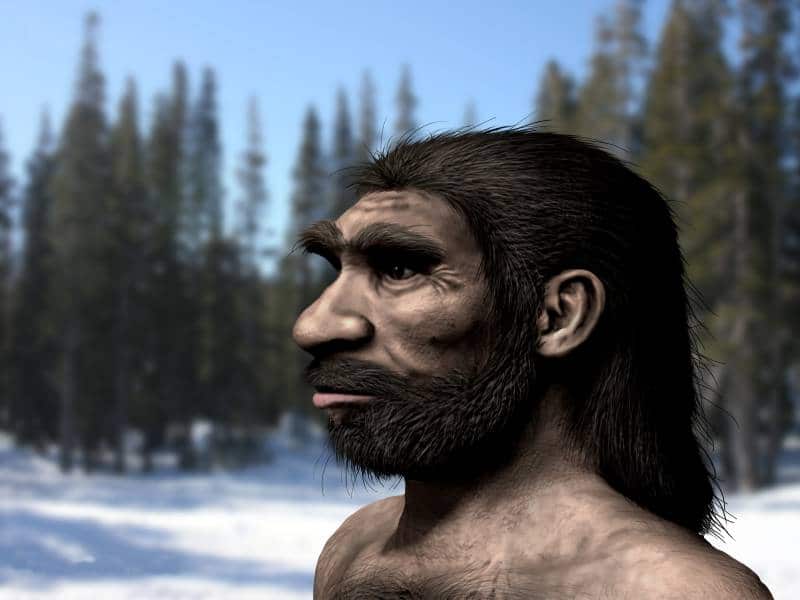
The exact opposite happened tens of millennia ago, when Denisovans from the east ventured into America. Denisovans inhabited present-day Russia and extended westward to the Tibetan plateau and to Oceania in the south. A new study by the University of Colorado Boulder revealed that the now extinct hominin species, the Denisovans, interbred extensively with Neanderthals and humans, leaving chunks of their DNA in these migrants. Denisovans went extinct tens of thousands of years ago. We have very little information regarding these extinct hominins, with the first of their fossils discovered just 15 years ago in a Siberian cave.
Fernando Villanea, one of two lead authors of the study and an assistant professor in the Department of Anthropology at CU Boulder, along with colleagues, suggested the hypothesis of interbreeding and conducted a series of genome analysis experiments to back up their claims. They were especially interested in the MUC19 genome, an essential genetic component of the immune system.
The researchers discovered that these genes were present to a greater extent in people of Indigenous American descent. They speculate that this gene, originating from the Denisovans, helped the migrants survive the ecological and environmental changes in North and South America.
MUC19 is a gene shrouded in mystery. One of its roles is to produce mucus, a slimy material that traps pathogens in the airways and the alimentary canal. Denisovans possessed a form of the MUC19 gene, which was passed on to succeeding generations and underwent multiple mutations. This was a common occurrence, and even now, we have some portions of DNA that are actually similar to that of the Neanderthals.
To uncover further details regarding this genetic intermixing, the group scoured through the genome data of people from Mexico, Puerto Rico, Colombia, and Peru. The people residing in these areas had a lot of DNA similar to that of Indigenous Americans. In their study, they found that one in three modern people of Mexican ancestry had the Denisovan variant of the MUC19 gene. This was mainly noted in the portions of the genome that they inherited from the Indigenous Americans. What turned out to be more surprising was that Neanderthal DNA surrounded the Denisovan DNA portion.
“This DNA is like an Oreo, with a Denisovan center and Neanderthal cookies,” Villanea said.
According to Villanea and his team, before the humans traversed the Bering Strait, the Denisovans interbred with Neanderthals, passing the Denisovan MUC19 gene into their offspring. Then the Neanderthals bred with humans, passing some of the Denisovan genes into them. This is the first time that scientists have recorded a jump of DNA from Denisovans to Neanderthals and eventually into humans. Natural selection favored the MUC19 gene once the hominins came into the Americas.
There is a lot of information amiss, particularly why the Denisovan MUC19 variant of this gene didn’t spread across other parts of the world. However, Villanea speculates that this gene made it easier for the migrants to survive the new food and diseases in the Americas. The migrants developed new tools to hunt and farm, and they also underwent various biological changes over 20,000 years.
The next step in this anthropological venture is to determine how the MUC19 gene affects human health today. Villanea applauds these humans for crossing the Bering Strait into an unknown continent, where they faced changes both biologically and culturally.