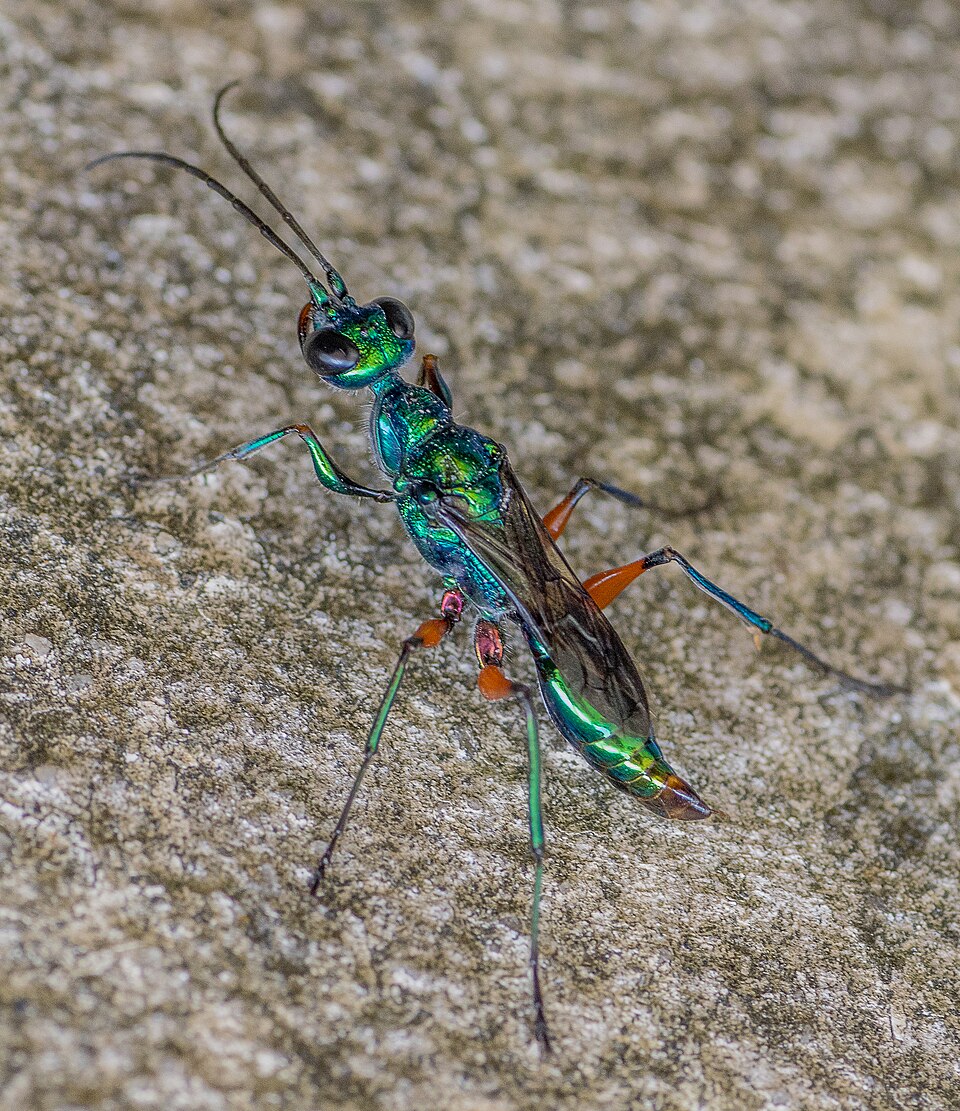
Scientists have found a natural anti-aging hack in jewel wasps. Jewel wasp larvae that underwent a developmental “pause” live longer and age more slowly. This slowdown is connected with conserved biological pathways and reveals possible applications in delaying human aging.
Jewel wasp larvae can undergo a kind of natural “time-out” before emerging as an adult wasp, with this surprising advantage in anti-aging. The study, conducted by scientists at the University of Leicester, revealed the anti-aging process. The wasp larvae undergo a developmental pause that slows the “epigenetic clock” that marks molecular aging.
Aging leaves molecular biomarkers on the DNA. Epigenetic clock tracks chemical changes in the DNA, known as methylation. This methylation accumulates with age and is a significant factor in aging. The question that intrigues scientists is what happens if we alter this pathway.
Jewel wasps make ideal candidates for aging-related studies as they have a functional methylation system like humans, unlike most invertebrates. They also have a short life span, making them easy to study.
The scientists exposed jewel wasp mothers to cold and darkness. This triggered a hibernation-like state in their babies called diapause. This natural pause extended the offspring’s adult lifespan by around 30%. Even more amazingly, the wasps that lived through diapause aged 29% more slowly at the molecular level. Their epigenetic clocks ticked less fast, offering the first direct proof that the pace of biological aging can be developmentally fine-tuned in an invertebrate.
“It’s like the wasps who took a break early in life came back with extra time in the bank,” said Evolutionary Biology Professor Eamonn Mallon, senior author on the study.
“It shows that aging isn’t set in stone; it can be slowed by the environment, even before adulthood begins.”
Some animals can slow aging in a dormant state; however, this is the first study that backs the benefits even after development resumes. Moreover, the molecular slowdown was not just random. These processes can be linked to changes in key biochemical pathways. These pathways are conserved across species, including those that are involved in nutrient sensing and insulin. These same pathways are targeted in humans for anti-aging purposes.
This research is special because it shows a long-lasting, environmental slowdown of aging in a system that’s both relevant and simple to human biology. Jewel wasps help understand a challenging concept: how and why aging occurs. This study opens up new avenues for discovering anti-aging techniques that we might one day design.
Copyright @smorescience. All rights reserved. Do not copy, cite, publish, or distribute this content without permission.
SUBSCRIBE TO OUR NEWSLETTER
.......... ..........Subscribe to our mailing list to get updates to your email inbox.
Monthly Newsletter