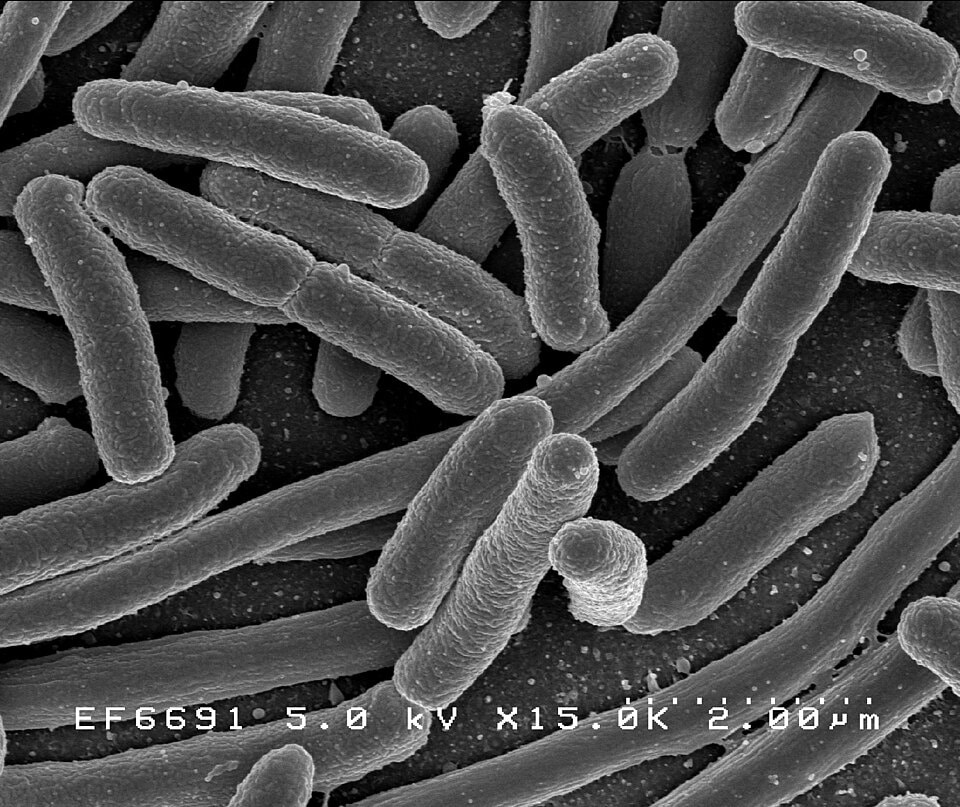
Scientists from China have discovered a powerful energy source for deep Earth microbes through earthquakes. Hydrogen and oxidants are generated when rocks crack due to earthquakes, which serve as an energy source in areas where sunlight doesn’t reach. The process also sheds light on how life could exist on planets that receive little to no sunlight.
Contrary to the belief that all life needs sunlight to exist, Chinese scientists have proven that deep subsurface microbes can live without sunlight. These microbes derive energy from chemical energy at subsurface crustal faulting. They offer new insights into life below Earth’s surface.
The deep subsurface has long been regarded as incompatible with supporting life; however, in recent years, scientists have found that this region is teeming with large-scale microbial life. Abiotic redox reactions during water-rock interactions release energy that microbes derive. Hydrogen (H₂) is the most essential energy source. Oxidants are also significant for metabolic activities; however, their origins were not well understood previously.
To gain insights into this process, scientists simulated crustal faulting activities that produced free radicals. These free radicals decompose water to produce hydrogen gas and also oxidants such as hydrogen peroxide (H₂O₂). These chemicals create a redox gradient within the fractures, which further reacts with iron and groundwater in the rocks. The chemical setup oxidizes ferrous iron (Fe²⁺) to ferric iron (Fe³⁺) or reduces ferric iron (Fe³⁺) to ferrous iron (Fe²⁺), depending on local redox conditions.
Hydrogen production driven by earthquakes was found to be up to 100,000 times greater than that from other known pathways, such as serpentinization and radiolysis, in microbe-rich fractures. The research team successfully established that this process effectively drives iron’s redox cycle. In turn, the redox process affects the geochemical processes of elements like carbon, nitrogen, and sulfur—sustaining microbial metabolism in the deep subsurface biosphere.
This study provides new knowledge about the ecological diversity of deep subsurface microbiomes and the energy source that they use. According to Prof. Hongping He, a member of the Chinese Academy of Sciences (CAS), and Prof. Jianxi Zhu, both from the Guangzhou Institute of Geochemistry of CAS, fracture systems on other Earth-like planets could potentially provide habitable conditions for extraterrestrial life, offering a new avenue for the search for life beyond Earth.
Copyright @smorescience. All rights reserved. Do not copy, cite, publish, or distribute this content without permission.
SUBSCRIBE TO OUR NEWSLETTER
.......... ..........Subscribe to our mailing list to get updates to your email inbox.
Monthly Newsletter