If your dog seems to perk up every time a squirrel darts across the TV screen, or growls at the sound of a doorbell in a movie, you’re not alone, and science is starting to explain why. A new study published in Scientific Reports on July 17 reveals that a dog’s response to television might have less to do with what’s on the screen and more to do with what’s going on inside their furry little heads.
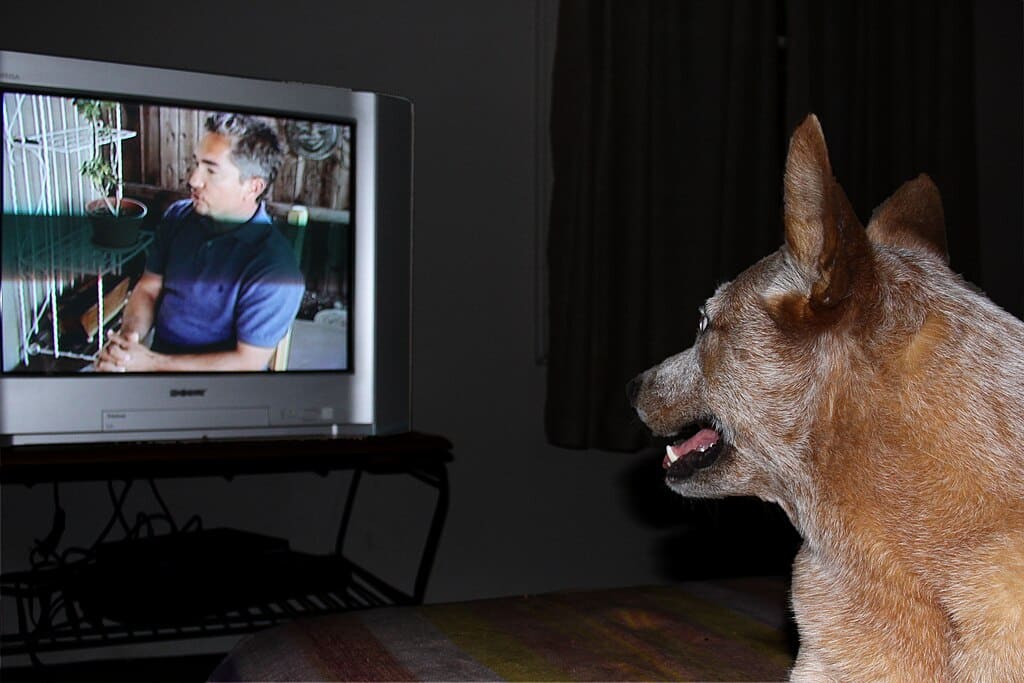
Many pet parents leave the TV on while they’re away, hoping it soothes their pets. And there’s no shortage of dog-specific content these days: channels full of calm music, animal footage, and even exposure therapy for everyday “scary” sounds like vacuums or doorbells.
But Jeffrey Katz, a comparative psychologist at Auburn University, wasn’t convinced. “I’ve seen them watch TVs or look at TVs. But do we know what they’re extracting from it?” he asked. That question sparked a deeper dive into what dogs are experiencing when they look at the screen.
For a long time, dogs probably weren’t able to enjoy TV the way humans do. Their vision works differently; they only have two types of color receptors in their eyes, compared to our three, meaning their world is less colorful. They also process motion faster than we do, which made old TV screens look more like a flickering slideshow than smooth video.
Luckily, that’s no longer a problem because modern LED screens display images at a much higher resolution, allowing dogs to experience smoother visuals that are more similar to how humans see television.
But can dogs enjoy TV the way humans do? To answer that, Katz and his team surveyed 453 dog owners across the U.S. They wanted to know: what makes dogs bark, wag, growl, or chase when the TV is on?
Turns out, about 45% of the dogs sampled responded to seeing or hearing other dogs on screen. But it wasn’t breed, age, or gender that predicted how a dog reacted; it was their personality. Energetic dogs were far more likely to be glued to the screen, especially when animals were moving across it. One excitable pup even looked behind the television to find the “missing” off-screen animal!Lane Montgomery, a cognitive and behavioral scientist at Auburn and a coauthor of the study, noticed the same thing in her dog, Jax, a 3-year-old Catahoula leopard dog.
But for anxious dogs, TV isn’t always a treat. The sound of a doorbell or a creaking door, even if it’s just part of a movie, can be stressful. It’s also worth noting that dogs might be reacting not just to the screen, but to you. If you cheer during a game or shout in surprise during a thriller, your dog could mirror that excitement, even if they don’t understand what’s happening on the screen.
Before you reach for the remote, it might be a good idea to think about your dog’s temperament. Does your retriever love to watch wildlife documentaries? Does your terrier bark every time there’s a commercial jingle? Dowling-Guyer says it comes down to knowing your pet: “People really should know their pets and know their personality and how they react to different types of TV programs and different stimuli.”
So maybe your schnauzer does prefer a good true crime documentary, while your golden retriever just wants background nature sounds. And for more sensitive dogs, a little peace might be the best channel of all.
Bottom line? Your dog’s favorite TV show might say more about their personality than you think. So the next time you and your pup settle in for a binge-watch, pay attention. They might just be watching with you.
Copyright @smorescience. All rights reserved. Do not copy, cite, publish, or distribute this content without permission.
SUBSCRIBE TO OUR NEWSLETTER
.......... ..........Subscribe to our mailing list to get updates to your email inbox.
Monthly Newsletter