A stressed plant doesn’t keep quiet. Instead, they emit cries in the ultrasonic range, which humans cannot hear. However, researchers have been using special devices for decades to listen to plants’ cries.
For the first time, a group of scientists in Israel has recorded that insects can listen and react to plants’ acoustic distress signals. According to lead study author Rya Seltzer, an entomologist and doctoral student in the Department of Zoology at Tel Aviv University in Israel, this finding is related to the research group’s prior work on recording sounds made by tobacco and tomato plants when they are dehydrated. Changes in a plant’s water balance within the xylem vessels produce these sounds. Xylem vessels are vascular tissue that carry water and nutrients upward from roots to the stems and leaves.
Lack of water causes stress in plants. Due to a lack of water, air bubbles form, expand, and collapse inside the xylem tissues. This cascade of events produces vibrations, and the plants emit intermittent, click-like sounds, which the researchers measured in the acoustic frequency range of approximately 20 to 100 kilohertz. The researchers estimate that these frequencies are audible to insects at a distance of 16 feet or around 5 meters.
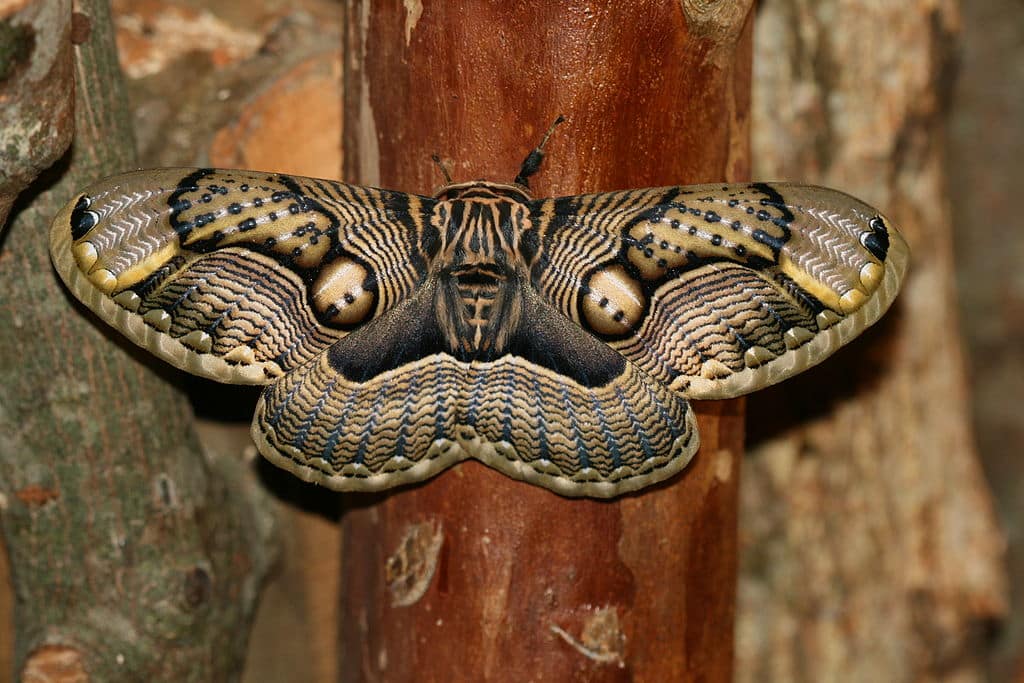
The scientists tried to know if these ultrasonic sounds were being recognized and picked up by insects, so they observed the Egyptian cotton leafworm moth (Spodoptera littoralis), which lays its eggs on plant leaves. The team found that these moths avoided noisy, stressed tomato plants and preferred to lay their eggs on quieter, healthier plants. The quieter plants had juicier leaves, providing nutritious meals to the newly hatched larvae.
Although interacting and reacting to sounds coming from dehydrated tomato plants is a natural response, it is not a form of communication. Plants producing these sounds are doing so passively, without any active intention to communicate with the moths.
When the researchers presented a dried-out tomato plant and a fresh one to female moths, they flocked to the fresh plant to lay their eggs. But the team wanted to gain further insight. The researchers tested whether the sounds from the dehydrated plant were a factor in the moths’ selection. For the experiment, the researchers built a setup consisting of two boxes. In one box, they played recordings of plants’ distress sounds, while the other box was silent.
In the experiment, moths gathered in the noisy box, and scientists theorize that it’s because the click-like sounds suggested that they would find a living plant there. When the scientists deafened the moths, this preference vanished, leading to the conclusion that moths were listening to the plants before making their choices.
In another experiment, female moths were given a choice of two hydrated tomato plants. In this case, one of the plants was near a speaker playing ultrasonic stress sounds. The female moths chose the quieter plant for laying eggs. A third experiment tested whether the female moths were influenced by other acoustic sounds, such as those of male moths. In this experiment, when male moths’ calls were broadcast from one side of the arena, females showed no preference as to where they lay their eggs, according to the study.
These experiments demonstrated that the moths were able to listen to and recognize sounds produced by plants. These moths are also able to use these acoustic cues to make decisions about laying eggs and reproduction.
Since the Eocene epoch, insects have been able to detect ultrasonic sounds. However, the researchers were amazed to see that these moths recognized and listened to plants’ ultrasonic distress signals. Surprisingly, female moths that have never laid eggs before, and hence have not faced acoustic cues before, preferred the quieter plants to lay their eggs on. They were also able to recognize the sounds.
“It’s a really cool and surprising discovery!” Zhang, an adjunct associate professor of physiology at the University of Pennsylvania’s Perelman School of Medicine, said. “We’ve known for a long time that plants give off smells when they’re in trouble, like when they’re being eaten by bugs or are thirsty. These smells help attract helpful insects or scare away pests,” he said.
“What’s new here is that sound may give extra information — like a warning signal — especially when there’s no smell or the smell is hard to detect.”
Plant acoustics is a growing field, and preliminary work suggests that sound-making is widespread. Future endeavors involve acoustic monitoring to shed light on how stress affects plant health. It can also help us identify its potential applications in pest control. According to Seltzer, this is just the tip of the iceberg.
Copyright @smorescience. All rights reserved. Do not copy, cite, publish, or distribute this content without permission.
SUBSCRIBE TO OUR NEWSLETTER
.......... ..........Subscribe to our mailing list to get updates to your email inbox.
Monthly Newsletter