Mars is not friendly to living things. Its atmospheric pressure is just 1% of Earth’s, which means water can’t stay liquid. As Robin Wordsworth, planetary scientist at Harvard University, put it, “If you put a beaker of water on the surface, it would freeze and turn to steam in a very, very short time.”
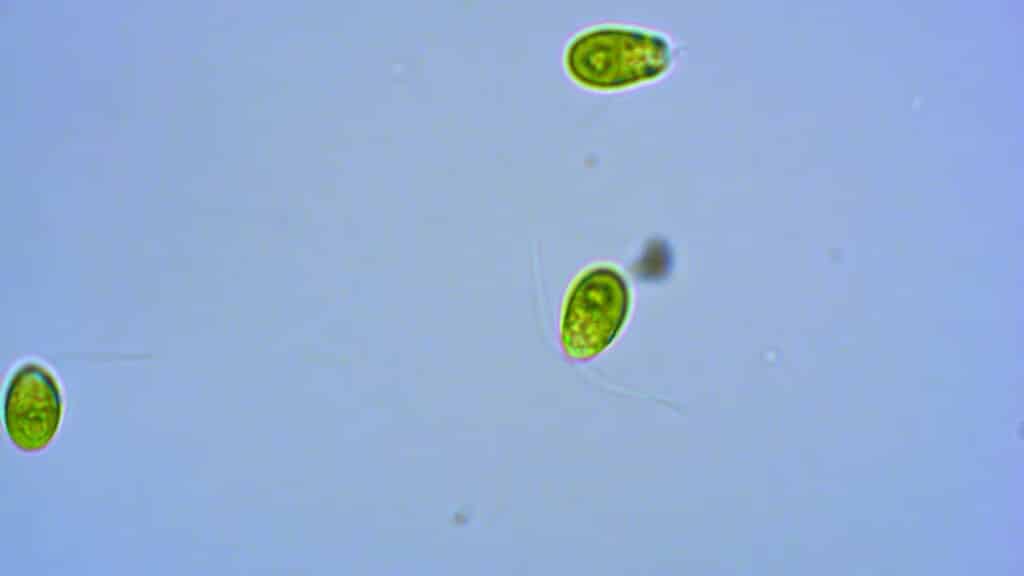
But these bioplastic beakers create a pressure gradient inside that helps stabilize water, just enough for algae to stay hydrated and grow.
The beakers aren’t completely transparent. Their cloudy surface plays a crucial role by blocking dangerous UV radiation while still letting in just enough light for the algae to perform photosynthesis.
What is even better? Many of the ingredients needed to build these algae-growing chambers already exist on Mars. There’s ice for water and carbon dioxide in the atmosphere, both essential for algae. All humans would need to bring are some basic tools, like a 3D printer and starter cells for the algae.
Wordsworth explained, “It’s very hard to keep humans alive anywhere in long periods without having plants.”
While these algae habitats aren’t ready to support human life yet (the pressure inside is still far too low), they’re a step in the right direction.
The team also believes that by combining these bioplastic beakers with materials like aerogels, which can withstand cold, they could eventually support a broader range of crops, not just algae. That means astronauts might one day grow their vegetables on Mars in these alien greenhouses.
This innovation is about more than algae or beakers. It’s about building a self-sustaining loop, where plants and people can thrive together in another world. Every drop of water and every gram of oxygen matters when you’re 140 million miles from Earth.
If humans ever settle on Mars, they’ll need more than oxygen tanks and canned food. They’ll need farms, and these bioplastic homes for algae might be the first seed in that future.
So next time you throw away a compostable spoon, just imagine, a bit of that same bioplastic might one day help grow salad greens, on Mars.
For more details, refer to this article published in Science Advances.