In a breakthrough that could change the way we treat chronic pain, researchers at the University of Southern California (USC) have developed a revolutionary implant that utilises sound waves and artificial intelligence to stop pain at its source. Imagine a future where managing pain doesn’t mean popping pills or undergoing risky surgeries. That future may be closer than we think.
Chronic pain affects over 51.6 million Americans, according to the U.S. Pain Foundation. For more than 17 million of them, the pain is so severe that it limits their daily life. While opioids can dull the pain, they often come with addiction, dependency, and devastating side effects.
Spinal cord stimulators have offered an alternative, using electric pulses to interfere with pain signals. But these devices can be bulky, expensive, and require invasive surgeries and frequent battery replacements.
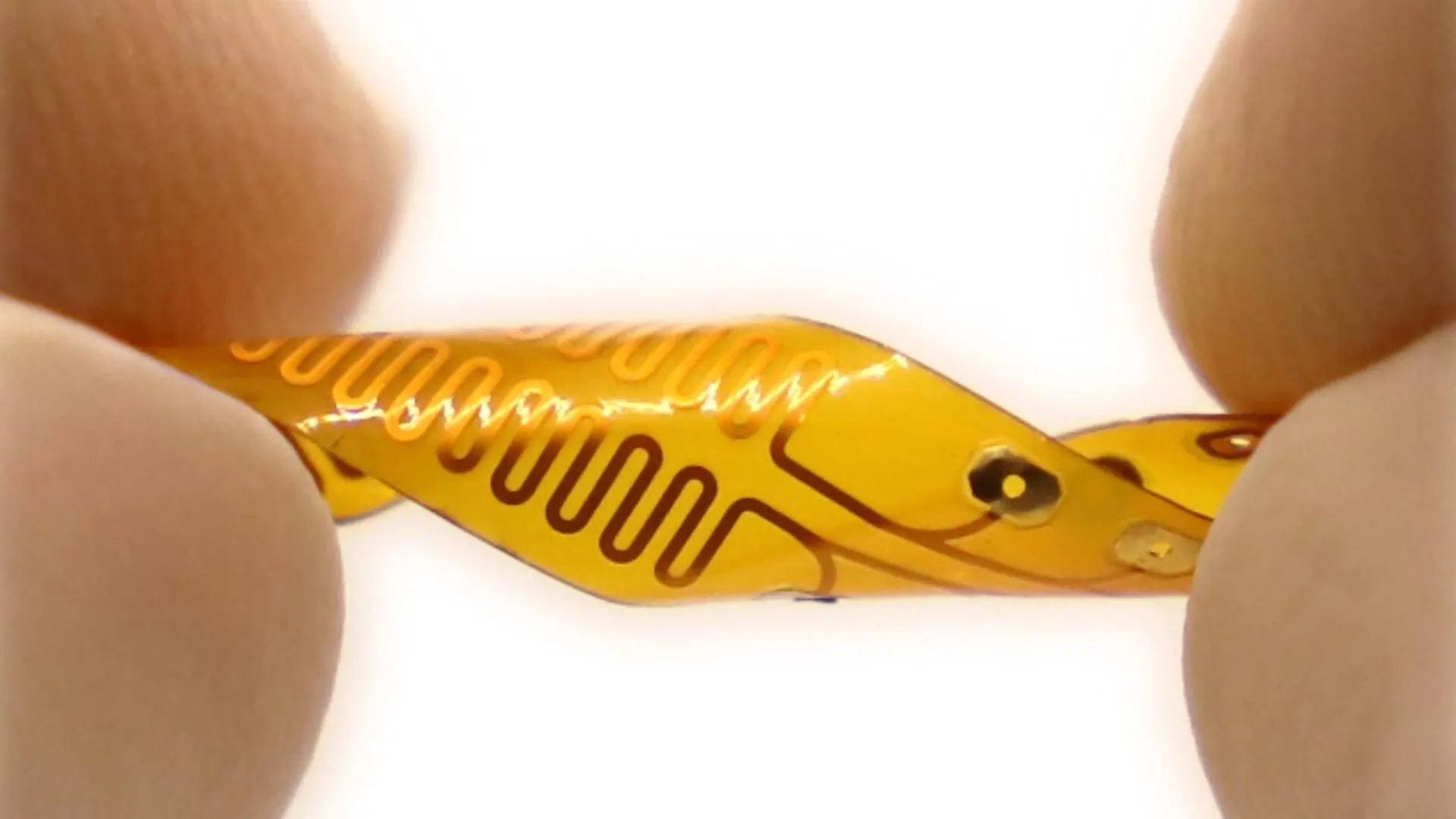
That’s where the innovation from the Zhou Lab at USC and their collaborators at UCLA comes in; a flexible, battery-free implant that can twist, bend, and even learn how your body feels pain.
The new device, called a UIWI (ultrasound-induced wireless implantable) stimulator, is a small implant that’s powered completely wirelessly by an external ultrasound patch. This wearable patch sends safe sound waves into the body, which the implant turns into electrical pulses. These pulses then interrupt pain signals before they reach the brain.
“What truly sets this device apart is its wireless, smart and self-adaptive capability for pain management,” said Professor Qifa Zhou, one of the project leaders at USC. “We believe it offers great potential to replace pharmacological schemes and conventional electrical stimulation approaches, aligning with clinical needs for pain mitigation.”
Unlike existing devices, which are rigid and powered by batteries, the UIWI stimulator is soft and flexible, built to move with the body. It’s also small enough to be implanted with minimal discomfort and might one day be injected with a simple syringe.
What makes this tech even more exciting is its brain-reading ability. The implant doesn’t just zap blindly. It’s guided by a smart system that monitors brain waves (EEG signals) and detects when you’re in pain.
The team trained an artificial intelligence model to categorize pain into three levels: mild, moderate, and severe. And it’s accurate: the system was able to detect pain levels with 94.8% precision. Once a pain level is identified, the wearable patch adjusts the ultrasound energy it sends to the implant, which then fine-tunes its electrical response to match. This creates a closed-loop system that constantly adapts to the user’s changing pain.
Yushun (Sean) Zeng, a PhD student and lead author on the project, explained that the UIWI stimulator works by using wireless ultrasonic energy transfer along with a closed-loop feedback system. This approach eliminates the need for bulky implanted batteries and enables real-time, precisely adjustable pain modulation.
Zeng noted that this type of energy conversion is essential for deep stimulation because ultrasound is a non-invasive and highly penetrating form of energy commonly used in clinical and medical settings.
The team tested the implant on mice experiencing both mechanical and thermal pain. The results were striking: not only did the device reduce pain responses, but the mice actively sought out the chamber where the device had been activated, suggesting they associated it with relief.
What comes next? The team is already dreaming of even smaller, more user-friendly versions of the device. Future designs could include smart patches that monitor and stimulate at the same time, or even smartphone-connected systems that let users control their pain treatment directly from their pockets.
“From a clinical standpoint, incorporating deep learning-based pain assessment enables dynamic interpretation and response to fluctuating pain states, which is essential for accommodating patient-specific variability,” added Chen Gong, another lead author from the Zhou Lab.
As research continues, this innovation may bring hope to millions battling chronic pain. By replacing pills and surgeries with personalized, AI-guided stimulation, the UIWI stimulator is pointing toward a future where pain relief is smarter, safer, and designed just for you.
And perhaps, someday soon, managing chronic pain might be as simple as wearing a patch.
To dive deeper into the findings, you can explore the study in Nature Electronics.
Copyright @smorescience. All rights reserved. Do not copy, cite, publish, or distribute this content without permission.
SUBSCRIBE TO OUR NEWSLETTER
.......... ..........Subscribe to our mailing list to get updates to your email inbox.
Monthly Newsletter