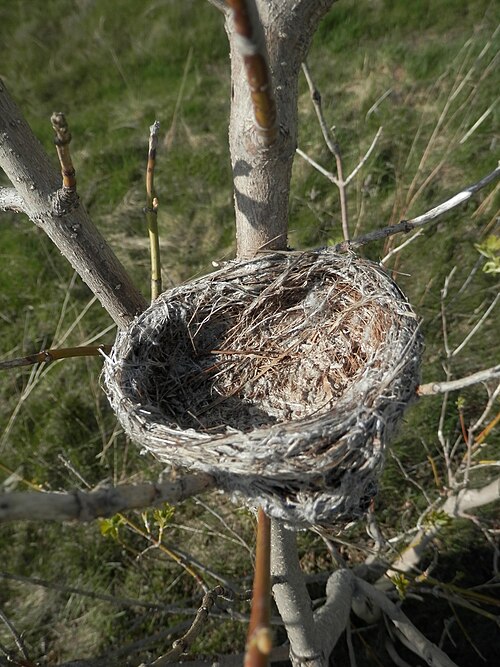
Arctic springs bring a large number of hatchlings as millions of birds come along to raise their offspring. This tradition started around 73 million years ago, and birds raised their young alongside dinosaurs. Birds have existed for 150 million years; for half of that period, they have nested in the Arctic.
Using fossilized bones and teeth, lead author Lauren Wilson, a doctoral student at Princeton University who earned her master’s degree at the University of Alaska Fairbanks, identified gull-like birds, diving birds like loons, and birds resembling modern ducks and geese. Before this, the oldest nest ever discovered was 47 million years old, well after 75% of Earth’s animals died due to the asteroid’s impact.
The existence of baby bird bones is a miracle in itself, given that they are porous, fragile, and easily destroyed. “Finding bird bones from the Cretaceous is already a very rare thing,” Wilson said. “To find baby bird bones is almost unheard of. That is why these fossils are significant.” Prince Creek Formation, an area along the Colville River on Alaska’s North Slope known for its dinosaur fossils, served as a rich hub of fossils. Scientists have identified more than 50 bird bone pieces and fragments. The team has put Alaska on the radar for fossilized birds.
The scientists at Prince Creek Formation haul tubs of screened sediment to the lab where they get their hands on every bone and teeth, from visible to microscopic. Their findings help identify new species and provide exceptional insights into the physiological and behavioral habits of birds, dinosaurs, and mammals living in the Cretaceous period.
It is yet to be decided whether the bones found on the Colville River are the earliest-known members of Neornithes. Neornithes is the group in which all modern birds are categorized. Skeletal features exclusive only to this group have also been found. Some of these birds, like modern birds, had no true teeth. The oldest fossils currently are 69 million years old.
Copyright @smorescience. All rights reserved. Do not copy, cite, publish, or distribute this content without permission.
SUBSCRIBE TO OUR NEWSLETTER
.......... ..........Subscribe to our mailing list to get updates to your email inbox.
Monthly Newsletter