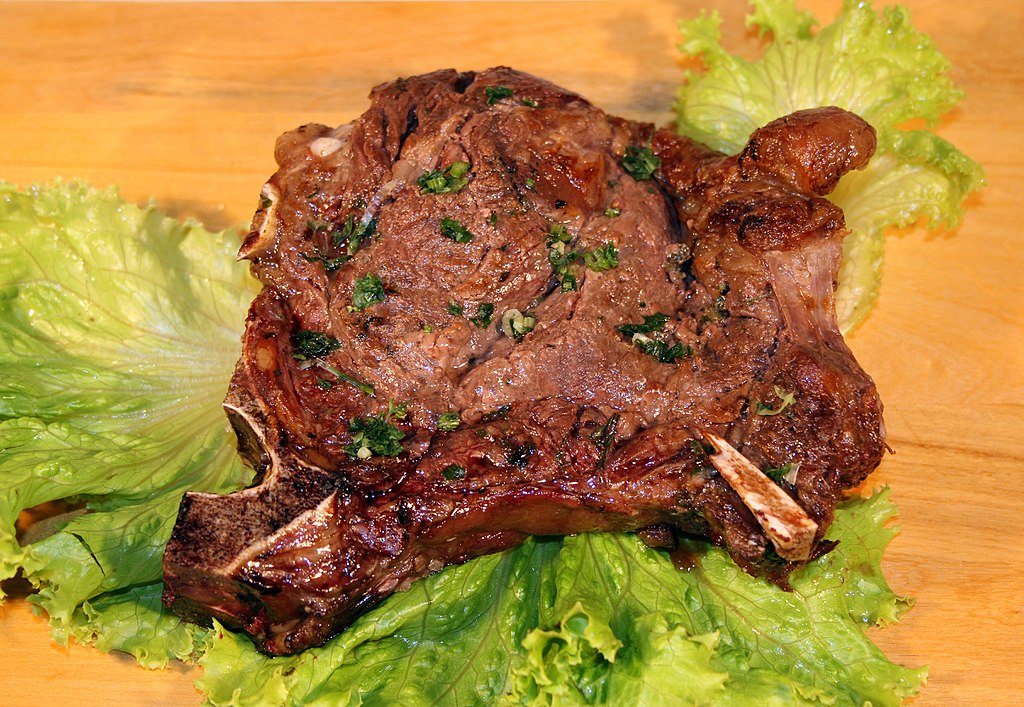
Astronauts typically receive freeze-dried food in space, which is neither fresh nor appetizing. Even then, the daily cost of feeding an astronaut is around $20,000. Now, scientists are exploring ways to produce food in space, including everything from steak and mashed potatoes, grown from individual cells. A European Space Agency (ESA) project is experimenting with the viability of growing food in labs under low gravity and high radiation in orbit and on other worlds. The experimental food lab will orbit the Earth for three hours before re-entering the atmosphere and falling back to Earth off the coast of Portugal. The idea is to test whether a small-scale food production plant on the International Space Station is feasible within two years.
These are much like replicator machines from Star Trek, which can produce food and drinks from pure energy. Once considered a work of science fiction, Dr. Shamsul, CEO and founder of Bedford-based Frontier Space, which is developing the concept with researchers at Imperial College, London, says it is no longer a fantasy. His dream is to establish factories on the Moon and in orbit.
If NASA is to achieve the dream of sending astronauts for settlement on other planets, food costs will become prohibitive. Growing food from scratch in space is a much better alternative. Usually, lab-grown foods are developed in test tubes or vats as carbohydrates, fats, proteins, and other components, and then artificially flavored to resemble the taste of food. For the time being, Dr Shamsul says that it is possible to make protein-enriched mashed potatoes, and his further ambitions involve 3D printing whatever food an astronaut chooses to make.
Dr. Shamsul has a setup at Imperial College’s Bezos Centre for Sustainable Proteins in west London, known as a bioreactor. The bioreactor has a bubbling, brick-colored liquid in a test tube. The process is called ‘precision fermentation, where ‘precision’ refers to the genetically engineered aspect. In the process, genetically engineered yeast is being used to produce extra vitamins. However, according to Dr. Rodrigo Ledesma-Amaro, Director of the Bezos Centre, any kind of ingredient can be produced.
A significantly smaller and simpler version of the bioreactor has been launched into space aboard a SpaceX Falcon 9 rocket as part of the ESA mission. This experiment aims to determine whether food can be cultivated from individual cells in low-gravity conditions and high radiation environments similar to those found in space.
Dr. Ledesma-Amaro and Dr. Shamsul have sent small amounts of the yeast mixture to orbit the Earth in a small cube satellite carried by Europe’s first commercial returnable spacecraft, Phoenix. If everything goes according to plan, it will orbit the Earth for around three hours before falling back into the sea off the coast of Portugal. A recovery vessel will retrieve the experiment and return it to the lab in London for examination. The data gathered will provide information on whether a larger, better bioreactor will be a feasible option for generating food.
The only problem with the brick-colored food, which has been dried into a powder, is its unappetizing taste, which seems to beat the already bland freeze-dried food.
Astronauts lose calcium from their bones, hormone balance and iron levels are altered, and a plethora of other biochemical changes occur in their bodies. Astronauts do take supplements to supplement their diets, but with new food-making technology, the food can be tweaked to produce the required nutrients, potentially mitigating these health issues. Astronauts often eat less in space, but the introduction of new lab-grown food production in space may change their appetite.
Copyright @smorescience. All rights reserved. Do not copy, cite, publish, or distribute this content without permission.
SUBSCRIBE TO OUR NEWSLETTER
.......... ..........Subscribe to our mailing list to get updates to your email inbox.
Monthly Newsletter