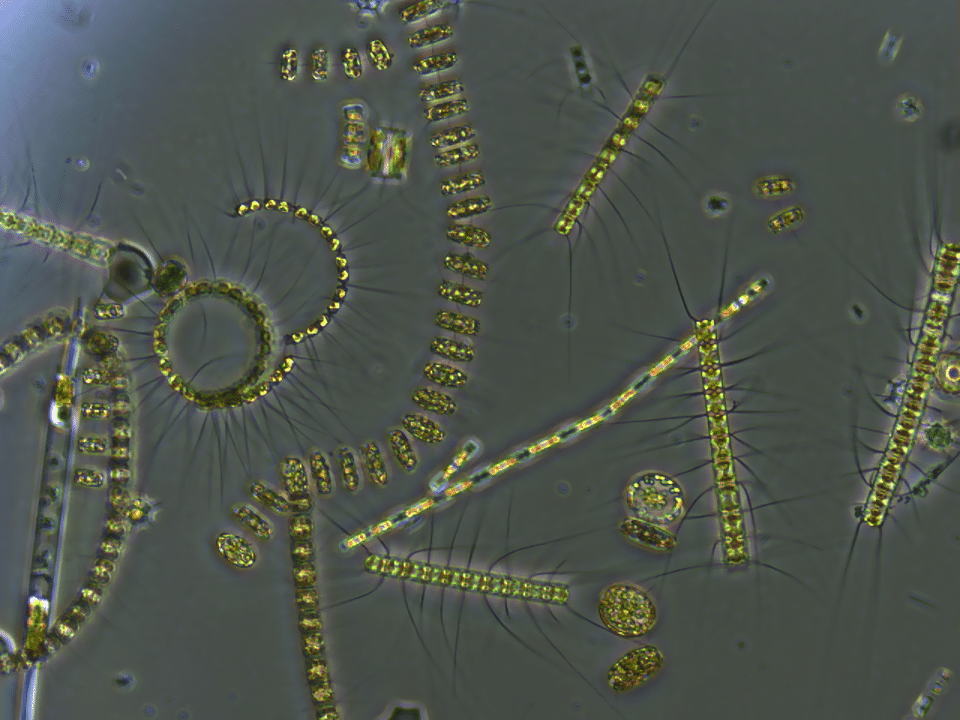
Astronomers at the University of Cambridge have detected one of the most striking signs of life in the exoplanet K2-18b. Using data from the James Webb Space Telescope (JWST), the astronomers have discovered the chemical traces of dimethyl sulfide (DMS) and dimethyl disulfide (DMDS) in the atmosphere of the exoplanet, which orbits its star in the habitable zone. The discovery is special because on Earth, DMS and DMDS are only produced by living organisms. Microbes, such as marine phytoplankton, are the primary producers of DMS and DMDS. However, the chemical process that produces DMS and DMDS on the exoplanet K2-18b remains unknown; yet, the results provide the strongest evidence of the presence of life on a planet outside the solar system.
Earlier observations of K2-18b, located in the constellation Leo, revealed the presence of carbon dioxide and methane in its atmosphere, marking a first for an exoplanet in the habitable zone. These results upheld the prediction that this exoplanet might have a habitable ocean-covered world beneath a hydrogen-rich atmosphere.
To determine the chemical composition of the atmosphere of a planet lying very far away, astronomers analyze the light from the parent star as the planet transits or passes in front of the star as seen from Earth. During transit, JWST can detect a drop in the brightness of the starlight. A fraction of the starlight passes through the atmosphere of K2-18b before reaching Earth. Absorption of some of the starlight by the planet’s atmosphere leaves “imprints in the stellar spectrum”, which the astronomers can study to understand the gaseous cocktail of the planet’s atmosphere.
The concentration of DMS and DMDS in Earth’s atmosphere is one part per billion; however, on K2-18b, it is a thousand times stronger. According to Nikku Madhusudhan, lead researcher of the study, the findings on K2-18b suggest that it is a Hycean planet: a planet with a habitable ocean world underneath a hydrogen-rich atmosphere.
Although Madhusudhan is excited by the results observed, he recognizes the need for further data to reach a definitive conclusion. He is “cautiously optimistic”, acknowledging the fact that a previously unknown process might be at play in producing DMS and DMDS on K2-18b. However, the question, “Are we alone in the universe?” continues to boggle our minds, and findings in line with this study push us a step further in the direction of finding an answer.
Marine phytoplanktons produce DMS and DMDS on Earth, Credit; Wikimedia/University of Rhode Island/Stephanie Anderson
Copyright @smorescience. All rights reserved. Do not copy, cite, publish, or distribute this content without permission.
Join 20,000+ parents and educators
To get the FREE science newsletter in your inbox!
SUBSCRIBE TO OUR NEWSLETTER
.......... ..........
Subscribe to our mailing list to get updates to your email inbox.