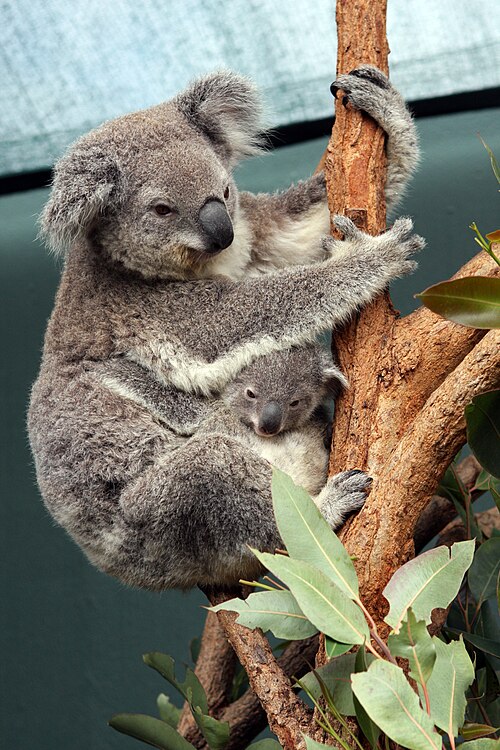
Some of Sydney, Australia’s koalas are trapped in a tough situation—stay isolated and face the dangers of inbreeding, or mix with neighboring koalas and risk catching a deadly disease. New research published in Conservation Genetics reveals that koalas in southwestern Sydney are the most inbred in the state of New South Wales. While introducing new koalas could boost their genetic health, it may also bring a devastating threat—Chlamydia, a genus of bacteria that can cause a disease that causes blindness, infertility, and even death.
The impact of inbreeding
Koalas in the wild typically rely on genetic diversity to stay healthy and adapt to new challenges. But the koalas living in the forested regions south of Sydney are surrounded by urban areas on three sides, cutting them off from other populations. This isolation has caused severe inbreeding, which weakens their ability to fight off diseases and adapt to environmental changes.
At first glance, their isolation seems to have a silver lining—these koalas are among the few in New South Wales that remain Chlamydia-free. Across Australia, Chlamydia has wiped out large portions of koala populations. In some areas, the infection rate is close to 100%, making the disease one of the leading causes of koala deaths.
But as new research shows, this fragile balance may not last much longer.
A team led by Carolyn Hogg, a conservation biologist at the University of Sydney, analyzed the DNA of 111 wild koalas from seven different locations around Sydney. The results were alarming—koalas from areas like Campbelltown, Heathcote, and Liverpool were so genetically similar that they resembled half-siblings. Other nearby groups showed a connection similar to first cousins.
The threat of Chlamydia
“The likelihood that the disease will eventually arrive in the disease-free area is quite high,” says Hogg.
The study also revealed that crossbreeding is already happening between Chlamydia-free koalas in Campbelltown and infected populations in areas like Wollondilly. If Chlamydia enters these vulnerable groups, the lack of genetic variety could make it impossible for the koalas to fight off the disease.
The research team captured wild koalas, collected ear tissue samples, and released them back into the wild. Using advanced DNA analysis, they mapped how closely related these koalas are. This method allowed the researchers to track genetic diversity and monitor whether Chlamydia-infected populations are moving closer to disease-free areas.
This situation presents a difficult choice for conservationists: whether they should allow isolated koalas to remain inbred, which weakens their ability to survive and adapt, or they introduce new koalas to boost genetic diversity, but risk spreading a lethal disease.
Conservation efforts and challenges
“Usually the quickest way to inject new diversity is by bringing in individuals from another population or structuring environments in a way to ensure that different populations are connected and don’t become geographically isolated—like building corridors,” says Chloé Schmidt, an evolutionary ecologist at Dalhousie University in Canada. “But here, corridors wouldn’t be a great idea!”
Another option would be moving uninfected koalas from other regions into Chlamydia-free zones. However, according to Rebecca Taylor, a conservation genomicist at Environment and Climate Change Canada, this approach would be “very intensive and costly” and would need to be repeated every couple of years to maintain genetic diversity.
The researchers plan to continue monitoring the genetics of Sydney’s koalas to track how Chlamydia spreads and how it interacts with koala immune systems. Their goal is to find the genetic factors that make some koalas more vulnerable to disease—knowledge that could shape long-term conservation efforts.
The future of Sydney’s koalas
The fate of Sydney’s koalas hangs in a delicate balance. Keeping them isolated could lead to genetic collapse, while introducing new koalas may open the door to a deadly disease. As researchers race against time to protect these iconic animals, one thing is clear—saving koalas isn’t just about preserving their habitat, it’s about protecting their genes, too.
For more details, read the full study in Conservation Genetics.
Copyright @smorescience. All rights reserved. Do not copy, cite, publish, or distribute this content without permission.
SUBSCRIBE TO OUR NEWSLETTER
.......... ..........Subscribe to our mailing list to get updates to your email inbox.
Monthly Newsletter