Is AI redefining art, or is it stealing from artists? This is the fiery debate sparked by Christie’s latest move—auctioning 34 AI-generated artworks in its first-ever collection dedicated to artificial intelligence in fine art. The Augmented Intelligence collection, up for bidding from February 20 to March 5, aims to explore the evolving relationship between human creativity and AI. However, it has also triggered an intense backlash. Over 6,000 artists have signed an open letter demanding the auction be canceled, citing ethical concerns over AI’s reliance on copyrighted material.
AI-generated art of two teenagers, Credit: Wikimedia/Damian Putica
AI-generated art has been controversial since 2022, when powerful tools like Stable Diffusion, Midjourney, and DALL-E became widely accessible. While some celebrate AI as a revolutionary creative tool, others argue it threatens human artists by repurposing their work without consent. Christie’s auction is now at the center of this debate, showcasing historical and modern AI artists, including pioneers like Harold Cohen and contemporary creators like Refik Anadol, Vanessa Rosa, and Sougwen Chung.
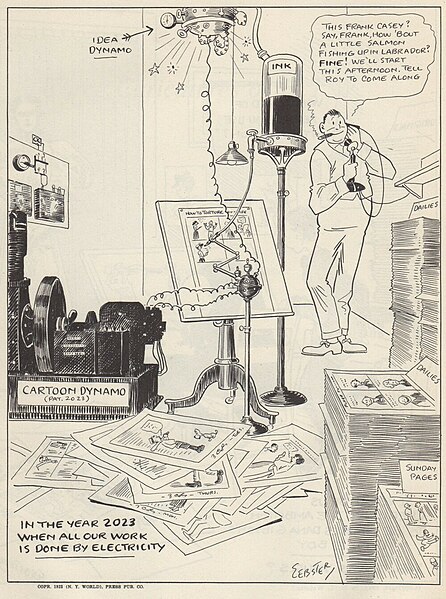
A comic strip from 1923 pictures a cartoonist in 2023 using electricity to create art, Credit: Wikipedia/H.T. Webster
The collection features diverse AI-assisted artworks, including physical pieces, digital NFTs, and hybrid creations. Among them is Untitled Robot Painting 2025 by Alexander Reben, a piece that evolves in real time as bidders participate, with an oil-painting robot translating digital changes onto a physical canvas. Estimated to sell at between $100 and $1.7 million, the painting has already sparked curiosity—along with controversy.
Critics claim that some artworks at the auction rely on AI models trained on copyrighted works without permission. The open letter condemning the auction argues that AI companies have built their models on the “mass theft” of human creativity, using existing works to train algorithms without compensation to the original artists.
Why It Matters
Legal Uncertainty: Courts have yet to determine if AI-generated works violate copyright laws or fall under “fair use.” This auction could set important precedents.
Economic Impact: Many artists fear they will lose their livelihoods as AI-generated images flood the market, making human artistry seem less valuable.
Cultural Implications: The event raises profound questions—if AI is part of the creative process, who is the real artist? Should creativity be redefined in the age of machines?
Ethical AI Development: Some artists use public datasets, like Refik Anadol’s NASA-sourced visuals, demonstrating that AI art can be created ethically. Could this become the new standard?
Christie’s says the collection aims to explore “human agency in the age of AI within fine art,” prompting viewers to question the artist’s evolving role and creativity.
While some call for the auction to be canceled, others argue that AI and art must find ways to coexist. Potential solutions include open-source licensing models, ethical AI training practices, and fair compensation frameworks for artists whose work contributes to AI databases.
Instead of shutting down AI-generated art, should the focus shift to making AI creation more transparent and ethical? As AI continues to push boundaries, the art world faces a pivotal moment: will it embrace this shift, or will resistance to change prove stronger?
The Christie’s auction is more than just a sale—it is a test of how society will define creativity in the AI era. Are we ready for a future where the artist is no longer human?
AI art is forcing a re-examination of artistic authorship and value. While the battle lines between traditional artists and AI-generated works remain drawn, one thing is clear—the future of art is being rewritten, whether we’re ready or not. This is a moment for society to reimagine how AI would complement creativity.