A new bandage could revolutionize wound care using nothing more than water. Scientists have developed a self-powered wound dressing that generates a healing electrical field when activated with water—all for just $1. This low-cost, electronics-free technology could be a game-changer for millions of people suffering from chronic wounds, making advanced treatment more affordable and accessible.
Chronic wounds, such as diabetic foot ulcers, affect about 2% of Americans and are notoriously difficult to heal. Current treatments range from basic dressings to high-tech biological therapies, but many are ineffective, expensive, or impractical—some costing over $20,000 per wound. As a result, patients often struggle with repeated infections, amputations, and life-threatening complications.
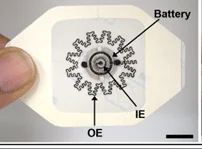
Now, a team of American researchers has designed an innovative alternative: a water-powered, electronics-free dressing (WPED). Published in Science Advances, their study highlights how this bandage stimulates wound healing naturally, providing a simple, affordable solution for millions in need.
The self-powered bandage works by combining magnesium and silver/silver chloride electrodes, which generate a gentle electric field when exposed to water. This electrical stimulation helps speed up healing by boosting new blood vessel formation, reducing inflammation, and accelerating wound closure.
In preclinical trials on diabetic mice, the results were remarkable. By day 11, 75% of wounds treated with the bandage had completely healed, compared to just 12.5% in untreated mice. By day 13, the healing rate reached 88%, far outpacing traditional wound dressings. The device remained functional across different temperatures and pressures, making it practical for real-world use.
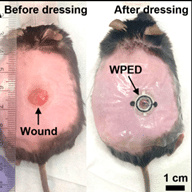
Unlike existing electrical wound therapies, which require bulky external devices, this bandage is lightweight (just 290 milligrams), flexible, and fully self-contained. A built-in color-changing “check pad” indicates when the system is fully activated, making it user-friendly for at-home treatment.
The team designed the bandage to mimic the body’s natural healing mechanisms. When water is added to a special pad, it activates a biocompatible battery, which then delivers an electrical field to the wound.
In laboratory testing, researchers assessed the bandage’s effectiveness under different conditions. They tested its durability in varying temperatures, evaluated its performance under pressure (simulating walking on a foot ulcer), and compared healing rates with and without electrical stimulation.
The results confirmed that electrical stimulation significantly accelerated wound healing. The bandage’s ability to conform to irregular wound shapes was also crucial, ensuring the electric field targeted the wound center for maximum effectiveness.
This discovery could reshape the future of wound care. Diabetic foot ulcers and other chronic wounds are a leading cause of lower limb amputations, and existing treatments have limited success. With no need for expensive external equipment, this low-cost bandage could offer millions of patients an affordable and effective treatment option.
Moreover, the last FDA-approved therapy for diabetic ulcers was developed over 25 years ago. The need for new, innovative approaches has never been greater.
“Our goal here was to develop a far less expensive technology that accelerates healing in patients with chronic wounds,” says Amay Bandodkar, Assistant Professor at North Carolina State University. “We also wanted to make sure that the technology is easy enough for people to use at home, rather than something that patients can only receive in clinical settings.”
The research team is now working on refining the bandage for human clinical trials and exploring different materials to extend the duration of electrical stimulation. They are also testing its effectiveness in larger wounds and different patient groups.
If successful, this bandage could become a widely available, low-cost solution for chronic wound care, saving lives and reducing healthcare costs worldwide.
Sometimes, the most revolutionary medical innovations are also the simplest. By harnessing the power of water and natural healing mechanisms, scientists have developed a $1 solution that could change the lives of millions. As research continues, this bandage has the potential to become a standard treatment for chronic wounds, offering hope to patients who need it most.
For more details, read the full study in Science Advances here.
Copyright @smorescience. All rights reserved. Do not copy, cite, publish, or distribute this content without permission.
SUBSCRIBE TO OUR NEWSLETTER
.......... ..........Subscribe to our mailing list to get updates to your email inbox.
Monthly Newsletter