Ants may be tiny, but their brains are surprisingly sophisticated. New research from the University of Freiburg reveals that black garden ants (Lasius niger) can recognize rival colonies and hold what can only be described as insect grudges. This ability to remember and retaliate against past attackers shows that even underground colonies have their own neighborhood disputes.
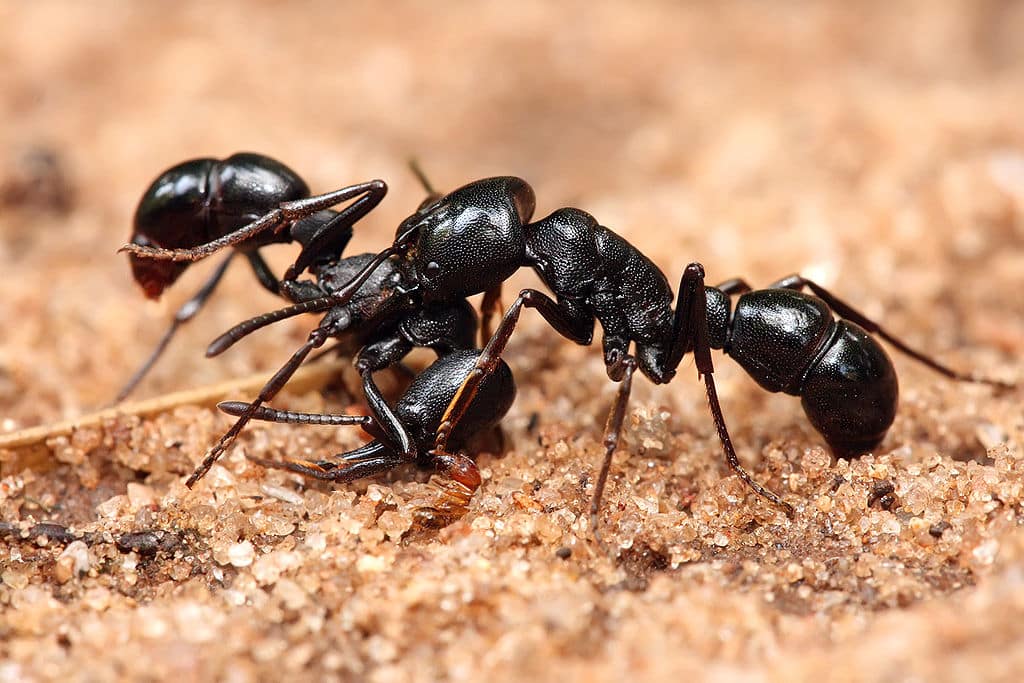
Memory plays a crucial role in shaping behavior across the animal kingdom, from elephants remembering herd members to dogs recalling hidden toys. But this study shows that ants, despite their miniature brains, are capable of learning and adapting their behavior based on past encounters.
Black garden ants, common across Europe, use unique chemical signatures to identify members of their own colony and distinguish them from outsiders. Encounters between rival colonies often escalate into aggressive behaviors, such as biting or spraying acid, as they compete for food and territory.
The study, published in Current Biology, demonstrates the remarkable memory and learning abilities of ants. The aggressive response shows that ants can form lasting memories of their adversaries and adjust their behavior accordingly. Interestingly, the ants were able to recognize and respond to rivals even after brief encounters, with just three interactions within a 45-minute period being enough to enhance their recognition abilities. However, when the encounters were spread over several days, the effect was even stronger.

Another striking discovery was the “nasty neighbor effect,” in which ants showed the highest levels of hostility toward colonies located within their immediate foraging range (about 5 meters). These nearby colonies represent the most direct competition for resources, making them the biggest threat to survival. This heightened aggression toward close rivals highlights the evolutionary advantage of recognizing and prioritizing immediate dangers over distant ones.
By comparing the responses of ants exposed to rivals with those encountering neutral or unfamiliar colonies, the team confirmed that memory plays a critical role in their behavior. Interestingly, when aggressive interactions were prevented—such as by disabling the attackers’ ability to fight—the ants did not develop recognition of their rivals. This indicates that physical confrontation is essential for memory formation.
The study highlights ants’ ability to learn and adapt, suggesting their social interactions are far more complex than previously believed. This memory mechanism helps older forager ants, who frequently interact with rival colonies, become more effective defenders of their nests.
“This research challenges the notion that insects function like pre-programmed robots,” said Dr. Volker Nehring, lead researcher at the University of Freiburg. “Our findings show ants can learn from experience and adapt their behavior.”
Beyond ants, this study sheds light on the role of associative learning in social insects, contributing to our understanding of how smaller brains achieve complex tasks.
The research team plans to explore whether ants adapt their olfactory receptors based on these experiences, potentially uncovering the physiological basis for their remarkable learning ability. Such findings could also inform broader studies on the evolution of memory and learning in social species.
It turns out ants have more in common with elephants than we thought—they, too, never forget their enemies. This fascinating discovery reveals that even tiny creatures possess sophisticated learning abilities, demonstrating the complexity of life in miniature societies.
For more information, read the full study in Current Biology.
Copyright @smorescience. All rights reserved. Do not copy, cite, publish, or distribute this content without permission.
SUBSCRIBE TO OUR NEWSLETTER
.......... ..........Subscribe to our mailing list to get updates to your email inbox.
Monthly Newsletter