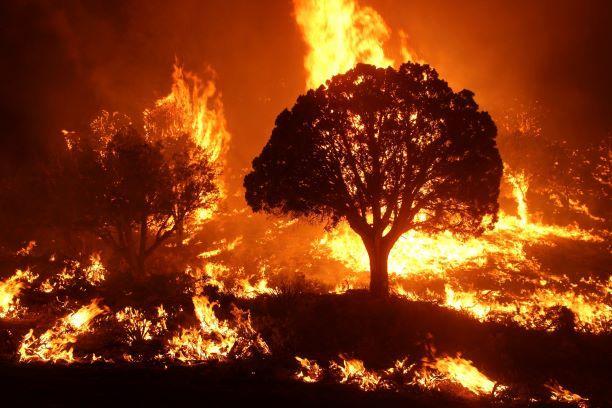
Hydroclimate whiplash, or rapid to and fro movement of climate from wet periods to dry periods and vice versa, is rising due to climate change. The swinging climate is a key culprit in the wildfires that have engulfed Los Angeles. Another example is that of California, which suffered from repeated droughts over the years, faced heavy precipitation in the winter of 2022-23. Mountains were buried in snow; erratic landslides caused trouble, and floods drowned valleys in snow melt and rain. This was followed by a record-hot summer and an arid start to the 2025 rainy season. Rampant wildfires have burned tinder-dry vegetation across the state.
The above scenario is the evidence of a hydroclimate whiplash, which has only gotten powerful due to global warming. Further warming will bring further rise in these events, said lead author Daniel Swain, a climate scientist with UCLA and UC Agriculture and Natural Resources. The whiplash has increased the risk of wildfires by increasing the growth of flammable grass and twigs while drying them out to exceptional levels during the fire season.
As for the statistics, hydroclimate whiplash has swelled from 31% to 66% since the mid-twentieth century. The world has already hit the borderline of a 1.5° C rise in average temperature hike, a limit set in the Paris Agreement. Anthropogenic climate change has sped up hydroclimate whiplash, which has made the atmosphere “sponge-like”—the growing ability of the atmosphere to evaporate, absorb, and release 7% more water for every degree Celsius of warming.
Previous studies of this climate whiplash considered the precipitation only. However, new studies have just started to incorporate the evaporative demands of a thirsty atmosphere which rapidly sucks up water from plants and soil, causing droughts which cannot be just defined as a simple lack of rainfall. Hydroclimate whiplash is projected to rise in areas like northern Africa, the Middle East, northern Eurasia, South Asia, tropical regions of the Pacific, and the Atlantic. The increase in whiplash directly indicates a global change in a warming Earth.
California is experiencing a high-warming scenario. This means that the state will experience an increase in its driest and wettest seasons in the coming days of this century.
Copyright @smorescience. All rights reserved. Do not copy, cite, publish, or distribute this content without permission.
SUBSCRIBE TO OUR NEWSLETTER
.......... ..........Subscribe to our mailing list to get updates to your email inbox.
Monthly Newsletter