Survival in nature is hard, and some organisms have evolved unusual strategies. Once such organism is the Theonella conica a sea sponge that inhabits the Red Sea and Indian Ocean. Researchers recently discovered this sponge’s ability to accumulate hazardous levels of molybdenum, a heavy metal, through its unique partnership with a bacteria.
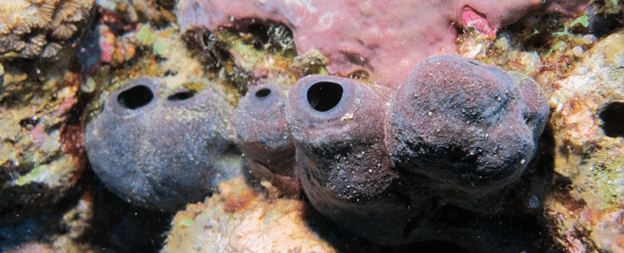
Theonella conica looks like a simple organism, with no organs or nervous system. Instead, it depends upon symbiotic relationships with other microorganisms such as bacteria, fungi, and algae. Approximately 40% of its body weight consists of these symbionts. Marine biologist Shani Shoham of Tel Aviv University set out to research the sponge’s composition after earlier studies indicated unusually high levels of molybdenum in them, a metal that is toxic at high concentrations. Shoham and her team aimed to investigate how the sponge could survive such a threatening accumulation.
Shoham’s study revealed that sponges collected from the Gulf of Eilat contained significant amounts of molybdenum—more than any other known organism. While molybdenum is essential in small amounts for breaking down toxins, the concentrations in T. conica should be fatal. The key to the sponge’s survival lies in one of its bacterial partners, Entotheonella sp., which helps detoxify the heavy metal.
Researchers found that Entotheonella sp. plays a critical role in the sponge’s ability to process molybdenum. This bacterium gathers and transforms the toxic molybdenum into safer compounds, such as calcium molybdate and sodium molybdate, allowing the sponge to store the metal without causing harm. The bacteria also seem to help the sponge with a defense mechanism by making it toxic to predators.
The findings open up exciting opportunities for environmental applications. Just as T. conica can detoxify molybdenum, related sponges have been found to neutralize high levels of arsenic and barium. These processes could be utilized to help fight issues like pollution. Further research into the detoxification abilities of these bacteria may help us with the resources to refine contaminated drinking water.
“Twenty to thirty years ago, researchers from our lab collected samples of a rare sponge called Theonella conica from the coral reef of Zanzibar in the Indian Ocean and found in them a high concentration of molybdenum,” says marine biologist Shani Shoham of Tel Aviv University.
“In my research, I wanted to test whether such high concentrations are also found in this sponge species in the Gulf of Eilat, where it grows at depths of more than 27 meters [88 feet]. Finding the sponge and analyzing its composition I discovered that it contained more molybdenum than any other organism on earth: 46,793 micrograms per gram of dry weight.”
The research team studied these sponges and their bacterial partners to explore their use for environmental cleanup. With millions of people worldwide affected by water pollution, understanding how these natural detoxifiers work could provide the most urgent solutions.
The unique relationship between Theonella conica and its bacterial symbionts showcases nature’s creativity for existence in this ecosystem. Further exploration of these sponges could reveal new ways to tackle environmental challenges, such as using nature’s detoxification methods to clean polluted water.
Copyright @smorescience. All rights reserved. Do not copy, cite, publish, or distribute this content without permission.
SUBSCRIBE TO OUR NEWSLETTER
.......... ..........Subscribe to our mailing list to get updates to your email inbox.
Monthly Newsletter