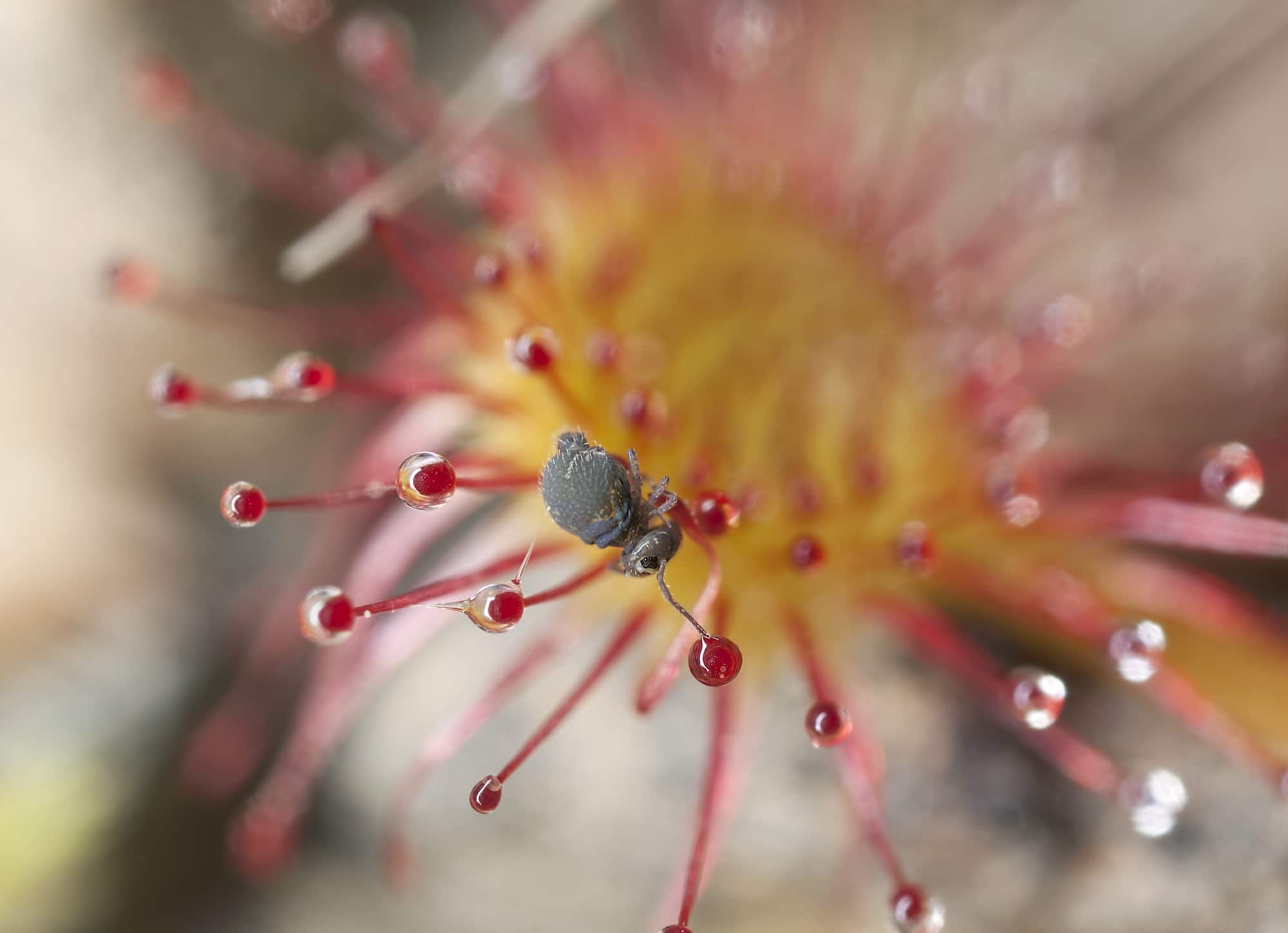
Insects that get trapped by sundew plants are pretty helpless. Adding an acid-loving fungus that helps the plant digest the insect faster is an overkill.
Sundews trap insects with the help of tentacle-like leaves that wrap around and cover unfortunate prey like flies with a sticky secretion called mucilage. The stuck prey is then digested by the plant with the help of enzymes that dissolve the bodies into nutrients that the plant then absorbs. As if this setup was not good enough already, the sundew plants find help from different organisms— a group of acid-loving fungi. The fungus, called Acrodontium crateriforme, acts as a booster of the digestion process. The fungus produces enzymes that make the leaf environment acidic, which helps the fungal enzymes mixed with mucilage work more effectively.
The organisms display a synergistic effect, in which both the fungi and the sundew plant benefit from digestion, which evolutionary biologist Isheng Jason Tsai has noted. Previously, bacteria have been found living in the mucilage of other carnivorous plants like pitcher plants and bladderworts. They have also been linked to better prey digestion in these plants. Tsai adds that this discovery opens up an avenue into the study of carnivorous plants and their potential microbial helpers.
The research team searched for microbes growing in the mucilage of spoon-leaved sundew found in Taiwan. A. crateriforme was the most abundant microbe found in the mucilage, making up 40 percent of the microbial genetic material found in the mucilage.
To test whether the microbe aids in digestion, the team sprinkled powdered ants to mimic prey capture. The time taken for digestion was 73 hours in sundew plants with the fungi, compared to 92 hours taken by sterile plants without the fungi.
The fungus has also been found in sundew plants in the United States and the United Kingdom. The fact that A. crateriforme lives in the mucilage of sundew plants across three continents suggests an ancient relationship between the two. This hints at the evolutionary ties of the fungi with insectivorous plants, a synergism that has escaped our notice for ages.
Copyright @smorescience. All rights reserved. Do not copy, cite, publish, or distribute this content without permission.
SUBSCRIBE TO OUR NEWSLETTER
.......... ..........Subscribe to our mailing list to get updates to your email inbox.
Monthly Newsletter