On Wednesday, Oct. 2, 2024, a spectacular annular solar eclipse captivated observers as the Moon obscured the Sun to create a awe-inspiring “Ring of Fire” effect. Skywatchers gathered in the remote Easter Islands to observe the annual solar eclipse from 11:15 a.m. EDT.
The brilliant ring light overwhelmed astrophotographers who captured the event for six breathtaking minutes. On this, Josh Drury, an astrophotographer, said that a lifelong ambition is nearly complete. Other photographers also felt overwhelmed after experiencing the eclipse.
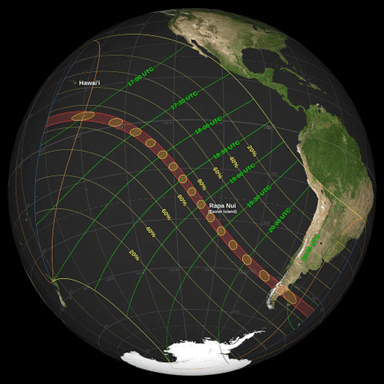
The eclipse’s path stretched across a wide geographical range, including Cochrane in Chile, Puerto Deseado, Puerto San Julian in Argentina, Hawaii, Southern Chile, North and South America, New Zealand and Antarctica across the Pacific and Atlantic oceans.
A global map shows the path of the Oct. 2, 2024, annular solar eclipse. NASA's Scientific Visualization Studio
Depending on the location, the view of the eclipse varied- off the coast of Argentina observer saw that the Moon covered 85% of the Sun. In Brazil, viewers only saw 10% of the Sun obscured by the Moon.
How Annular Solar Eclipses are different from Total Solar Eclipses
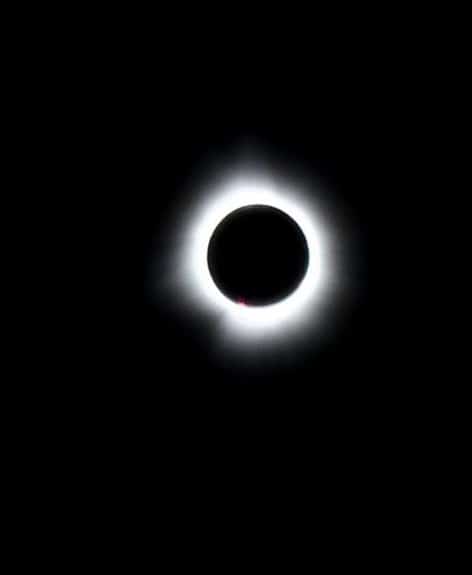
Total Solar Eclipse, Credit: Maxwell Fury, Pexels
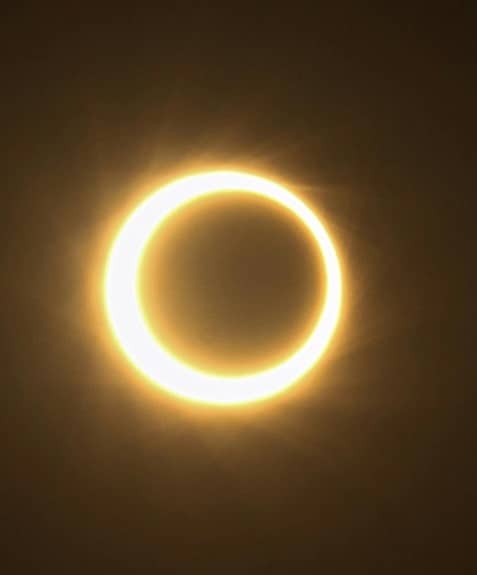
Annular Solar Eclipse, Credit: Thiago Japyassu, Pexels
Annular solar eclipses are not the same as total solar eclipse. And this has to do with the Moon’s orbit around Earth which is not entirely circular. During an annular solar eclipse, the Moon is near its apogee- the farthest point from Earth. At this distance, the Moon appears smaller in the sky and cannot completely cover the solar disk. So as the Moon moves in front of the Sun it creates a bright ring of sunlight around the lunar boundary called the ‘Ring of Fire’.
Drury who captured the annular eclipse near Easter Island’s iconic maoi statues noted that it would be another 312 years before the island would see another celestial event like this.
Copyright @smorescience. All rights reserved. Do not copy, cite, publish, or distribute this content without permission.
Join 20,000+ parents and educators
To get the FREE science newsletter in your inbox!
SUBSCRIBE TO OUR NEWSLETTER
.......... ..........
Subscribe to our mailing list to get updates to your email inbox.