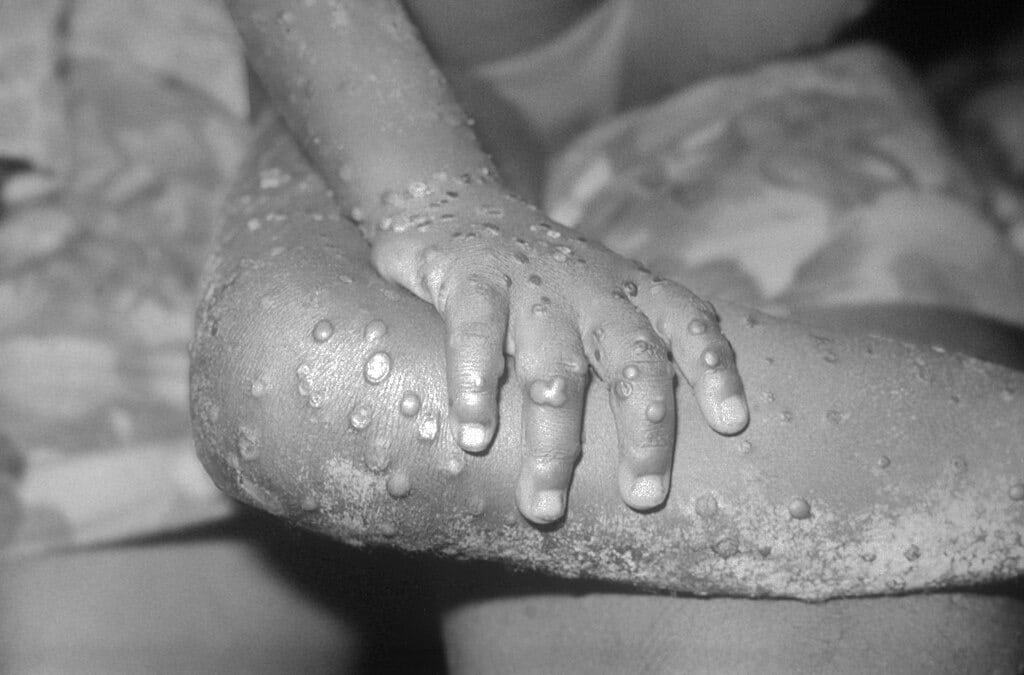
After being declared a global health emergency in 2022, mpox, formerly monkeypox, has been declared a global health emergency for the second time by WHO. Mpox is a viral disease with symptoms ranging from fevers and rashes to muscle aches.
Why is mpox a global health emergency
In 2022, mpox spread across European countries, with cases skyrocketing in Germany, the United Kingdom, Spain, etc. Cases shot up in the United States of America, with over 30,000 confirmed cases, with sporadic cases still being reported. The emergency ended in 2023 despite a rise in mpox cases in Congo.
This time, mpox cases have significantly surged in thirteen African countries, with over 15,000 cases and 537 deaths across Africa this year alone. Children and immunocompromised people (like people who have HIV) have been especially struck. Countries like Rwanda, Burundi, Kenya, and Uganda have reported their first cases of mpox. On 13th August, the Africa Centers for Disease Control and Prevention declared mpox a public health emergency across Africa, a first for the organization. Following this, WHO Director-General Tedros Adhanom Ghebreyesus declared it a global health emergency, emphasizing that an international response is needed to stop the disease from spreading further and outside Africa.
What makes mpox more dangerous this time
The previous mpox outbreak was caused by a variant of the mpox virus called clade ll. The outbreak usually affected men who had sex with other men. However, the disease spread through contact and fomites as well.
This time, a new variant of the virus called clade lb has made headlines. Not only does this variant cause more severe disease, but it also has higher transmissibility. One of the stark contrasts with clade ll is that the disease can spread through heterosexual sex. According to Ogoina, an infectious disease physician, mpox can become a problem for pregnant women, risking the health of the mother and the baby alike.
What is the current strategy against mpox
After declaring the emergency, vaccines and treatments will be administered to vulnerable people across the African continent. Supplies of vaccines are limited, and the full range of outbreaks is not yet known. Currently, WHO has allotted $15 million to pay for countermeasures. On the other hand, Japan has stepped up to offer their vaccines from the stockpile.
The outbreak is far from fading away, and a lack of ample knowledge of the virus is a significant setback. On the positive side, WHO has quickly recognized the global threat of mpox, declaring it a global health emergency. A lack of concern in the last outbreak resulted in a worldwide spread in 2022; hence, being vigilant has already put us on the safer side.
Copyright @smorescience. All rights reserved. Do not copy, cite, publish, or distribute this content without permission.
SUBSCRIBE TO OUR NEWSLETTER
.......... ..........Subscribe to our mailing list to get updates to your email inbox.
Monthly Newsletter