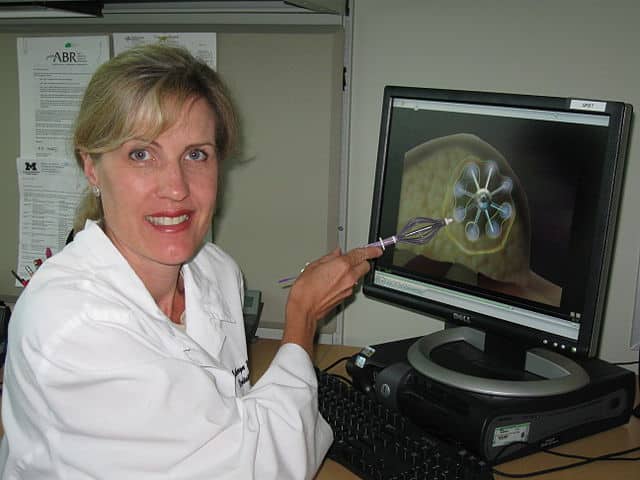
In the simplest terms, physics in medicine, or medical physics, is the application of physics to medicine for diagnosing, preventing, and treating diseases.
Medical physics may not be a career choice you hear about every day, but its impact is profound, especially in cancer treatment. A prime example was the year 2022, when the world saw 20 million new cancer diagnoses. It was estimated that nearly 10 million patients may have needed radiotherapy (a field standing on the shoulders of medical physics!) at a 50% utilization rate, or 12.8 million patients at a 64% rate.
By 2050, forecasts indicate that 16.5 to 21.2 million patients may require radiotherapy, based on the same utilization rates. This growing demand points to a promising future for medical physics and a booming arena for aspiring medical physicists.
What’s even more interesting is that physics in medicine goes beyond radiotherapy. It extends to diagnostic radiology, nuclear medicine, and much more. Let’s explore further.
A Medical Linear Accelerator for radiation treatments. Credit: Wikimedia Commons/YuddiW
How is Physics Used in Medicine?
Medical physics is behind many technologies and treatments that help diagnose and treat diseases. The roles of physics in medicine are broad, but some of the most well-known include:
Imaging Techniques: Medical physicists use technologies such as X-rays, CT scans, and MRIs to create images of the inside of the body. These images are important for diagnosing everything from broken bones to cancer.
Radiotherapy: As mentioned earlier, physics is fundamental in radiotherapy, where controlled doses of radiation are used to target and treat cancerous cells. Advanced techniques like proton therapy, which uses charged particles to treat cancer, are examples of physics-powered innovations in healthcare.
Nuclear Medicine: Nuclear medicine uses tiny amounts of radioactive materials to diagnose and treat diseases. Physics plays a key role in ensuring these substances are used safely and effectively, especially in advanced imaging techniques like PET scans.
In modern medicine, physics has also found its applications in ultrasound technology and medical equipment development. Physics helps improve ultrasound scans by using sound waves to get clear images of the body. It also plays a role in designing medical devices like pacemakers and ventilators.
Aspect
Details
Education
MS or PhD in medical physics or a related field
Training
Clinical physicists require a CAMPEP-accredited residency and board certification. Academic physicists often complete postdoctoral training.
Salary
Entry-level: $80K-$130K; Mid-career: $180K-$250K
Work Sectors
Academia, industry, clinical settings, government, and private practice
Career Outlook
High demand due to advancements in medical technology and treatments
Table 1: Medical Physics: Career at a Glance
Medical Physics as a Career Field
Medical physics can be a fascinating career for someone who wants to contribute to diverse domains within healthcare and technology. Depending on their interests and specialization, medical physicists can opt for:
1. Clinical Roles
Designing and optimizing radiation treatments for cancer patients
Performing quality assurance on diagnostic and therapeutic equipment like MRIs, CT scanners, and linear accelerators
Ensuring patient and staff safety during radiation procedures
Collaborating with physicians to develop treatment plans
2. Research and Innovation
Developing next-generation imaging and treatment technologies
Studying the biological effects of radiation to improve therapeutic outcomes
Conducting clinical trials for new devices or methods
3. Education and Training
Teaching medical students, residents, and other healthcare professionals
Supervising research projects and residency programs
A radiation therapist prepares a patient for radiation treatment using the "TomoTherapy" machine. Color Source: National Cancer Institute (NCI)/Author: Rhoda Baer (Photographer)
Career Opportunities and Sectors
Medical physicists have the flexibility to work in diverse settings:
Clinical Practice
The largest sector, where professionals work directly with patients and healthcare teams to deliver safe and effective treatments
Academia
Academic roles in medical physics encompass teaching and mentoring students while conducting research. They also involve the development of innovative diagnostic and therapeutic technologies.
Industry
Medical device companies employ physicists to design, test, and market advanced medical technologies.
Government and Regulatory Bodies
Roles in policy development, radiation safety, and compliance with regulatory standards
Product development, R&D, and technical consulting
Government Agencies
Radiation safety, regulatory compliance, public health policy
Table 2: Medical Physicists: Places of Employment and Roles
A Medical Physicist is preparing to run some tests on a mini C-arm fluoro machine. Credit: Wikimedia Commons/Nightryder84
Salary Range
Medical physicists earn competitive salaries because of their specialized skills and the high demand for their services in healthcare.
Starting salaries for medical physicists typically range from $80,000 to $130,000, with mid-career professionals earning between $180,000 and $250,000, according to the American Physical Society (APS).
Salaries can vary significantly based on the type of work and level of experience. For example, in the United States, a Postdoctoral Fellow can earn around $61,298 per year, while a Nuclear Medicine Technologist can earn up to $139,885 per year. This shows that medical physics jobs requiring more specialization and technical skills tend to offer higher salaries.
Medical Physics Jobs
Average Base Salaries (per year)
Radiation Therapist
$132,046
Nuclear Medicine Technologist
$139,885
Scientist
$98,043
Medical Technologist
$64,544
Auditor
$65,290
Research Associate
$66,793
Clinical Laboratory Scientist
$95,844
Postdoctoral Fellow
$61,298
Medical Physics Faculty
$67,571
Table 3: Medical Physics Degree Jobs and National Average Salaries in the United States. Source: indeed.com
INFIERI is a multi-national and inter-disciplinary ITN project to train young physicists and engineers in the new domain of intelligent devices and tools for frontier applications in Astrophysics, Particle and Medical Physics, and Telecommunications. Credit: Wikimedia Commons/Sturm
Educational Pathway
Degrees and Training
To become a medical physicist, you typically need:
Bachelor’s Degree: Physics or related discipline
Master’s/PhD: Graduate training in medical physics, often from CAMPEP (Commission on Accreditation of Medical Physics Educational Programs)-accredited programs
Residency: A two-year clinical residency for hands-on experience
Certification
Board certification is essential for clinical roles in the United States and Canada. Common certifying bodies include:
American Board of Radiology (ABR)
American Board of Medical Physics (ABMP)
Canadian College of Physicists in Medicine (CCPM)
Career Trajectories
Medical physics offers several rewarding career paths, each brimming with growth potential for personal and professional advancement.
Clinical Path
Entry-Level: Junior medical physicist
Mid-Career: Senior physicist with leadership responsibilities
Postdoctoral fellowships often lead to positions like assistant professor
With experience, one can advance to associate professor, professor, or even department chair
Industry Path
Starting as a researcher, medical physicists can progress to product managers or technical directors
Opportunities in entrepreneurship or consultancy are also common
Other Career Paths
Roles like research journal editor, science writer, or positions in non-profits like the National Foundation for Cancer Research are also open for medical physicists.
Due to their overlapping skills needed, medical physicists can easily switch between academia, industry, and clinical roles.
Photo of a SAVI breast brachytherapy device. Credit: Wikimedia Commons/Cianna Medical, Inc.
Is Medical Physics the Right Career for You, and What Are the Skills You Need to Thrive in One?
Medical physics ticks the boxes for a fulfilling and dynamic career. However, it is important to consider whether it aligns with your interests, skills, and long-term goals. If you are into science, especially physics, and enjoy working with technology to help improve patient care, then medical physics could be a great career for you.
You must also be detail-oriented, since accuracy is the key to ensuring patient safety and treatment effectiveness. To succeed in physics in medicine careers, here are some of the key skills you might want to work on:
Skill
Why it is Important
Physics Knowledge
A strong foundation in various physics principles is needed, as medical physicists apply these principles to improve medical treatments and diagnostics.
Technical Skills
You will work with high-tech machines, so knowing how to operate and maintain them is essential.
Attention to Detail
Small mistakes in radiation treatment can be dangerous, so being detail-oriented is crucial.
Communication Skills
You may need to clearly explain technical concepts to doctors, nurses, and patients, ensuring everyone understands treatment plans and procedures.
Problem-Solving Skills
You might face unexpected issues with machines or treatment plans and need to find solutions.
Table 4: Medical Physicists: Places of Employment and Roles
Being a team player is also an important skill in a medical physics job. As one Medical Physicist from Tata Memorial Hospital shares: “In the Medical Physics job role, we work as a team with a variety of professionals including doctors, technologists, etc., so one should be comfortable with teamwork. Even though work will be mainly focused on the physics aspect of patient care, a good understanding of biology and anatomy is required. Also, as oncology is an ever-evolving field, one should be ready for constant learning and upskilling.”
There is no denying that medical physics is a rewarding career option, but it is also important to be aware of the pressures that come with the job. A medical physicist from Pt. Jawahar Lal Nehru Memorial Medical College explains: “Working in medical physics, especially in radiation oncology, can be pretty stressful. It’s a high-pressure environment where even small mistakes can lead to serious consequences for patients. Plus, job opportunities are often found in bigger hospitals or research centres, so you might have to relocate if you want to advance in the field.”
Overall, a medical physics job comes with both challenges and opportunities. It is an exciting career for those who not only love science and technology but are also ready to embrace both the learning curve and the responsibility that comes with it.