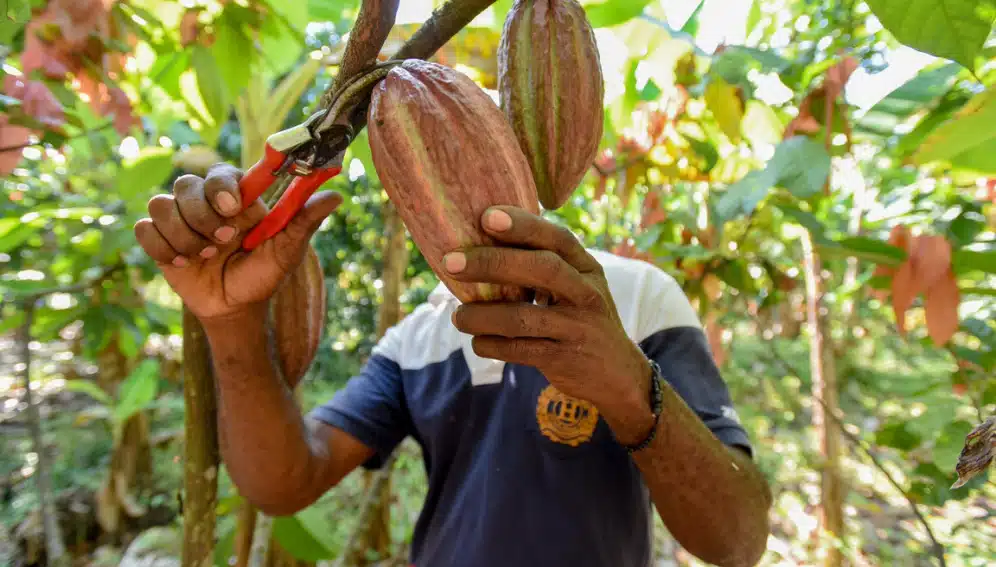
Nearly 6 million smallholder farmers cultivate cocoa globally, but another 40 to 50 million people depend indirectly on the crop’s yields Copyright: Alliance of Bioversity International and CIAT/Flickr, Creative Commons CC BY-NC-SA 2.0 Deed
Chocolate is one of the world’s favorite treats, but did you know that extreme rainfall could threaten the cocoa trees that produce it? New research suggests that heavy rain can damage cocoa crops and reduce harvests, creating challenges for farmers in tropical regions.
Why Is Heavy Rain a Problem for Cocoa Trees?
Cocoa trees, scientifically known as Theobroma cacao, grow in warm, humid tropical regions. Their seeds are used to make chocolate. Although these trees need water to grow, too much rain at the wrong time can damage their flowers and young fruits, which are called pods.
Researchers studying cocoa production in Ghana, Ecuador, and Indonesia found that extreme rainfall can be a major climate-related threat to cocoa harvests. The findings suggest that the timing and intensity of rainfall may matter more than average temperatures or typical water availability.
Three Ways Extreme Rainfall Damages Cocoa Crops
1. Heavy Rain Can Damage Flowers
Cocoa trees depend on their flowers to produce pods. Intense rain and strong winds can damage delicate flowers and young pods before they have a chance to develop. If fewer flowers survive, fewer cocoa pods may grow, reducing the eventual harvest.
2. Rain Can Disrupt Pollination
Many cocoa flowers rely on tiny insects, including small flies called midges, for pollination. Pollination happens when pollen reaches the appropriate part of a flower, allowing it to develop into a fruit.
Heavy rainfall can interfere with insect activity and make pollination more difficult. When fewer flowers are successfully pollinated, the tree may produce fewer pods.
3. Wet Conditions Encourage Plant Diseases
Persistent wet weather can create favorable conditions for fungal diseases. One serious problem is black pod disease, which damages cocoa pods and can destroy part of a harvest.
Rain can help fungal spores spread between plants and pods. When moisture remains high for long periods, infections may become more difficult for farmers to control.
How Does El Niño Affect Cocoa Production?
El Niño is a natural climate pattern that changes ocean temperatures in the Pacific Ocean and influences weather in many parts of the world. Its effects vary by region.
During El Niño events, some cocoa-growing areas may experience unusually dry conditions, while others may receive exceptionally heavy rainfall. These changes can affect flowering, pod development, and the timing of harvests.
Researchers believe that understanding large-scale climate patterns could help farmers anticipate dangerous weather conditions. Forecasts may provide useful warnings before heavy rainfall damages vulnerable cocoa crops.
Can Farmers Protect Cocoa Trees?
Farmers cannot control the weather, but they can take steps to reduce some of its effects.
- Improve drainage: Channels can help excess water flow away from fields that are prone to flooding.
- Prune trees carefully: Removing diseased or unnecessary plant growth can improve farm management and help reduce disease problems.
- Monitor fungal diseases: Regular inspections can help farmers identify infections and respond promptly.
- Use weather forecasts: Early warnings can help farmers prepare drainage systems and plan farm maintenance before severe rain arrives.
- Protect soil and trees: Suitable shade, healthy soil, and good farming practices can improve the resilience of cocoa farms.
Not every cocoa farm responds to heavy rainfall in the same way. Soil conditions, drainage, tree varieties, shade, and farm management can all influence how much damage occurs.
What Does This Mean for the Future of Chocolate?
Cocoa supports the livelihoods of millions of smallholder farmers around the world. When harvests decline, farmers can lose income, and cocoa supplies may become more difficult to maintain.
Climate change is expected to intensify many heavy rainfall events, although the effects will vary across regions. Scientists are investigating how better climate forecasts could help farmers prepare for extreme weather and protect their crops.
The research highlights an important lesson: climate change is not only about rising temperatures or droughts. The timing, duration, and intensity of rainfall can also affect the plants that provide our food.
Did You Know?
Cocoa trees can produce flowers and fruits at different stages of their lives. A single tree may carry flowers and developing pods at the same time, making the timing of weather events particularly important for a successful harvest.
Test Your Knowledge
1. What is one way extreme rainfall can damage cocoa crops?
- A. It makes cocoa seeds grow instantly.
- B. It damages flowers and young pods.
- C. It prevents all insects from existing.
- D. It turns cocoa trees into desert plants.
Answer: B. It damages flowers and young pods.
2. What is black pod disease?
- A. A fungal disease that damages cocoa pods.
- B. A type of cocoa fertilizer.
- C. A weather forecasting tool.
- D. A species of pollinating insect.
Answer: A. A fungal disease that damages cocoa pods.
Learn More
Read the original report from SciDev.Net about extreme rainfall and cocoa yields.
You can also explore the scientific study published in the journal Proceedings of the National Academy of Sciences (PNAS).
“`