Some early relatives of four-limbed animals had necks but could barely move their heads. A team led by Dana Korneisel used living fish and fossil measurements to test how these ancient necks worked. Their results challenge a familiar idea about why necks first evolved.
A neck without much freedom
A neck seems like an obvious tool for looking around. Separating the head from the shoulders should let an animal look for food without moving its whole body.
That idea helped explain a major change in our distant ancestors. As fish gave rise to four-limbed animals, the skull and shoulders became separate. A distinct neck region appeared between them.
But a gap between bones does not tell us how freely an animal could move. The tissues inside that gap matter, too.
These ancient animals had an unusual backbone. Much of it consisted of a long rod of tissue called the notochord. Small skeletal parts surrounded it.
Living fish help test an ancient idea
The missing soft tissues posed a problem: fossils could not reveal their stiffness. So the team turned to sturgeon, living fish with a similar type of backbone.
The researchers bent and twisted sturgeon backbones in a testing machine. They used those measurements, along with fossil dimensions, to model movement in six extinct animals.
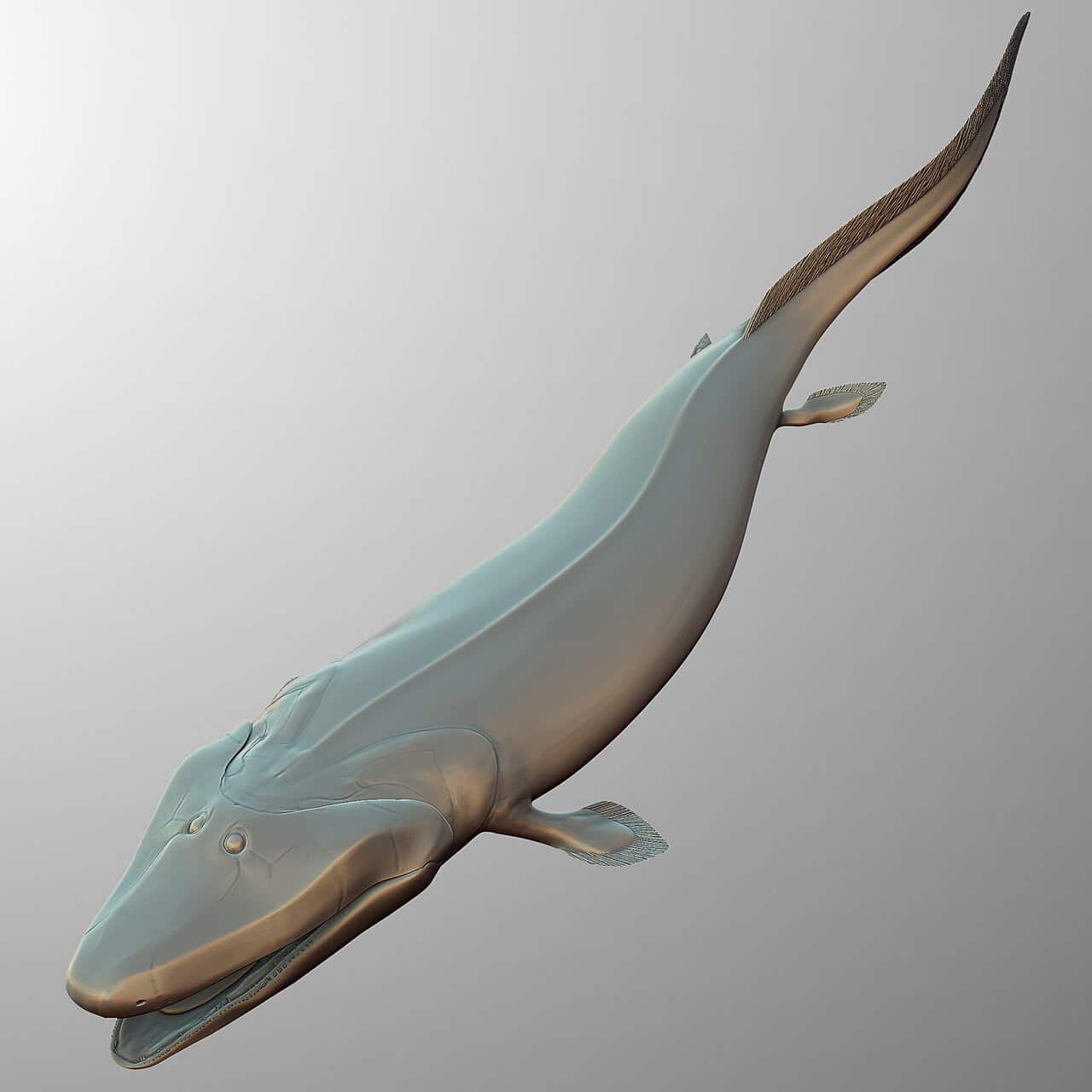
The models suggested that most had very limited neck movement. Tiktaalik, a fish closely related to four-limbed animals, could bend its neck sideways by about 5.5 degrees.
There was an exception. Whatcheeria had a longer neck and much more room for sideways bending. Early necks did not all work the same way.
The central result was that separating the head and shoulders did not bring a clear jump in neck mobility. The researchers suggest that changes linked to front-limb movement offer a better explanation for that separation.
Why this discovery matters
This study changes how scientists read a familiar fossil feature. An animal could have a distinct neck without gaining much freedom to turn its head. Flexible necks appear to have become useful later.
What scientists still do not know
The models estimate movement but they do not show an ancient animal being able to move. They also use living sturgeon as a stand-in for tissues that vanished long ago.
Muscles, skin and other surrounding structures could have limited movement further. The method also cannot directly test animals whose backbones had a different structure.
Exactly when greater neck movement evolved remains an open question.
References
Copyright @smorescience. All rights reserved. Do not copy, cite, publish, or distribute this content without permission.
SUBSCRIBE TO OUR NEWSLETTER
.......... ..........Subscribe to our mailing list to get updates to your email inbox.
Monthly Newsletter