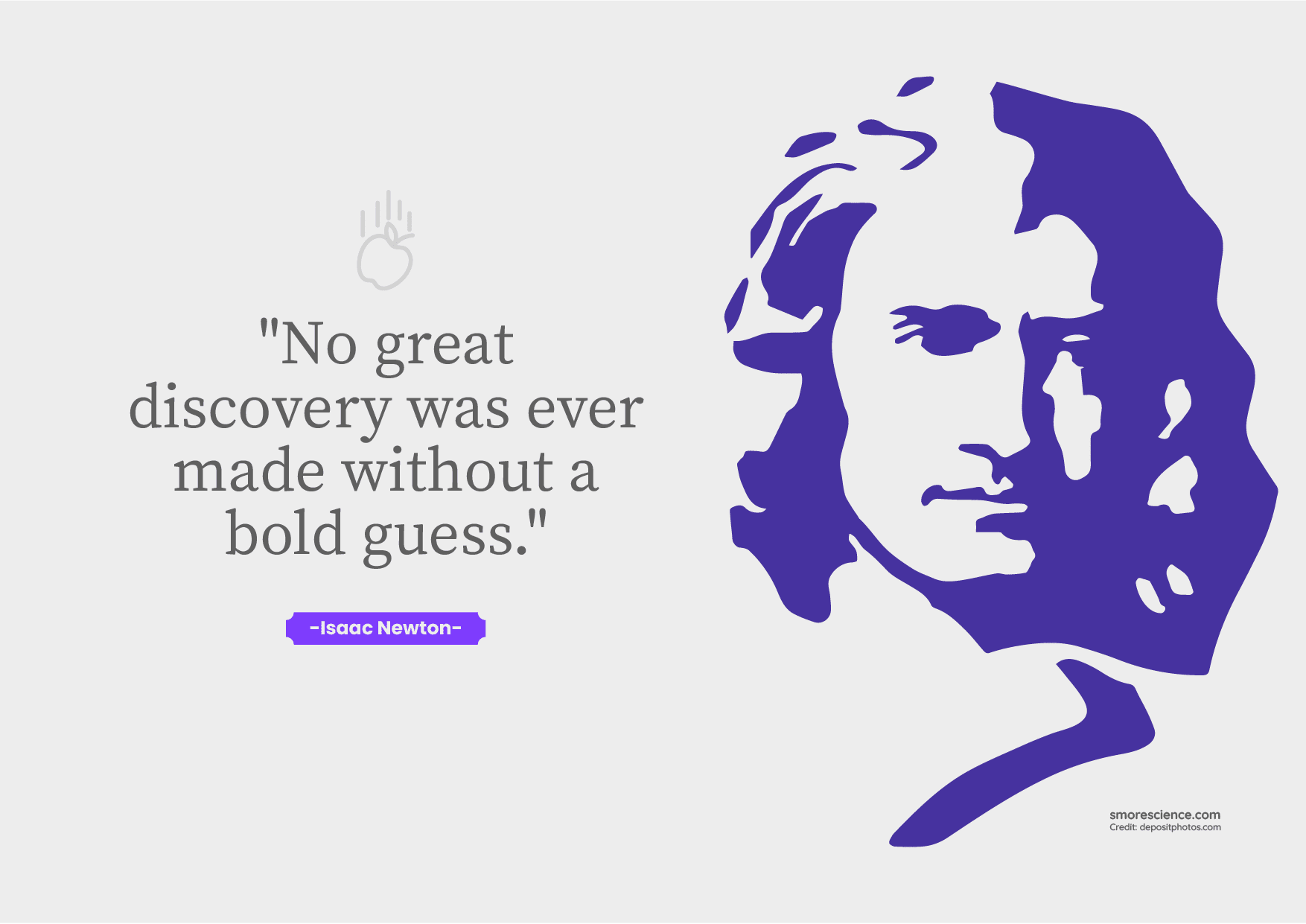
Newton is renowned for his profound and insightful quotes that capture his scientific genius and philosophical worldview. Some of the famous Isaac Newton quotes include:
1. "What we know is a drop, what we don't know is an ocean."
2. "If I have seen further it is by standing on the shoulders of giants."
3. "For every action, there is an equal and opposite reaction."
4. "Nature is pleased with simplicity."
5. "I can calculate the motion of heavenly bodies but not the madness of people."
6. "Tact is the knack of making a point without making an enemy."
7. "Gravity explains the motions of the planets, but it cannot explain who sets the planets in motion."
8. "Truth is ever to be found in the simplicity, and not in the multiplicity and confusion of things."
Isaac Newton is a name that has become synonymous with scientific genius and groundbreaking discoveries. As one of the most influential figures in the history of science, Newton’s contributions have had a profound and lasting impact on our understanding of the natural world. In this article, we’ll delve into the life and work of this remarkable individual, exploring the key insights and innovations that have cemented his place in the pantheon of scientific greats.
Born in 1642 in Woolsthorpe Manor, Lincolnshire, England, Newton’s early life was marked by a tumultuous upbringing. His father, also named Isaac Newton, passed away before he was born, and his mother, Hannah Ayscough, remarried shortly after his birth, leaving him in the care of his grandparents. Despite these challenges, Newton’s innate curiosity and intellectual prowess began to shine through at a young age.After attending the King’s School in Grantham, Newton enrolled at the University of Cambridge in 1661, where he would go on to make some of his most groundbreaking discoveries. During his time at Cambridge, Newton immersed himself in the study of mathematics, optics, and natural philosophy, laying the foundations for his future achievements.
Newton’s most famous contribution to science is undoubtedly his formulation of the three laws of motion, which laid the groundwork for classical mechanics. These laws, which describe the relationship between an object’s motion and the forces acting upon it, have become the cornerstone of our understanding of the physical world.In addition to his work on mechanics, Newton also made significant contributions to the field of optics. His experiments with the nature of light and color led to the development of the reflecting telescope, a revolutionary instrument that allowed for more precise observations of celestial bodies.Perhaps Newton’s most famous work, however, is his theory of universal gravitation. Developed in the late 17th century, this theory explained the motion of the planets and the force that keeps them in their orbits around the sun. This groundbreaking insight not only revolutionized our understanding of the cosmos but also laid the foundation for future advancements in astronomy and astrophysics.
Copyright @smorescience. All rights reserved. Do not copy, cite, publish, or distribute this content without permission.
Join 20,000+ parents and educators
To get the FREE science newsletter in your inbox!
SUBSCRIBE TO OUR NEWSLETTER
.......... ..........
Subscribe to our mailing list to get updates to your email inbox.