We have turned a set of symbols and signs into a language to help us explain nature. Just look at the golden ratio of 1.618304, maintained to make aesthetically pleasing structures. We have learned to create complex shapes with a ruler and compass in geometry. We can portion the big into small parts and join the small into a big portion using calculus. We have answered problems in science and commerce with math. But how did we get here, and who took us to this place? Let’s inspire ourselves with the works of five famous mathematicians who designed the language of mathematics.
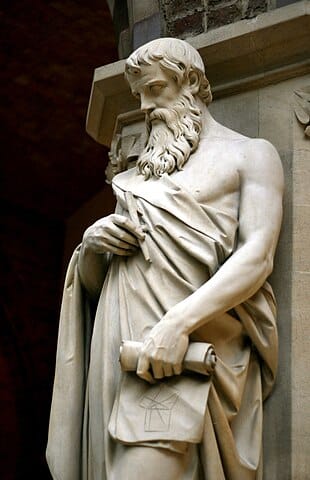
Euclid (325BC-265BC)
Euclid Statue. Credits: Wikimedia/Mark A. Wilson
Euclid was one of the greatest mathematicians of his era, if not the best. Euclidean geometry was the gold standard in mathematics until the 19th century. His works, primarily found in The Elements, are listed below:
Axiomatic system of proof
Euclid discovered the importance of statements that are assumed to be true, called axioms. For example, every event has a cause is an axiom. You cannot simply have a way to prove this fundamental fact apart from just seeing it happen in this manner. Similarly, Euclid laid down ten axioms that are assumed to be true. It is on these axioms that we base a lot of arguments on mathematical and geometric proofs. An example of his axiom is: A line can be drawn between any two points.
Contribution to number theory and geometry
Euclid defined terms like point, unity, prime, line, etc. These definitions gave a clear picture of what the person was working on and the features of the shape or structure.
The definitions also helped prove theories like there are an infinite number of primes. He also developed the concept of geometric progression. (e.g.: 2(21),4(22),8(23),16(24),…).
Euclid also worked on 3-dimensional figures, in Greek,
The Golden Section
Euclid found out that if a line segment is divided into a short portion S and an extended portion L, then if;
L/S = (L+S)/L, the structure will be aesthetically pleasing. Later on, the golden section became the golden ratio of 1.618304.
Aryabhata (476CE-550CE)
Aryabhata. Credits: Wikimedia/1940368 Hemateja
Aryabhata is one of the first mathematicians to use math in astronomy. His contribution is so outstanding that the first satellite India launched was named after Aryabhata. His contributions to the field of math are:
Discovery of zero
The value of nothing is far more critical than was realized. Aryabhata developed the decimal and place value systems, both of which recognized the importance of zero. And with the discovery of zero, we actually invented the wheel of mathematics, the number that kept math moving on the right track.
Calculation of pi
“Add four to 100, multiply by eight, and then add 62,000. By this rule, the circumference of a circle with a diameter of 20,000 can be approached.”
These were the exact words in Aryabhata’s Ganita or mathematical statement. The approximate value came up to 3.1416, close to the current value of 3.14159. Pi was rediscovered in the 1700s, but without Aryabhata’s work, we would have been dealing with problems in making wheels, mills, and all sorts of circular stuff.
Contribution to algebra
Aryabhata is known as the “Father of Algebra” due to his genius use of algebra in planetary systems. He was the first to explore the integer solutions to the equation forms by =ax+c and by =ax-c.
Sir Isaac Newton (1643-1727)
Sir Isaac Newton (1643-1727). Credits: Wikimedia/Godfrey Kneller
It wasn’t just the apple that boggled Sir Isaac Newton’s amazing mind. Besides the laws of gravity and motion, Newton played a major role in further pushing math’s boundaries. His best contributions are:
The invention of calculus
Newton invented calculus, a very cool branch of mathematics. Suppose you were to fill a pool with sand. The challenge begins immediately: You need to calculate the pool’s volume by adding the volumes of individual grains of sand. Not that easy, right? Well, Newton has a solution for you. Calculus can help add extremely tiny portions (the volume of a sand grain) into a big portion (the volume of a pool) in a few steps only. Bonus: You can do just the opposite and divide the volume of the pool into that of a grain of sand.
The invention of the binomial theorem
(a+b)2 = a2 + b2+ 2ab
(a+b)3 = a3+ b3 + 3ab2 + 3a2b
(a+b)12 … Yeah, this is where it goes crazy. Newton solved this problem by introducing the binomial theorem. The formula is:
(a+b)n= ∑nr=0nCr an-rbr
nCr is the binomial coefficient. And how do you solve for nCr? Here’s a cool triangle to help you out:
Credits: Mathigon
Note the pattern here. Let’s see again:
You can work your way up this triangle, called the Pascal triangle, up to 12 and fill in the values of x.
Imagine this formula on larger numbers. You are getting a head start, all thanks to Sir Isaac Newton.
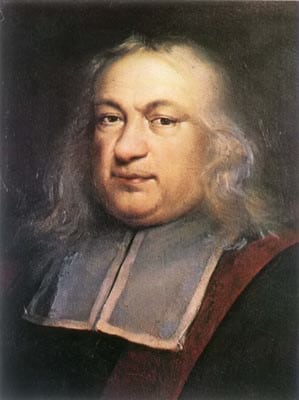
Pierre de Fermat (1601-1665)
Pierre de Fermat. Credits: Wikimedia
Pierre de Fermat is referred to as the father of modern number theory, and rightly so. He has touched on geometry and calculus and worked on theories of probability. His works are:
Discovery of analytical geometry
The study of geometry drawn on a graph is known as analytical geometry. An arc or line drawn on a graph can be used in analytical geometry, and a square or circle drawn on a graph can also be a part of it. The trajectory of a rocket, which is an arc, has analytical geometry, too—all thanks to Pierre de Fermat.
Discovery of differential calculus
Pierre de Fermat developed the math of rate of change. Differential calculus compares the rate of change of one quantity to another. Newton used this field of math to prove his concepts on the laws of motion.
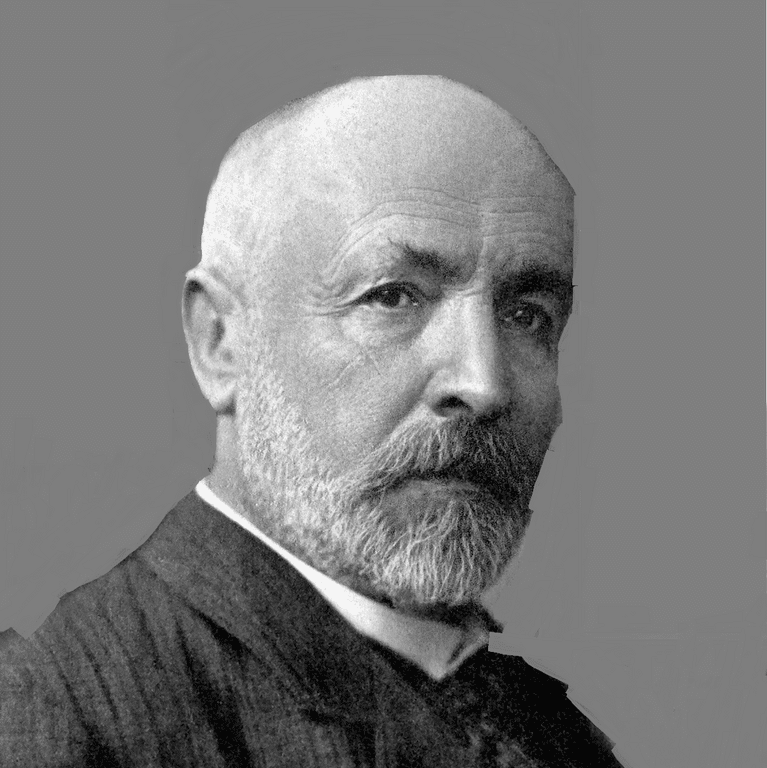
Georg Cantor (1845-1918)
Georg Cantor. Credits: Wikimedia/Sreyansu tm
Georg Cantor had the most audacious proof for the world. We still struggle to define infinity, yet Cantor found a way to give some perspective to how we see it. His works include:
Invented the set theory
All cats are animals, but some animals are cats.
Explore this statement carefully. All cats (house cats, lions, tigers) form a set of cats and are also mammals. However, not all mammals are cats; some might be different types of dogs, fish, and birds. Thus, all cats form a set of cats, but it falls under the set of animals, which has multiple sets of animals like fish and dogs. This might not seem like much, but grouping numbers is a major data-maintaining tool in mathematics, and Georg Cantor made it happen.
Concept of countable and uncountable infinities
Infinity cannot be counted, or so the thought went. Naturally, when Cantor proved otherwise, he met with much resistance. However, a quick proof called Cantor’s diagonal argument did the trick. According to the argument, more real numbers (basically decimal numbers in this case) are between 0 and 1 than integers. Thus, even if extended infinitely, the number of real numbers will at least always be one more than the number of integers, making it uncountable. Integers form countable infinity because their number can always be assigned as one less than the total number of real numbers between 0 and 1.
Here’s a link to the explanation of Georg Cantor’s argument:
Copyright @smorescience. All rights reserved. Do not copy, cite, publish, or distribute this content without permission.
Join 20,000+ parents and educators
To get the FREE science newsletter in your inbox!
SUBSCRIBE TO OUR NEWSLETTER
.......... ..........
Subscribe to our mailing list to get updates to your email inbox.