Table of Contents
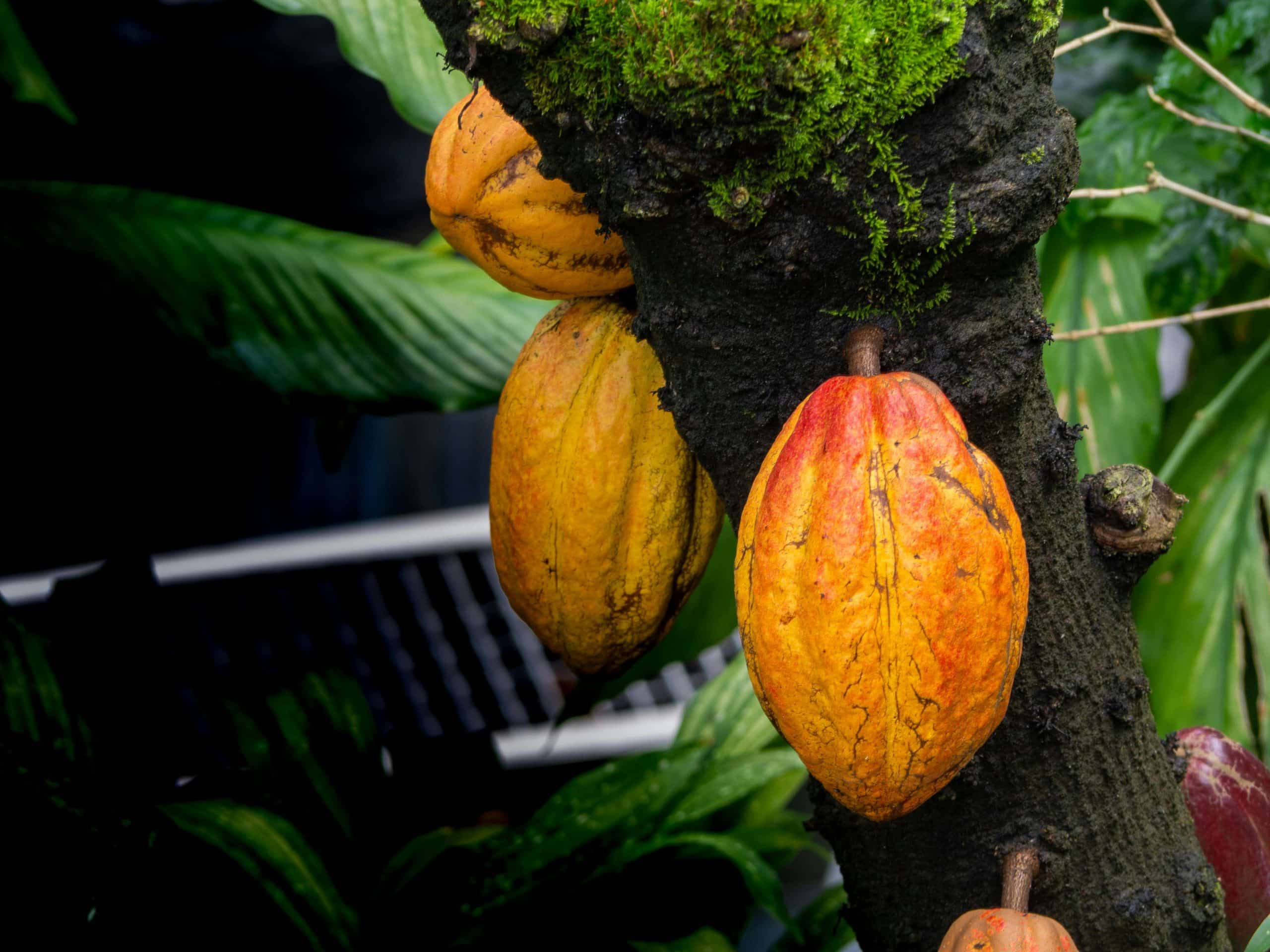
Fruits are the sweet or sour, fleshy products on trees and plants that contain seeds and can be consumed as food. Fruits are important sources of vitamins and minerals . According to biologists, fruits are actually the ripened female reproductive part (called the ovary ) along with its components.
How exactly are fruits formed? Let’s learn about the formation of fruits! Then, let us take a closer look at how bananas grow!
How Are Most Fruits Formed?
All the plants and trees around us may be divided into two groups: flowering and non-flowering. Flowers are not just attractive to the eye, but also play an important role in the life cycle of such plants and trees.
Flowers contain the male ( stamen ) and female ( carpel ) reproductive organs of the plant. The female reproductive organ, known as the carpel, is at the center of the flower and has three parts: the ovary, the style , and the stigma . The male reproductive organ (stamen) consists of two parts: the anther , and the filament .
The carpel (including the ovary, the style, and the stigma) plays a role in the development of a fruit. The ovary protects the ovules (or immature seeds) and maintains an environment for the ovules to mature into seeds. The anthers (male reproductive organs) make pollen.
In order to develop into a fruit, the carpel must first receive pollen grains. This process is known as fertilization , and fruit development begins. Thus, a fruit is eventually formed with seeds inside it.
What About Seedless Fruits?
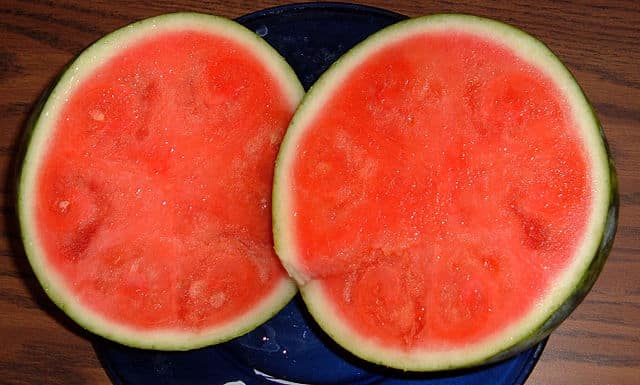
Apart from being a source of food, fruits also play a role in the life cycle of plants and trees by protecting the seeds inside. However, not all fruits have seeds! For example, watermelons, grapes, and bananas may be seedless! Then, are these still considered fruits?
Although they do not possess seeds, these are still considered fruits. Such seedless fruits also develop from the carpel of the flower. However, the process of fertilization, involving the interaction of pollen and carpel, is not required in such plants or trees. Rather, seedless fruit arise from a process called parthenocarpy , in which fruit formation is initiated naturally or artificially without fertilization.

How do bananas grow and reproduce ?
So, how exactly are bananas formed? And, if bananas don’t have seeds, how are banana plants grown? In the wild, a similar mechanism of fertilization and reproduction is seen in bananas as in all fruits. However, as for the bananas we eat, the case is certainly unique!
Although edible banana fruits are formed, banana trees reproduce in a different manner altogether! Usually, banana trees reproduce through outgrowths of the stem or the root called suckers or pups . These give rise to smaller trees next to the adult tree. This means that the smaller banana trees surrounding the parent are actually the same plant attached at the roots. Later on, these pups may be replanted on their own and grow to produce mature banana fruits.
As for the banana fruit, tiny black dots present at the center are actually the immature seeds. Rather, bananas have an odd number of sets of chromosomes (three) which makes them unable to produce functional seeds. Therefore, after many years of evolution, bananas do not have seeds.
Read More: The Banana Apocalypse is Happening Right Now, And You Could Help Stop It
Flesch Kincaid Grade Level: 8.2
Flesch Kincaid Reading Ease: 61.6
Glossary
Vitamins: a group of organic compounds needed for normal growth and nutrition
Minerals: a group of elements needed for normal growth and nutrition
Ovary: the female reproductive part of plants in which ovules are produced
Stamen: the male reproductive part of plants made of anther and filament
Carpel: the female reproductive part of plants made of stigma, style, and ovary
Style: the long, tubular stalk of the carpel
Stigma: the part of the carpel on which pollen grains land for fertilization
Anther: the part of stamens which produces pollen grains
Filament: the long, thin stalk of stamens
Fertilization: the fusion of male and female components to form a seed or fruit in the case of plants
Parthenocarpy: the formation of fruit without fertilization
Suckers/ Pups: outgrowths of the root or lower stem of plants that may grow into separate individual plants
Chromosomes: a threadlike structure of nucleic acids and protein containing genetic material
References
Bruenn, Riva, et al. “How Do Banana Flowers Develop?” Frontiers for Young Minds, https://kids.frontiersin.org/articles/10.3389/frym.2018.00060.
“All about Bananas: Producers, Where They’re Grown & Why They Matter.” Banana Link, 2 Feb. 2023, https://www.bananalink.org.uk/all-about-bananas/.
“Banana Flowers.” Improving the Understanding of Banana, https://www.promusa.org/Banana+flowers.
Leonard, Cayla. “Everything You Need to Know about How Bananas Reproduce.” HappySprout, HappySprout, 25 July 2022, https://www.happysprout.com/gardening/bananas-reproduction-seeds/.
Stehn, Sarah E., et al. “What Is a Fruit?” Frontiers for Young Minds, https://kids.frontiersin.org/articles/10.3389/frym.2020.00027.
Contributors
Copyright @smorescience. All rights reserved. Do not copy, cite, publish, or distribute this content without permission.
SUBSCRIBE TO OUR NEWSLETTER
.......... ..........Subscribe to our mailing list to get updates to your email inbox.
Monthly Newsletter