The Fibonacci sequence is more than just a mathematical curiosity—it’s a powerful pattern that appears in countless real-world scenarios. The Fibonacci sequence, named after the Italian mathematician Leonardo of Pisa, starts simply with 0 and 1. Each subsequent number is the sum of the previous two. While simple in structure, the Fibonacci numbers have profound applications in nature, architecture, art, and financial markets. From the spiral of a sunflower to stock market analysis, understanding the Fibonacci sequence reveals the hidden mathematics shaping our world.
The basics: Understanding the Fibonacci sequence
Before we tackle the problems, let’s get our basics right.
Imagine adding 0 and 1 – you get 1.
Add 1 and 1, you have 2.
Now, 1 and 2 make 3, and so on.
The sequence looks like this: 0, 1, 1, 2, 3, 5, 8, 13, 21, 34… and it goes on infinitely.
Each new number is simply the sum of the two before it. This sequence isn’t just a mathematical curiosity. It’s nature’s way of maintaining order and symmetry in complex systems.
Fibonacci sequence in nature
One of the most enchanting aspects of the Fibonacci sequence is its appearance in nature. For example, take the spirals of a sunflower or the arrangement of leaves around a stem. These are all governed by the Fibonacci sequence. This pattern allows for the most efficient packing of seeds in a sunflower or leaves around a stem, ensuring maximum exposure to sunlight and rain. The appearance of the Fibonacci sequence in nature is a testament to its fundamental role in the growth and structure of living things.


Mathematical problems in the Fibonacci sequence
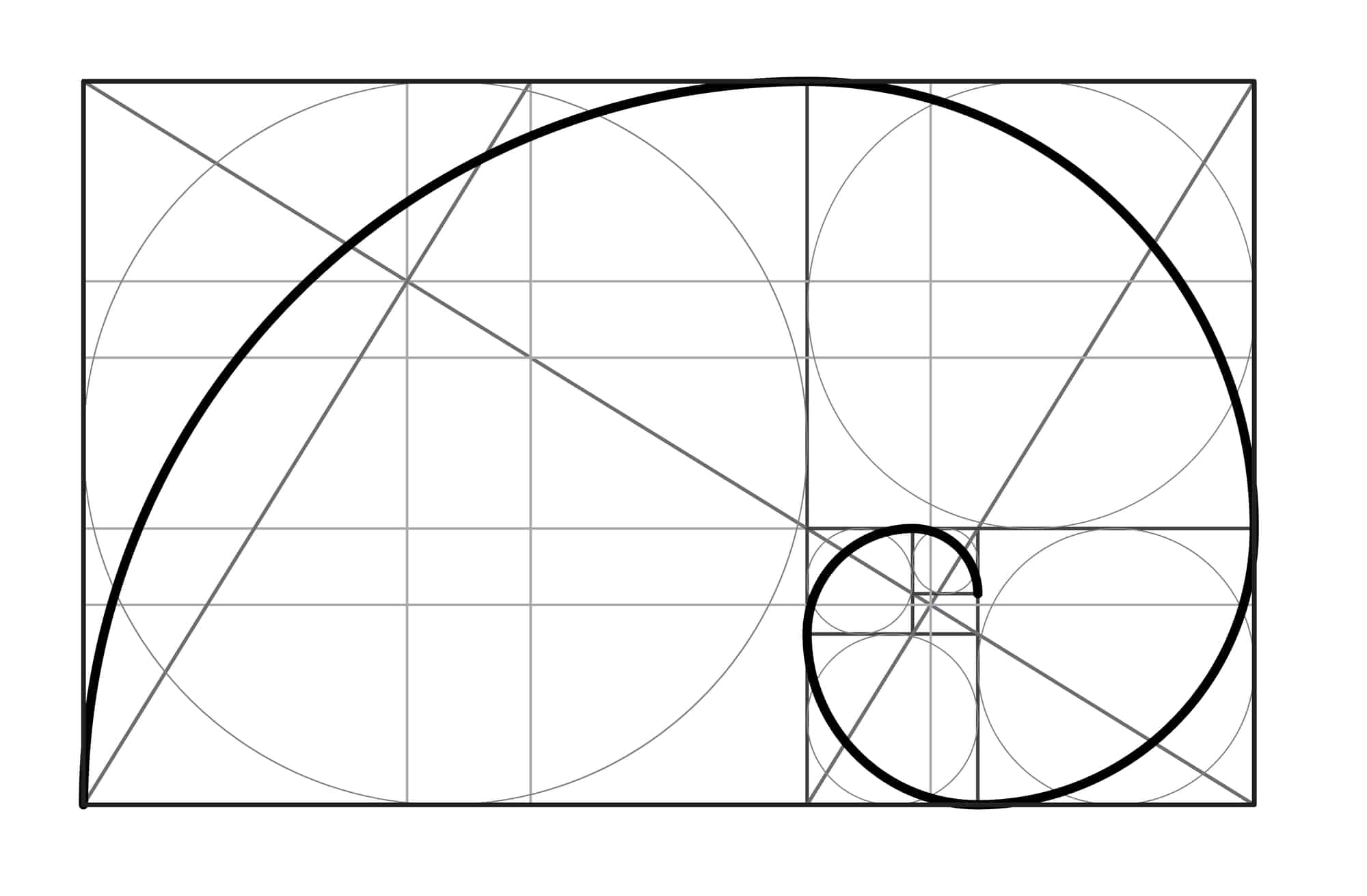
Despite its apparent simplicity, the Fibonacci sequence poses some intriguing problems. For example, consider finding an exact formula for the nth number in the sequence. This led to the discovery of the golden ratio, an irrational number that appears in various aspects of art, architecture, and even in the stock market. The challenge here is in the realm of number theory, where mathematicians strive to find relationships and patterns within the sequence.

Fibonacci in the stock market: Predicting the unpredictable?
Interestingly, the Fibonacci sequence has found applications in financial markets. Traders often use Fibonacci retracement levels to predict potential support and resistance levels in stock prices. This is based on the idea that markets might retrace a predictable portion of a move, after which they will continue to move in the original direction. However, it’s important to remember that these are predictive models and not certainties. The stock market is inherently unpredictable, and while Fibonacci tools can provide insights, they are not foolproof.
The golden ratio: A link between Fibonacci and aesthetics
The golden ratio, approximately 1.618, is a fascinating aspect of the Fibonacci sequence. This ratio is obtained by dividing a number in the sequence by its immediate predecessor. As you move higher up the sequence, the ratio becomes closer to the golden ratio. This ratio is often found in aesthetically pleasing designs – from the Parthenon in Athens to the Apple logo. Artists and architects have used this ratio for centuries to create compositions that are pleasing to the eye.
Computational challenges: Fibonacci’s demands on computing
When we try to compute higher numbers in the Fibonacci sequence, we encounter significant computational challenges. The numbers grow exponentially, and calculating them can be resource-intensive. This has led to various algorithmic solutions to compute Fibonacci numbers more efficiently, such as the fast doubling method or matrix exponentiation. These methods are not only theoretical exercises; they have practical applications in computer science and cryptography.
Fibonacci in architecture: Structuring the beautiful
The Fibonacci sequence and the golden ratio are not limited to the natural world. They play a significant role in architecture as well. Many famous structures, like the Great Pyramid of Giza and the Parthenon, are believed to have been designed with these mathematical principles in mind. The sequence provides a blueprint for balance and aesthetic appeal, making structures pleasing to the eye and structurally sound.
Puzzles and problems: Fibonacci for the inquisitive mind
For those who love puzzles, the Fibonacci sequence offers plenty of challenges. From finding missing numbers in a Fibonacci series to solving complex equations involving Fibonacci numbers, there’s no shortage of brain teasers. These problems help sharpen mathematical skills and improve understanding of this fascinating sequence.
Embracing the complexity and beauty of Fibonacci
The Fibonacci sequence is a beautiful blend of simplicity, complexity, and ubiquity. It bridges the abstract world of mathematics and the concrete realities of nature and human creation. Understanding its problems and solutions gives us insights into the mathematical world and helps us appreciate the intricate patterns woven into the fabric of our universe. Whether you’re a math enthusiast, a nature lover, or just someone curious about the world, the Fibonacci sequence offers a unique perspective on the interconnectedness of all things.
Contributors
Copyright @smorescience. All rights reserved. Do not copy, cite, publish, or distribute this content without permission.
SUBSCRIBE TO OUR NEWSLETTER
.......... ..........Subscribe to our mailing list to get updates to your email inbox.
Monthly Newsletter