In the animal kingdom, memory plays a crucial role in survival. From navigating vast distances to recalling the location of hidden food reserves, the ability to remember is a powerful tool for many species. This list explores the top 10 animals with the best memory.
10- Squirrels
Squirrel. Credits: Wikimedia/Rhododendrites
Geographic Location: Squirrels can be found in almost every habitat, from tropical rainforests to arid deserts, mainly across the Americas, Europe, and Asia.
Why they have a good memory: Squirrels have one of the best memories, especially when hiding and later retrieving food. They use a technique known as “scatter hoarding,” where they hide their food in numerous locations. Studies have shown that squirrels can remember where they’ve hidden thousands of nuts for months and that squirrels will arrange and bury their stash according to specific characteristics, including the type of nut.
Scientific Facts: Studies from the University of Exeter found that squirrels have good memory and could quickly remember how to solve a problem they had not seen for almost two years. They gave some squirrels an identical task they had tried 22 months earlier, in which they had to press levers to get hazelnuts. The first time, the squirrels improved with practice – taking an average of eight seconds on their first attempt and just two seconds on the final attempt. When they tried again after 22 months, they could get the hazelnut in three seconds.
9- Pigeons
Pigeon. Credits:Wikimedia/Satdeep Gill
Geographic Location: Pigeons are found worldwide, especially in urban areas where they have successfully adapted to live alongside humans.
Why they have a good memory: Pigeons possess an extraordinary memory for spatial navigation, which is evident in their homing ability. They can return to their nests over extremely long distances, a skill that humans have harnessed for pigeon-post systems historically.
Scientific Facts: Studies have shown that pigeons use a combination of the Earth’s magnetic field, sun positioning, and visual landmarks to navigate. Furthermore, scientists have described that pigeons have good long-term memory since a single bird could memorize 1200 pictures.
8- Rats
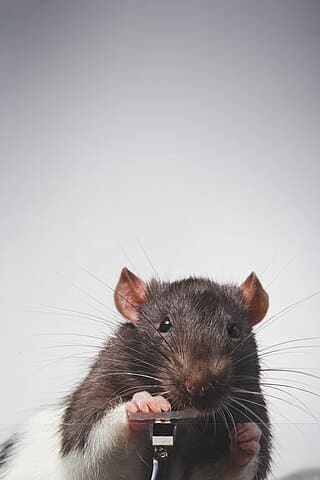
Rats. Credits:Wikimedia/Augustin Lignier
Geographic Location: Rats are highly adaptable and are found in nearly every part of the world, from rural to urban areas.
Why they have a good memory: Rats have shown remarkable memory abilities in laboratory tests, including maze navigation and recognizing objects. Their memory is not only spatial but also involves learning from experiences, indicating a level of episodic memory. For example, one study demonstrated that rats exhibit much stronger episodic memory than previously thought since these animals could remember more than 30 events in context and likely recognize several more using episodic memory. These findings about these remarkable memory skills can have implications for research on human diseases that affect memory, such as Parkinson’s and Alzheimer’s since most research on the brain starts based on insights into how the brain works in rats.
Scientific Facts: Recently, a new study demonstrated another feature: rats have one of the best memories. Researchers described that, like humans, rats can think about objects and places not in front of them, using their thoughts to imagine walking to a location or moving a remote object to a specific spot. Furthermore, when these rodents experience places and events, specific neural activity patterns are activated in the hippocampus, a brain area responsible for spatial memory.
7- Parrots
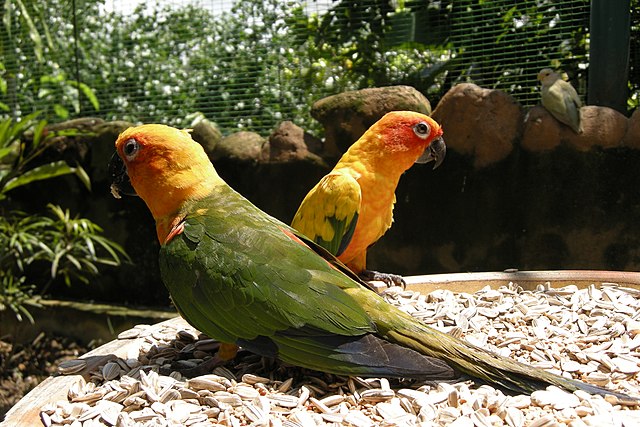
Parrots. Credits: Wikimedia/Vyacheslav Argenberg
Geographic Location: Parrots are mainly found in tropical and subtropical regions, with the greatest diversity in South America and Australia.
Why they have a good memory: Parrots are known for their exceptional memory, especially in terms of vocal mimicry. They can learn and recall a vast repertoire of sounds, including human speech, to communicate with their flock or humans. Parrots can learn new sounds relatively quickly and continue learning new sounds throughout their lives.
Scientific Facts: The cognitive abilities of parrots, including problem-solving and the use of tools, are supported by their strong memory and learning capabilities. Studies have shown that parrots can remember complex sequences of sounds and use this ability to interact socially. What is impressive is that these birds can figure out puzzles and have the intellectual skills of a 3-year-old child.
6- Octopuses
Octopus. Credits: Wikimedia/Betty Wills (Atsme)
Geographic Location: Octopuses inhabit diverse marine environments, from coral reefs to the deep sea, primarily in tropical and temperate waters.
Scientific Facts: Octopuses have a highly centralized nervous system, with a large brain relative to their body size, which supports their cognitive functions. Research has shown that they can learn through observation and possess both short-term and long-term memory, a rare trait among invertebrates.
5- Dogs
Dog. Credits: Wikimedia/ Ken Billington
Geographic Location: Dogs are globally distributed, living in various environments alongside humans.
Why they have a good memory: Dogs have a strong memory, particularly for people, places, and commands. They can remember their owners after long periods of separation and can learn complex commands and tricks through repetition.
Scientific Facts: The bond between dogs and their owners is also strengthened by their ability to remember and respond to their owners’ emotions and behaviors. Working dogs, including German shepherds, use their memory to track bombs or substances in the military and police forces. Additionally, other dog breeds memorize complex commands as service dogs, from retrieving medication to turning off the lights in a room.
4- Crows
Crow. Credits: Wikimedia/*~Dawn~*
Geographic Location: Crows are found almost everywhere, from remote countryside areas to dense urban centers.
Why they have a good memory: Crows are renowned for their problem-solving abilities and possess a sophisticated memory. They can remember human faces, hold grudges, and even pass that knowledge on to other crows. Crows use tools and have been observed hiding and retrieving food, indicating a solid spatial memory.
Scientific Facts: Research into crow intelligence suggests that their memory capabilities are similar to those of primates. Their ability to remember specific humans and their behaviors towards them indicates a high level of social intelligence and memory retention.
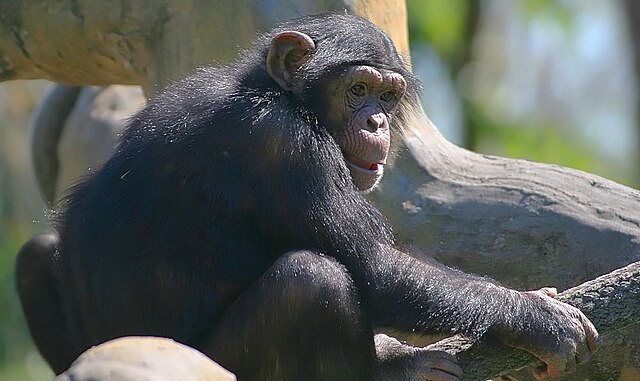
Why they have a good memory: Chimpanzees have been used in several studies, tasks, and space travel, but what is most surprising is their working memory. These animals have demonstrated remarkable short-term memory skills, mainly in tasks that require them to remember numbers or sequences. For example, one study revealed that a chimpanzee could remember numerical sequences in less than one second, overcoming humans. It is not surprising that they have such excellent memories, considering they share around 98% of their DNA with humans.
Scientific Facts: Despite these remarkable capacities, these animals were declared endangered by the International Union for the Conservation of Nature, and human behaviors are the main reason for that. Deforestation and poaching are the main threats to this species. Conservation organizations are working to expand protected areas and trying to avoid the illegal killing and taking of animals.
Scientific Facts: Dolphins are highly social animals, known for their playful nature and learning capacity. For example, Dolphins engage in cooperative hunting, use tools, and recognize themselves in mirrors, demonstrating their exceptional self-awareness and cognitive abilities.
Why they have a good memory: Elephants earn our top position in animal memory because of their extraordinary memory, particularly in spatial navigation and recognizing individuals. They can remember the locations of water sources over vast distances and have been known to recall other elephants or humans after many years.
Scientific Facts: Studies have revealed elephants have a highly developed hippocampus, a brain region associated with emotion and memory. Interestingly, cognitive studies have shown that elephants are capable of visual symbol discrimination, relative quantity judgment, mirror self-recognition, tool use, and an understanding of cooperation. Their remarkable memory is important for survival and plays a crucial role in the complex social structures and emotional bonds within their herds.
Carla Calçada, PhD, is a researcher with a background in Health Sciences and a focus on malaria, drug resistance, and cancer models. She completed her PhD in Portugal and is currently based at one of Canada’s leading Research Hospitals, where she explores the intricacies of photodynamic therapy and the interplay between the immune system and cancer. Carla enjoys her morning walks with her dog Joy before heading to the lab and getting her hands on those petri dishes filled with cells. Her passion for science extends to her role as an editor for Smore Science, where she helps to make scientific topics accessible to diverse audiences.