A lush piece of green atop the shimmering blue of the water is a sight for sore eyes. Indeed, some plants can grow without soil at all! From stunning lotuses floating gracefully on ponds to tiny duckweeds blanketing lakes, these aquatic plants are built to thrive in water. They have adapted their green bodies to survive under aquatic conditions.
They don’t just look beautiful; they play a vital role in keeping our ecosystems balanced. In this article, we’ll explore 10 amazing water plants with names and pictures, learn how they adapt to life underwater, and discover why they’re so important for the environment.
What Are Aquatic Plants?
Aquatic plants — also called hydrophytes — are plants that live in or around water. They have special adaptations such as air-filled leaves, flexible stems, and floating roots that help them survive in aquatic environments.
Any talk about aquatic greenery would be incomplete without the mention of the surreal lotus. It is the national flower of India, and in many cultures, it symbolizes new beginnings! Lotus comes in several hues of white and pink and is known for blossoming in muddy waters. Did you know that the lotus has its own water-repellent and dust cleaner? The lotus leaves have a waxy coating that prevents the leaf from becoming wet and submerging in water. Due to the waxy coating, water droplets just slide right off the leaf’s surface, repelling water droplets. The sliding of water acts to clean the dust off the surface of the leaf. And voila, your leaf is dirt-free!
2. Water Lily (Nymphaea)
A classic pond plant with round floating leaves and colorful flowers. Its waxy coating keeps the leaves dry.
Water lily. Credits: DepositPhotos/ABBPhoto
Talk about water lilies brings up images of a simple, dainty white flower nestled amongst lush green leaves. However, water lilies are known to come in various colors, including pink, red, orange, yellow, purple, and blue. Moreover, their round or oval-shaped leaves aren’t just for show – they’re designed to dance on the water’s surface! This clever adaptation ensures they soak up every ray of sunshine, thereby ensuring efficient photosynthesis.
Cool fact: Nymphaea thermarum, known to be the world’s smallest water lily, is being used by scientists as a research tool to understand the evolution of flowering plants!
3. Water Lettuce (Pistia stratiotes)
Soft, velvety leaves that resemble open lettuce heads. A popular choice for aquariums and ponds.
Water lettuce. Credits: DepositPhotos/lera_abrakadabra
The word ‘lettuce’ may bring up images of a vegetable most of us didn’t like eating as a kid. However, water lettuce isn’t the lettuce we usually eat; rather, it only resembles the appearance of lettuce. It is a floating aquatic plant, also known as water cabbage, Nile cabbage, or shellflower. Water lettuce is often used in tropical aquariums to provide a privacy cover for small fish. Due to its medicinal properties, it can be used as fodder for cattle and pigs. Moreover, it outcompetes algae for nutrients in the water, thereby preventing massive algal blooms. What’s algal bloom? An algal bloom is the overgrowth of pesky algae that harms aquatic light by blocking sunlight from other underwater plants.
4. Water Hyacinth (Eichhornia crassipes)
Known for its purple blooms, this plant cleans water but can spread rapidly in warm climates.
Water hyacinth flowers. Credits: DepositPhotos/may1985
Water hyacinth is one mischievous aquatic troublemaker. You might have heard of water hyacinth as the terror of Bengal. Once it is introduced into a freshwater body, it forms dense mats that clog waterways, blocking boating, fishing, and various recreational activities. Additionally, its proliferation leads to a reduction in biodiversity by outcompeting native plants both at the water’s surface and below.
Another cool fact: Water hyacinth can indicate water pollution! How does it do that? The plant usually absorbs lead as part of its nutrition, and lead is a major chemical hazard.
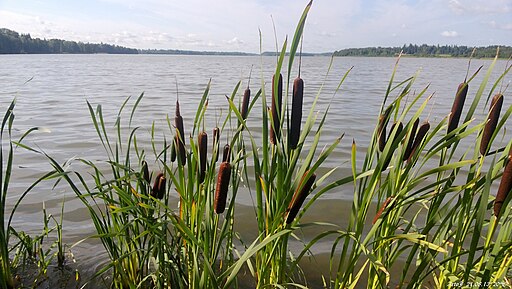
5.Cattail (Typha latifolia)
Tall, reed-like plant often seen in marshes. Provides shelter for birds and filters water pollutants.
Arto J, CC BY-SA 3.0 , via Wikimedia Commons
The iconic silhouette of cattails is unmistakable—those characteristic brown, cigar-shaped seedheads that crown tall, sword-like leaves. Also known as bulrush, reedmace, or punks, cattails are among the most recognizable wetland plants in the world. Nearly every part of the cattail is edible and has been used by various cultures throughout history, from the starchy rhizomes to the tender young shoots.
Beyond food, cattails serve as excellent natural water filters, absorbing excess nutrients and pollutants from pond water. Their dense root systems also provide crucial habitat for aquatic wildlife, from nesting birds to spawning fish. What makes them special? Cattails are nature’s water purifiers—their extensive root networks can remove up to 97% of phosphorus and nitrogen from water, making them invaluable for maintaining healthy aquatic ecosystems.
6. Water Chestnut (Eleocharis dulcis)
Chinese water chestnut. Credits: flickr/Ron Cogswell
Water chestnut is one of the many wonders of the underwater world. It is an aquatic tuber vegetable found chilling in shallow waters such as marshes, ponds, and gentle streams. However, perhaps the most distinctive feature of this plant is its edible fruit, which resembles a chestnut in its appearance. The fruit has several medicinal and culinary benefits as they are a rich source of fiber and antioxidants. Moreover, this plant can be a crucial source of a very important nutrient- Folate. This nutrient is important for dietary support during pregnancy as it is particularly important in the development of the fetus in the mother’s womb.
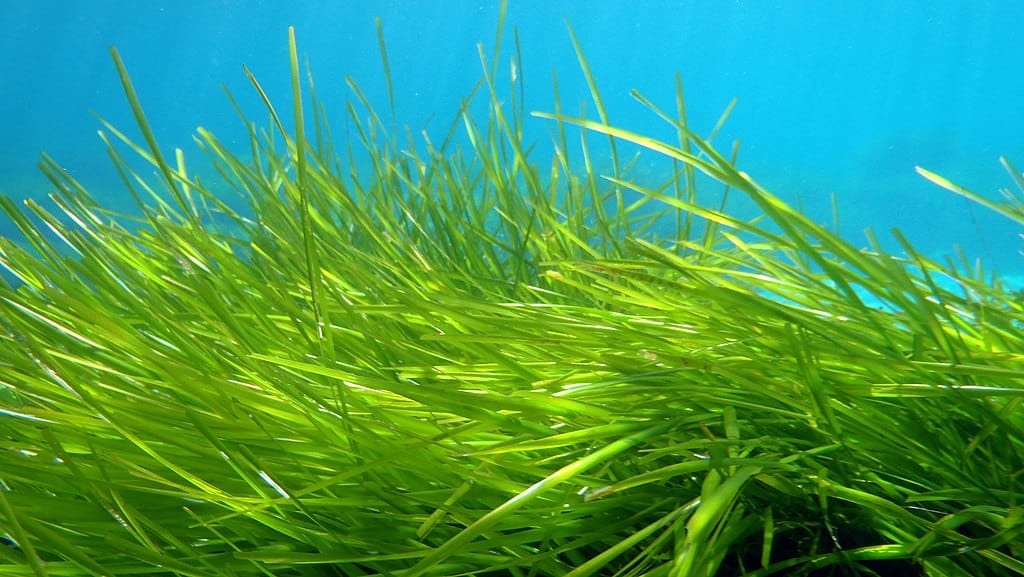
7. Neptune Grass (Posidonia oceanica)
Neptune grass. Credits: Wikimedia/Melina Marcou
Can you imagine living for thousands of years? The mesmerizing Neptune grass, a type of seagrass found in the Mediterranean Sea, is believed to be one of the slowest-growing and longest-living plants on Earth. The scientific community believes that this plant has the capacity to live for thousands of years. Neptune grass is also famously known for producing large floating fruits that look like olives, which gave it the well-earned name ‘the olive of the sea’. Beyond its uniqueness, Neptune grass has significant ecological benefits. It recycles nutrients, provides food for animals, and provides protective and breeding habitat for many species. In short, there are many reasons to be fascinated by this plant!
Cool Fact: Sometimes, the ocean current forms a dense ball of dead Neptune grass, which catches plastics, effectively removing them from the ocean. This plant just keeps getting better!
8. Duckweed (Lemna minor)
The smallest flowering plant in the world , it floats freely and provides food for fish and ducks.
Duckweed. Credits: DepositPhotos/jtas
Duckweed, as the name suggests, is a tiny, free-floating pondweed found in slow-moving water bodies. It is a curious little plant because it doesn’t have any leaves or stems. However, it does have a few roots. Duckweeds can be a terrifying enemy or a dearest friend. It provides food for ducks and also provides shelter for spawning frogs and toads. However, they are also notoriously known to cause problems for other aquatic wildlife. They block out sunlight from submerged aquatic plants and also prevent the exchange of gases with the air, which causes the underlying water to become deoxygenated and toxic for the poor underwater plants.
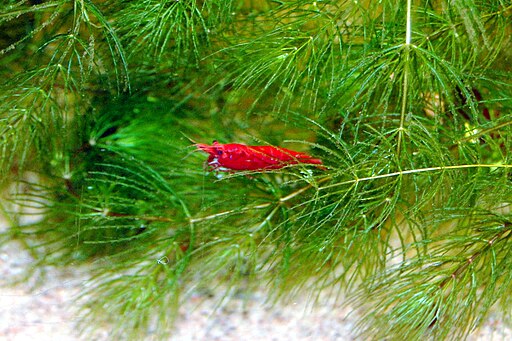
9. Hornwort (Ceratophyllum demersum)
A submerged plant that releases oxygen into the water . Great for aquariums.
hornwort has nothing to do with horns or warts. This entirely submerged aquatic plant gets its name from the horn-like appearance of its fruit. Also called coontail or rigid hornwort, it’s one of the most popular oxygenating plants among aquarium enthusiasts and pond keepers alike. Hornwort is incredibly low-maintenance, requiring no substrate as it floats freely or can be anchored down. It grows rapidly, making it highly effective at absorbing nitrates and other waste products from the water, which helps maintain crystal-clear conditions. Additionally, its dense, bushy structure provides excellent shelter for fish fry and spawning sites for adult fish.
What’s its superpower? Hornwort releases allelopathic compounds that naturally inhibit algae growth, acting as a biological algae control without any chemicals needed.
10. Papyrus (Cyperus papyrus)
Ancient Egyptians used this plant to make paper. It grows in shallow water and wetlands.
pjt56 ---, CC BY-SA 3.0 , via Wikimedia Commons
When you think of papyrus, you might picture ancient Egyptian scrolls and manuscripts. That’s exactly the right connection—this majestic aquatic plant is the very same species used by ancient civilizations to create the world’s first paper. Also known as paper reed or Nile grass, papyrus is a tall, elegant sedge that can reach heights of 10-15 feet in ideal conditions. Its distinctive appearance comes from the radiating spray of thread-like bracts at the top of each stem, resembling green fireworks frozen in time. Beyond its historical significance, papyrus serves practical purposes in modern water gardens by filtering nutrients and providing vertical interest. Its dense root systems offer habitat for beneficial bacteria that break down organic waste.
Fun Fact: Papyrus is a living fossil—it has remained virtually unchanged for thousands of years and was so valuable in ancient times that its export from Egypt was once punishable by death.
Why Are Water Plants Important?
Aquatic plants are nature’s water filters. They:
Provide oxygen for aquatic animals.
Offer food and shelter to fish and insects.
Reduce water pollution by absorbing excess nutrients.
Prevent erosion along riverbanks and ponds.
What’s the difference between water flowers vs. water plants ?
While all water flowers are aquatic plants, not all aquatic plants bloom. For example, lotuses and lilies are flowering aquatic plants, while duckweed and hydrilla are non-flowering ones.
FAQs About Water Plants
Q1. What are 10 examples of aquatic plants?
Water lily, lotus, duckweed, water hyacinth, water lettuce, cattail, hornwort, neptune grass, papyrus, and water chestnut.
Q2. What are the names of plants that grow in water?
These include lotus, water lily, and duckweed, all of which thrive in freshwater habitats.
Q3. Can plants grow only in water?
Yes! Many plants can grow hydroponically or in natural water bodies without soil.
Q4. What flowers bloom in water?
Lotus, water lily, and water poppy are the most popular water-blooming plants.