Tattoos are not just drawings on the skin, they are an age-old art form that dates back thousands of years. The very word ‘tattoo’ can be traced to the Polynesian term ‘tatau’, which means to ‘mark something’. This mark can eventually fade, even though those are made using ink, injected into the skin.
The ink isn’t just on the skin, it goes beneath it. This ensures that your body art doesn’t just wipe off. So, remember, getting a tattoo isn’t just getting inked, it’s a journey under your skin.
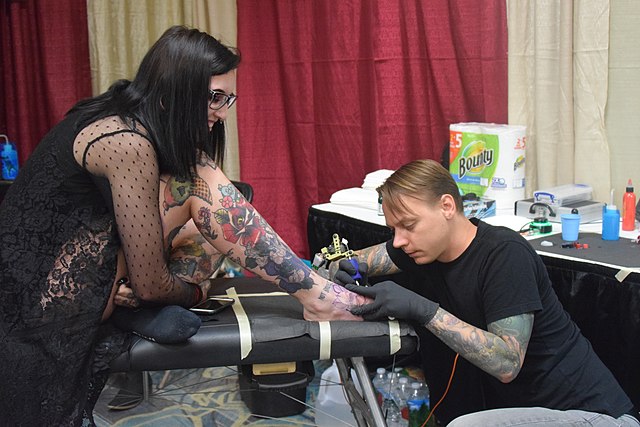
Tattooing in progress, Credit: Wikimedia/Tony Alter
How tattoos stay permanent?
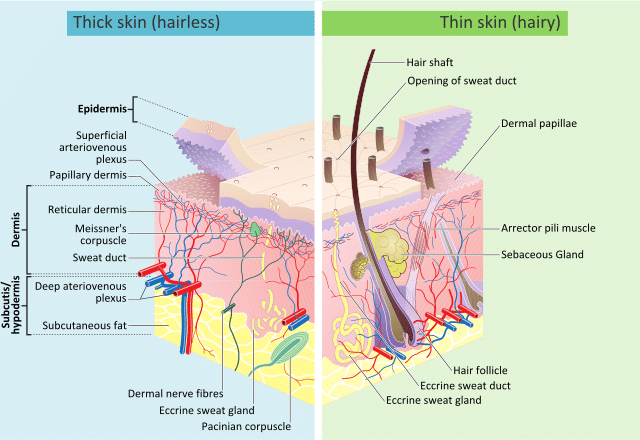
Tattoos stick around for a long time because the ink goes into a layer of skin called the epidermis . This is deeper than the top layer of your skin, which you can see and touch. The top layer sheds off old cells regularly but the epidermis stays put, just like your tattoos.
But our body is a smart machine. It detects the ink as a foreign substance and sends a special force of cells called ‘macrophages ‘ to deal with it. These macrophages try to eat up the ink to clean up your body. However, some ink particles are too big to be eaten up and they stay stuck in the skin. That’s how your tattoo stays visible.
Layers of human Skin, Credit: Wikimedia/Madhero88
Sunlight and tattoos
Now, what happens when you get out in the sun? The sunlight, especially the uv (ultra-violet) part of it, is pretty strong. It can break down things, even the tattoo ink under your skin.
Sunlight acts like a paint remover that slowly fades your tattoo. It doesn’t erase it completely, but over time, your tattoo might look less bright than before.
Where tattoos fade the quickest?
Did you ever notice that some tattoos seem to fade quicker than others? That’s because where you place your tattoo makes a big difference.
Tattoos on parts of your body that are always exposed to sunlight, like your hands or face, might fade faster. But the tattoos that are mostly covered by clothing – like on your belly or back – stay brighter for longer. That’s because your clothes act like a sunblock for your tattoo, protecting it from the sun’s eraser-like UV light.
How long do tattoos last?
Just like people, each tattoo has a lifespan . Some tattoos stay bright and clear for many years, while others might fade quicker. There’s a whole journey that each tattoo goes through from the time it’s inked onto your skin until it fades away.
The lifespan of a tattoo depends on many things: how well you take care of it, how much sun it gets, where it is on your body, and even the type of ink used for it. Each tattoo has a story to tell, and understanding these factors helps us appreciate the journey of body art even more.
So, tattoos are much more than just skin deep. They’re a mix of art, science, and even a little bit of sun!
Glossary
Epidermis: The outer layer of cells that cover the body of a person or animal.
Macrophages: A type of white blood cell that is part of the immune system and eats foreign substances.
UV (ultra-violet) light: A type of light that is too blue for humans to see. It can cause sunburn or fade tattoos.
Foreign substance: Anything that is not supposed to be in your body. When you get a tattoo, your body sees the ink as a foreign substance.
Ink particles: Tiny bits of tattoo ink. Some of these particles are too big for macrophages to eat.
Lifespan: The length of time that something lasts. In this article, it refers to how long a tattoo stays on your skin.