Oysters , these unassuming marine creatures, hold a secret as old as time itself. Inside their hard, rugged shells lies the potential for something extraordinary: pearls . Not just any pearl but orbs of lustrous beauty that have fascinated humans for millennia. But how do these simple creatures create such splendor? It’s a process as fascinating as the pearls themselves!
It all starts with an intruder. When a foreign object, like a grain of sand or a parasite, finds its way into an oyster’s shell, it disrupts its peaceful existence. Imagine the discomfort you’d feel with a pebble in your shoe – that’s what the oyster experiences. To protect itself, the oyster covers the irritant with layers of a substance called nacre , also known as mother-of-pearl.
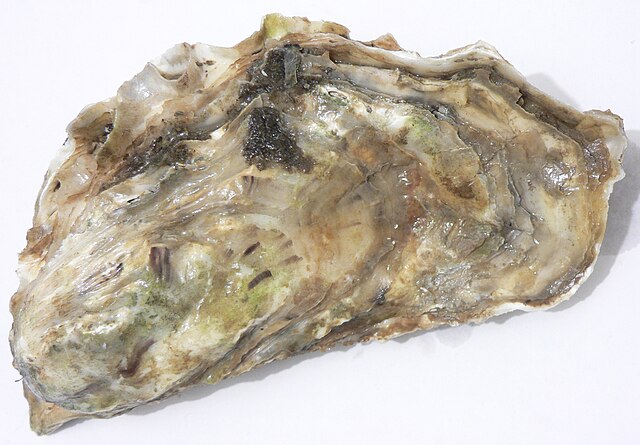
Raw Oysters, Credit: Wikimedia/David Monniaux
Nacre: The building block of pearls
Nacre is the oyster’s way of soothing its discomfort. This substance is a combination of calcium carbonate and a protein called conchiolin . Together, they form a crystalline structure that is both strong and iridescent. Over time, layer upon layer of nacre builds up around the irritant, eventually forming a pearl. The process is slow and painstaking, taking years to create a pearl of substantial size.
Not all oysters are equal in the pearl-making business. Only certain species of oysters possess the ability to create pearls. The most renowned among them are the pinctada maxima and pinctada margaritifera , responsible for producing the luxurious South Sea and Tahitian pearls, respectively. Each species imparts unique colors and sizes to the pearls, making each pearl as unique as a fingerprint.
The environment plays a crucial role in pearl formation. Factors like water temperature, pollution, and the oyster’s diet influence the quality and luster of the pearls. Pristine waters tend to produce the highest quality pearls, highlighting the importance of preserving our oceans.
Cultured pearls: Human intervention in pearl formation
In the early 20th century, humans learned to mimic nature’s process, leading to the birth of cultured pearls . By deliberately introducing a bead or piece of tissue into an oyster, pearl farmers can kickstart the pearl-making process. This innovation has made pearls more accessible than ever before, though it takes nothing away from the magic of natural pearls.
Natural pearls are incredibly rare, making them highly prized and valuable. Unlike cultured pearls, where the process is controlled, natural pearls are a testament to chance and the oyster’s resilience. Each natural pearl is a unique masterpiece, a witness to the wonders of nature.
Researchers have delved into the science of pearl formation, seeking to understand the intricacies of nacre production. Studies shed light on the molecular processes involved, offering insights into pearl formation and potential applications in materials science.
As we continue to explore the mysteries of pearl formation, there’s a growing emphasis on conservation. Protecting the natural habitats of oysters is crucial, not just for pearls but for the health of marine ecosystems . The future of pearls is inextricably linked to our stewardship of the oceans, reminding us of our responsibility to these remarkable creatures and their dazzling creations.
Glossary
Oysters: Marine mollusks that live in marine or brackish habitats. They are bivalves, having two hinged shells.
Pearls: Hard, lustrous spherical masses, typically white or bluish-gray, formed within the shell of an oyster or other bivalve mollusk due to the deposition of nacre.
Nacre (Mother-of-Pearl): A smooth, shiny substance forming the inner layer of the shell of some mollusks, especially oysters and abalones, responsible for the iridescence of pearls.
Calcium Carbonate: A chemical compound found in nacre, consisting of calcium, carbon, and oxygen. It’s a common substance found in rocks and is the main component of pearls.
Conchiolin: A protein found in the shells of mollusks, which, along with calcium carbonate, forms nacre.
Pinctada Maxima: A species of pearl oyster known for producing South Sea pearls, characterized by their large size and white, silver, or golden colors.
Pinctada Margaritifera: Another species of pearl oyster, known for producing Tahitian pearls, which are often black or dark in color.
Cultured Pearls: Pearls that are formed in oysters under controlled conditions, where humans introduce a foreign substance to initiate the pearl-forming process.
Marine Ecosystems: Biological communities in ocean and sea environments, including the plants, animals, and other organisms, as well as the physical and chemical environment.