Have you ever smelled the ocean? A lot what you smell actually comes from lots and lots of tiny plants floating around in the water. These plants are called phytoplankton. The ‘phyto’ part of the word refers to plant and ‘plankton’ means drifter.
Just beneath the ocean’s mirrored surface, there is another universe as weird and magical to us as outer space. We can find phytoplankton and other small creatures, like bacteria and zooplankton. In this busy little world, phytoplankton are the plants and zooplankton are the animals that eat them.
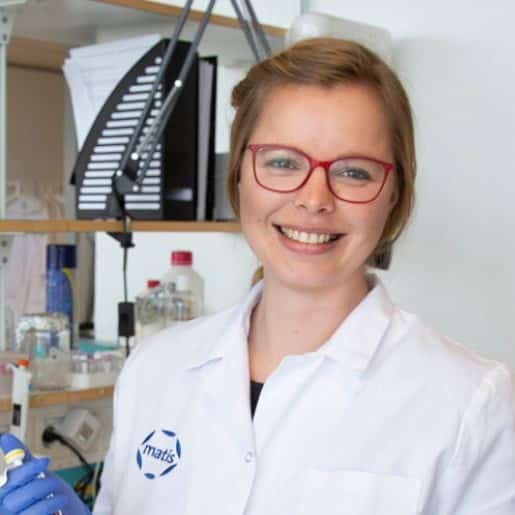
Marine microbiologists, like me, study this part of our planet. When I look at a drop of seawater through my microscope, I feel like an explorer stepping into a new world. Phytoplankton come in a variety of shapes, sizes and colors. They can also turn sunshine, water, and carbon dioxide into the sugars and oxygen we need to survive using photosynthesis.
What do phytoplankton do?
They are too small to move very far, so they depend on moving water to take them where they need to be.
Phytoplankton want three things:
1. Lots of sun, so that they can absorb the energy to make food (yummy sugars!). That is why they prefer to be close to the surface of the water.
2. Nutrients to grow into their interesting shapes.
3. To be as far away as possible from things that want to eat them! Zooplankton think phytoplankton are very tasty.
You might think the ocean is just water, but it is a huge phytoplankton forest too! Phytoplankton create most of the food in our oceans. They even create half of our world’s oxygen through photosynthesis! They might be very small, but they feed us, help us breathe, and create a comfy environment where we can happily live out our dreams.
Satellite image of a large phytoplankton bloom in a gulf of the North Sea. The phytoplankton are visible as bright blue and green swirls in ocean water, Credit: NASA Goddard Space Flight Center
Because phytoplankton are so small, they tend to be ignored. But scientists now know how very important these little creatures are for the health of our planet. We have developed impressive methods to study them.One methodlooks at all of the DNAin seawater to identify who was in there – CSI style! If you look closely enough (maybe with the help of a microscope) you may find that boring green puddleis really a weird and wonderful world of tiny creatures – tinycreatures who help power our planet.
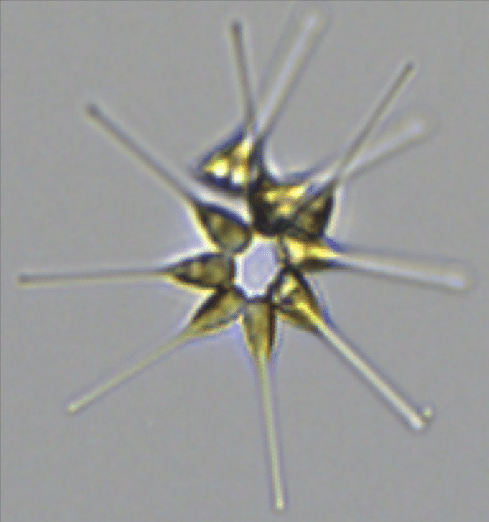
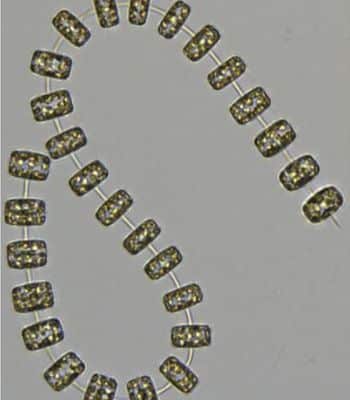
Interesting phytoplankton under the microscope. Some of them look like stars, don’t they? A type of phytoplankton, called diatoms, have glass shells – almost like a mini-greenhouse.
Some diatoms like to stick together and create chains that look like stars. Each tear drop you see is an individual diatom.
Others stick to each other and create chains that look like a necklace. Individual zooplankton may be only 1-2 millimeters long, but for phytoplankton they are scary predators.
A variety of zooplanktons
Glossary
Carbon dioxide (CO2): A gas that humans breathe out and plants breathe in. Too much of it can cause the planet to warm.
DNA: A thin, long strand in our cells that contains all the instructions for how our bodies should be built.
Marine microbiologists: Scientists who study the tiny living things in our ocean.
Oxygen (O2): A gas that plants breathe out and humans need to breathe in to survive.
Zooplankton: Animals that float freely in the ocean, from very small shrimp to large jellyfish.
Photosynthesis: A chemical reaction where energy from the sun is combined with water and carbon dioxide to form sugars and oxygen.