Exploring the animal kingdom reveals a fascinating diversity of sensory abilities, mainly in olfaction. This list explores the top 10 animals renowned for their exceptional sense of smell and how their olfactory prowess sets them ahead in the animal kingdom.
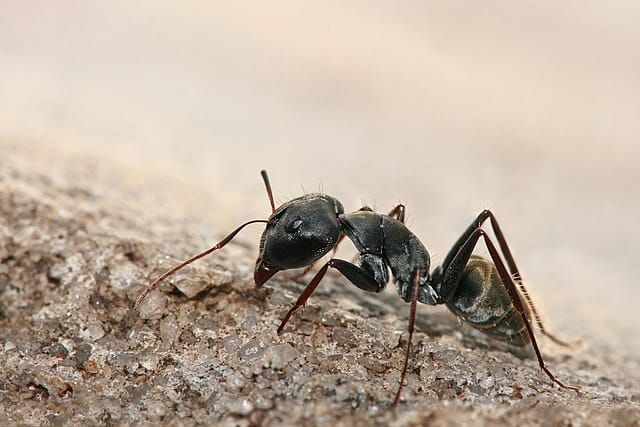
10- Ants
Ants, Credit: Wikimedia/Muhammad Mahdi Karim
Geographic Location: Ants are found worldwide, from the rainforests to the deserts, showcasing an incredible adaptability to diverse habitats.
Why they have a great sense of smell: Ants communicate and navigate using their keen sense of smell. They release and detect pheromones, chemical signals that help them find food, identify colony members, and warn of predators. This sophisticated chemical communication system is essential for their social organization and survival. Research about ant olfaction has revealed that they have a relatively large number of odor receptors compared to their body size. These receptors allow them to detect and discriminate a wide range of chemical signals, making them one of the most chemically adept insects.
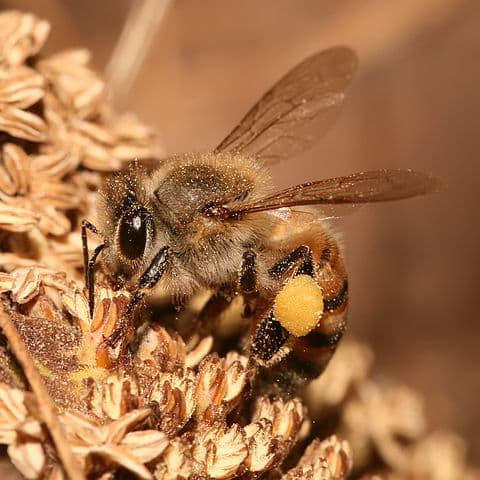
Why they have a great sense of smell: Bees have an exceptional sense of smell, which they use to locate flowers and discern between different types of plants and flowers from considerable distances. Their ability to detect and remember specific chemical compounds helps them in foraging and navigating back to their hive.
Scientific Facts: The bee’s olfactory system is highly specialized; it includes antennae equipped with receptors that can detect trace amounts of floral scents in the air. This sensitivity is essential for the search of nectars and communication, especially in the dance language they use to inform hive mates about the location of food sources.
8- Rats
Rat, Credit; Wikimedia/Augustin Lignier
Geographic Location: Rats are highly adaptable and are found in nearly every part of the world, from rural to urban areas.
Why they have a great sense of smell: Rats rely on their keen sense of smell to find food, avoid predators, and communicate with one another. They can detect odors associated with food or other rats from significant distances, which is vital to their survival and social interactions.
Scientific Facts: Studies have shown rats have a sophisticated olfactory system with many genes dedicated to olfactory receptors. This genetic endowment enables them to identify a wide variety of odors, making them invaluable in research, particularly in studies related to diseases and the development of new therapies. Interestingly, some species of rats have been used in some countries worldwide, including Cambodia, Angola, and Mozambique, to detect tuberculosis from hospital samples
7- Dogs (especially scent hounds)
Dogs, Credit; Wikimedia/Lukas3
Geographic Location: Dogs are domesticated animals found worldwide, with scent hounds being particularly bred for their tracking abilities.
Why they have a great sense of smell: Scent hounds, such as Bloodhounds, Beagles, and Basset Hounds, have an extraordinary sense of smell. They can follow a scent trail over days and across various terrains. This ability is used in search and rescue operations, detecting drugs, and tracking down fugitives. Humans sniff once per second-and-a-half; dogs, five to 10 times a second.
Scientific Facts: The olfactory cortex of a dog, the brain area responsible for processing smells, is proportionally forty times larger than that of humans. Dogs have up to 300 million olfactory receptors, compared to about six million in humans, explaining their remarkable sense of smell.
6- Wolves
Wolves, Credit; Wikimedia/Mas3cf
Geographic Location: Wolves inhabit various ecosystems worldwide, including the Arctic tundra, North America, Europe, and Asia.
Why they have a great sense of smell: Wolves have a highly developed sense of smell that they use for hunting, territory marking, and social interactions within the pack. They can detect prey, carrion, and other wolves over great distances, making their sense of smell a critical factor in their survival and social cohesion. The wolf’s sense of smell can be 100000 times greater than humans.
Scientific Facts: Olfactory communication among wolves consists primarily of scent marking. Scent marking marks the boundaries of territories, claims and defends that territory from other packs, marks food ownership, and acts as a road map for the pack itself. Because wolves have scent glands between their toes, they leave their signature wherever they walk. Urination is the most common form of scent marking for wolves.
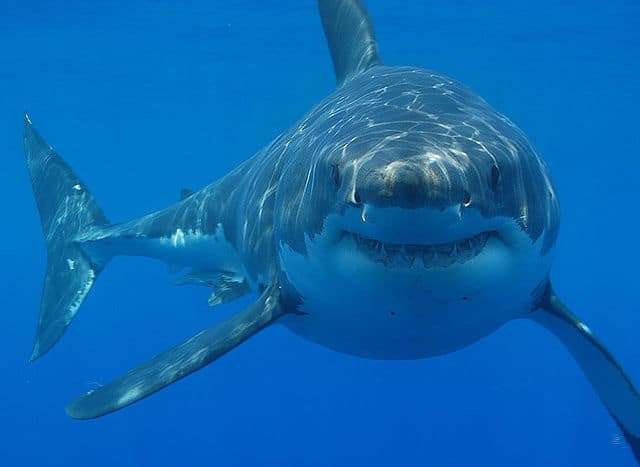
5- Sharks
Sharks, Credit: Wikimedia/Hermanus Backpackers
Geographic Location: Sharks are found in all the world’s oceans, from shallow coastal waters to the deep sea.
Why they have a great sense of smell: Sharks possess an extraordinary sense of smell, enabling them to detect a single drop of blood in 10 billion drops of water. This keen sense of smell is crucial for locating prey, navigating the vast oceans, and detecting mates.
Scientific Facts:Sharks’ olfactory bulbs are large and are a significant part of their brain. Their olfactory system is unique because it is separate from the respiratory system, contrarily to humans. Sharks use gills to facilitate oxygen uptake, while two nares or nostrils on the shark’s head are used solely for smelling and not for breathing. Water flows into the nostrils, and dissolved chemicals come into contact with tissue, exciting the olfactory receptors in the cells.
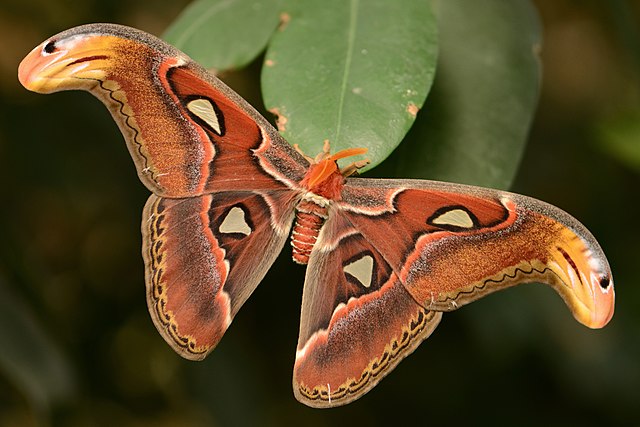
Why they have a great sense of smell:Male moths can detect the pheromones of a female moth from kilometers away. This incredible olfactory sensitivity is crucial for mating, as it enables males to locate potential mates in the vast darkness of night. On the other hand, female moths use the scent of male moths to check their reproductive fitness. Moths don’t have noses; instead, they use receptors in other areas to detect smells. Male silk moths have antennae covered in sensitive hairs that can detect pheromones released by potential mates from astonishing distances.
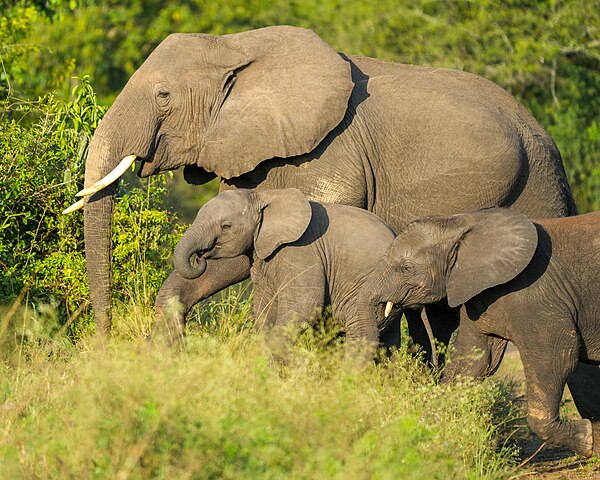
Why they have a great sense of smell: Elephants have a highly developed sense of smell, which they use to locate water sources, find food, and communicate with each other. They can scent water as far as 12 miles away and remember where they have previously found water. Their ability to detect scents over long distances is essential for their survival in the wild. Elephants can use the sense of smell alone to discriminate whether buckets contain different amounts of desirable foods.
Scientific Facts: Elephants have one of the most significant numbers of genes associated with olfactory receptors among mammals, being around five times more than humans and two times more than dogs. This genetic trait underpins their exceptional sense of smell, allowing them to have nuanced interactions with their environment and each other, including identifying family members and detecting potential threats.
2- Bears
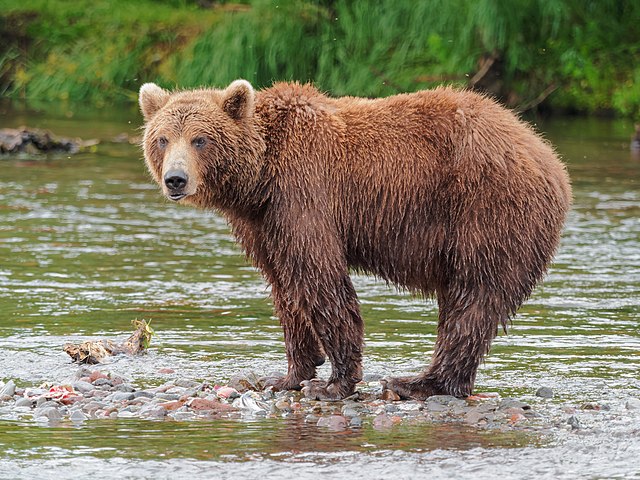
Bears, Credit; Wikimedia/Robert F. Tobler
Geographic Location: Bears are found in many habitats worldwide, from the forests of North America and Europe to the Arctic ice fields and the mountains of Asia.
Why they have a great sense of smell: Bears have an incredible sense of smell, surpassing that of dogs and nearly every other mammal. They can detect food, cubs, and potential threats from miles away. This sense is critical for their survival, especially when foraging for food across vast territories. For example, black bears can travel 18 miles straight to a food source, grizzlies can find an elk carcass underwater, and polar bears can smell a seal through the thick layers of ice.
Geographic Location: Bloodhounds are primarily found in Europe and North America and are used in law enforcement and search and rescue due to their tracking abilities.
Why they have a great sense of smell: Bloodhounds possess the most refined sense of smell among all dogs and arguably among all terrestrial animals. They can follow a scent trail for over 130 miles and track scents over 300 hours old. This incredible ability is why they are often the breed of choice for tracking missing persons and fugitives.
This exploration into the olfactory world of animals showcases the diversity of life on Earth and the complexity and sophistication of the senses that guide animal behavior and survival.
Copyright @smorescience. All rights reserved. Do not copy, cite, publish, or distribute this content without permission.
Join 20,000+ parents and educators
To get the FREE science newsletter in your inbox!
SUBSCRIBE TO OUR NEWSLETTER
.......... ..........
Subscribe to our mailing list to get updates to your email inbox.