Around 150 years ago, inventors closed in on an invention, possibly only rivalled by the wheel or the internet, that changed the face of human history. This light bulb of an invention was just that; the light bulb!
The history of the lightbulb
Electricity and the light bulb have a deeply entwined past. The advent of the electrical age, in 1879, was the pistol that set off the race for the invention of the light bulb. From that point onwards, for the next forty or so years, inventors did everything they could to claim the throne that read “inventor of the light bulb.”
Winner Winner Chicken Dinner!
Thomas Alva Edison might be one of the most well-known scientists in the world. As early as kindergarten, kids know him as the man who invented the light bulb… yet, this isn’t exactly true.
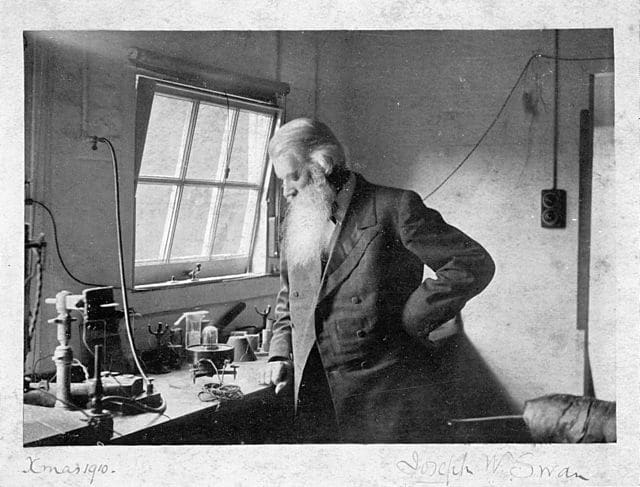
Joseph Swan invented the Arc Lamp. Credit: Wikimedia
Edison was the first to patent the world’s first light bulb; yet, the most rudimentary light bulb was actually invented long before, in 1880, by a group of British inventors. These inventors were the first to demonstrate the use of electricity in illumination by coming up with the arc lamp.
dapibus leo.
Today’s typical lightbulb versus Edison’s lightbulb
Apart from the filament(which has also changed), pretty much everything about the lightbulb has changed. For instance, Edison’s bulb used a carbon filament. In today’s market, we only produce and sell tungsten filaments to power light bulbs. Tungsten is more durable than carbon and it’s also more efficient. Another big selling point for tungsten, in the tungsten versus carbon competition, is the widespread abundance and availability of tungsten as compared to carbon.
Edison’s light bulb looked a bit different than today’s incandescent bulbs but worked on the same principle. Credit: Wikimedia/Joseph E. Hinds
Similarly, Edison’s incandescentlight bulb was a long and pointed tube with a bulb at the end. In contrast, today we’re rather spoiled for choice. From the typical ovoid or pear-shaped bulbs to the coiled and cylindrical bulbs, there’s a whole range of shapes and sizes.
Finally, today’s light bulbs are super, super efficient. Edison’s light bulb only converted 5 percent of the electrical energy it received into light energy. Luckily, years of invention and technology have upped that number significantly. Most of the light bulbs available today can convert up to 80 percent of the electrical energy they consume into light.
How many different kinds of light bulbs do we have today?
Short answer: many. Long answer: today, we have multiple types of lightbulbs, and each type of light bulb can be further categorized into multiple different kinds of light bulbs.
For instance, we can divide all the light bulbs we have today into four types, based on the method of light production.
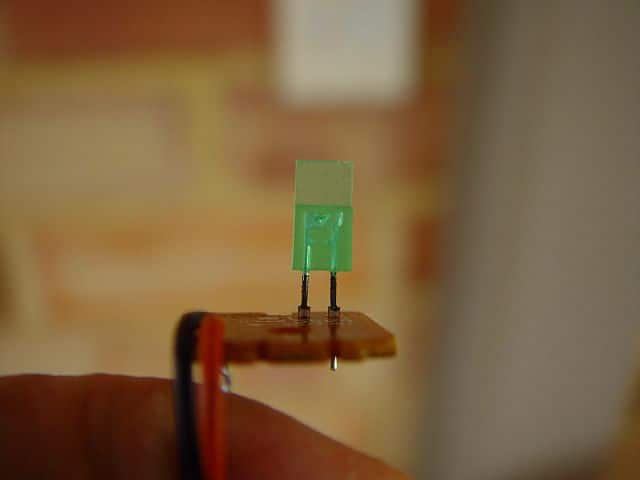
LED: LEDs, or light-emitting diodes, are one of the most advanced light bulbs available on the market today. These bulbs use semiconductors, known as diodes, to produce light. When we power LEDs, we’re actually switching on an electrical circuit that passes current into these tiny diodes. Once powered, the electrons inside these diodes begin to flutter around. The movement of these electrons is actually what results in the final illumination of the LED.
These diodes are advancements on rudimentary filaments, and act as the light-emitting substance in LED bulbs. Credit: Wikimedia/Leon Brooks
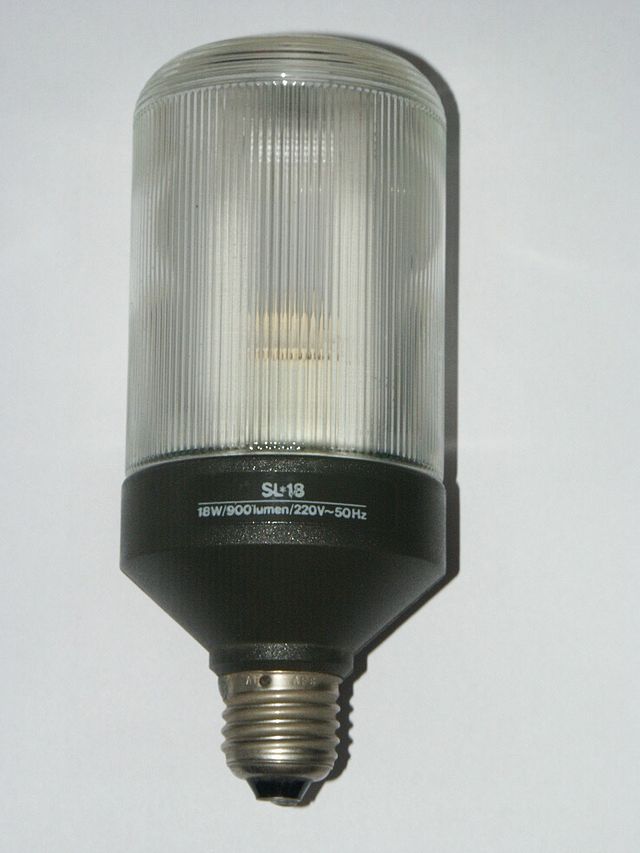
CFL: There’s a surprising amount of chemistry inside light bulbs, and there’s no better example of this than CFLs or Compact Fluorescent. In these bulbs, there’s generally a white powder that coats the insides of the tube. This powder coating is made up of fluorescent materials. When we switch on the light, we allow electricity to pass through the bulb. At this point, elements like mercury and argon will flood the inside of the bulb with their fumes. The resultant reaction? Ultraviolet light!
CFLs are slowly being phased out of production and use these days. Credit: Wikimedia/Echtner
Finally, the UV light produced itself reacts with the fluorescent coating to produce the visible and brilliant white light that we see. Essentially, CFLs produce light that in turn produces light!
As cool as this process sounds, CFLs aren’t the most popular choice when it comes to picking out a light bulb. In the hot pot of chemicals that make up a CFL bulb, quite a few of them are actually toxic. Let’s take mercury for example; it’s a pretty dangerous chemical that may cause danger if the bulbs aren’t discarded properly. In the States, California will effectively ban the sale of all CFL bulbs as soon as January 1st, 2024.
Halogen: Halogenbulbs, unlike CFLs and LEDs, actually uses a filament like the older incandescent bulbs. In halogens, once the filament burns, the burnt-off particles or material of that filament can be redeposited back onto the same filament!
Halogen bulbs were invented in 1959 as an improvement on the incandescent bulb. Credit: Wikimedia/Nord794ub
Simply put, halogens are incandescent bulbs that can recycle and restore their filaments. Thus, they can extend their life and usage for a long, long time!
Incandescent: Incandescents are the oldest type of bulbs and also the easiest, in terms of understanding how they work. Incandescents channel electricity through the tungsten filament. The current that passes through the filament generates resistance, which in turn generates heat which is expelled in the form of incandescence or thermal radiation.
They’ve been around for more than 100 years; incandescent bulbs are synonymous with light! Credit: Wikimedia/Ch Maheswara Raju
Likewise, using different criteria, we can also classify light bulbs based on wattage.
What is wattage?
Wattage is a measure of power consumption. It tells us how much electrical power an electrical device, such as a bulb, consumes. For instance, if an electrical bulb consumes one watt of electrical power, this means that it uses one joule of energy every second it runs. Generally speaking, LEDs and CFLs use significantly lower watts and are very energy efficient as compared to halogens and incandescents.
Conclusion
There are many different options available on the market today, yet the best, most efficient, and safest option of them all are LEDs.
Glossary
Filament: A thin and delicate string-like structure. It’s the part of an incandescent bulb that channels electrical current.
Incandescent: The phenomenon of producing light or illumination as a result of excess heat production.
Diode: A kind of semiconductor or microchip. In LEDs, the diode is similar to a filament. The flow of one-way (unidirectional) current can be channeled through the diode.
Fluorescent: Describes an element on the periodic table, like argon or xenon, that is capable of producing a specific kind of light called fluorescent light or fluorescence.
Halogen: A group of elements on the periodic table that have exactly seven electrons in their outermost shell.