It’s your school spring break. The final bell rings, and you and your best friend run outside. “What are you doing for break?” you ask. “We’re going to Mars for the week!” she replies. Her parents suddenly land in their personal spaceship to pick her up from school. She climbs in, puts on her custom tie-dye pattern space suit, straps into her seat, and they lift off into the bright sky. Lucky! At least you’ll get to go to Mars in the summer.
Will space tourism like this ever be possible? Will everyone have their own personal spaceships? Will any planets besides Earth be habitable , or potential homes, for humans? Are any other planets already home to different types of organisms? What does the future of space exploration look like?
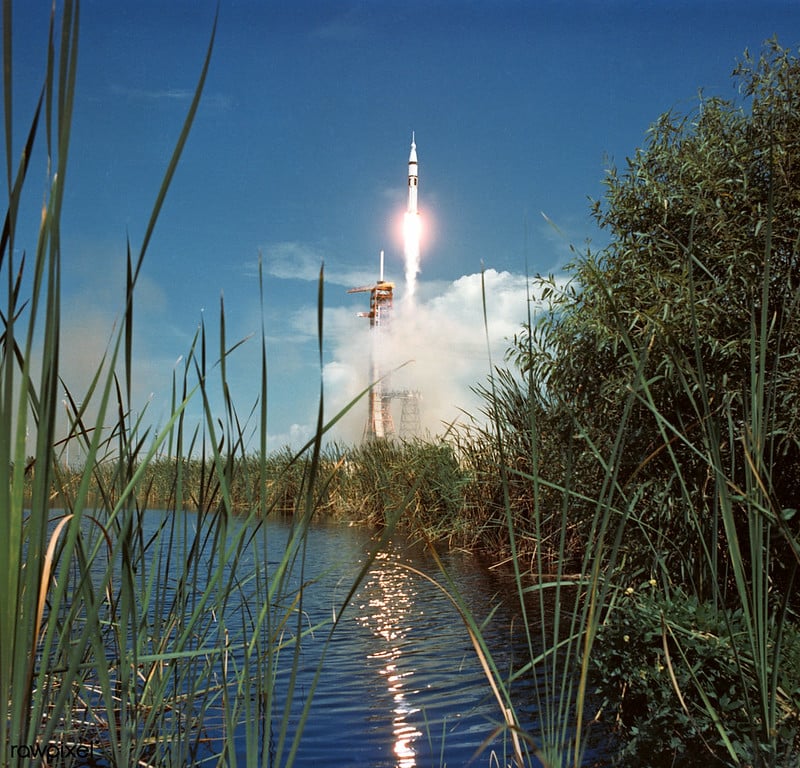
Apollo 15 Mission liftoff, Credit: Flickr.com/Rawpixel Ltd
Why do we explore outer space?
We know plenty about our own solar system and the systems beyond it. We have named planets and explored how they are different from planet Earth. We know how they revolve around the Sun, and we have become skilled at predicting patterns in the night sky. We even know when comets and asteroids will pass by. But there is so much more to explore. We study space because we are curious. Curiosity landed us on the Moon. Curiosity is even the name of a rover that is currently exploring Mars.
But there are other great reasons to explore space, too. Learning about space helps us to learn more about our own planet. Our planet is one of a few known planets in the universe that can potentially support living creatures and organisms. When we learn more about those planets, we can make better decisions about how to support our own planet. Humans are facing issues like climate change, and learning about space can help us to be more informed about how to treat our planet. Some scientists even say that we need a “Planet B,” or another place where humans can live in case of an emergency on Earth.
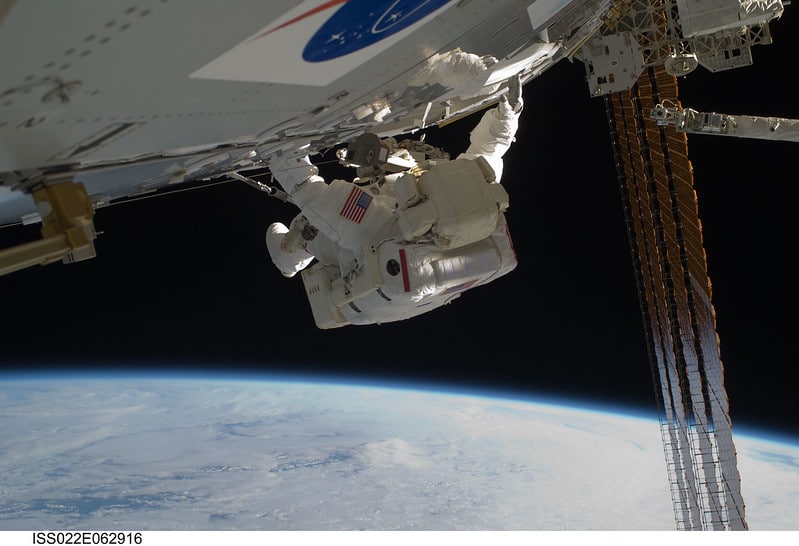
An astronaut on the International Space Station, Credit: Flickr.com/NASA's Marshall Space Flight Center
Are any other planets habitable?
A habitable planet is one that can support living organisms. NASA , the National Aeronautics and Space Administration, has tools to discover whether certain planets could support life. In our solar system, we know that Earth supports living creatures. There is also a possibility that living organisms could exist below the surface of Mars. In other solar systems, there are planets similar to Earth that are in the goldilocks’ zone , where planets are not too hot or too cold, but may have just the right conditions to support life. Even though we have found other planets that could support life, only Earth is known to have living organisms. We also know that it took over 4 billion years for Earth to have intelligent living creatures. So it is possible that some of these planets may have intelligent life in the future, even if they do not right now. It can be tricky to learn about these planets because they are so far away. But there is plenty to explore nearby in space, as well.
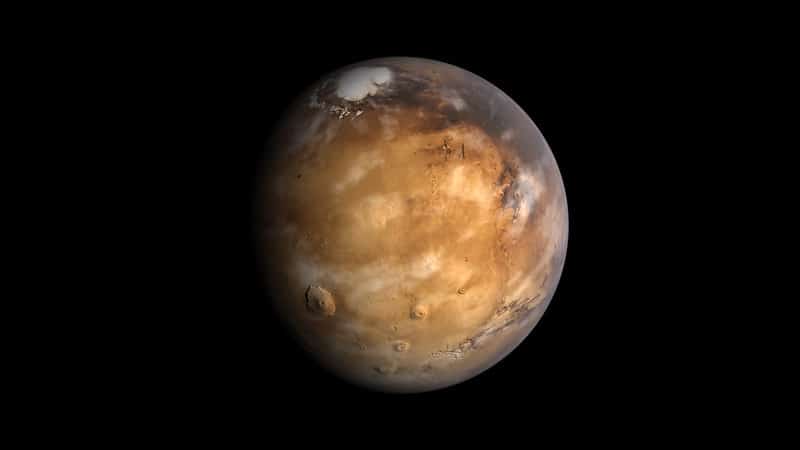
Mars, Credit: Flickr.com/Kevin Gill
What are the next steps in exploring the universe?
We have already been to the Moon and landed exploration rovers on Mars. But in 2024, humans plan to return to the Moon and build a space station and even a base camp for more exploration. Some say that by 2050, we could have a permanent site on the Moon. We will also continue to explore Mars and eventually build a research center there.
But what about the space beyond our solar system? Is it possible to travel even farther? It takes three days to get to the Moon, but it takes seven months to get to Mars. Traveling to the edge of our solar system would take hundreds or thousands of years with current technology. We can explore deep space with powerful telescopes like the James Webb telescope. This telescope orbits around the Sun and can see over 13 billion light years away. Telescopes like this, and other impressive technologies, help us to locate and learn about other solar systems.
Will humans ever become space tourists?
If Mars is a seven-month trip away, it’s not likely that your friend from school will go there for spring break on vacation with her family. However, we are taking steps, or taking flight, into the future of space tourism. In September of 2021, a crew of four people who were not astronauts took off into orbit. The team included a physician assistant, a geoscientist, an Air Force veteran and data engineer, and an aviator. The physician assistant, Hayley Arceneaux, was the first person with a prosthetic body part to go into space. This team spent three days in orbit and landed safely in the ocean before returning home. Missions like this will happen more in the future. Scientists are even working on making rockets reusable so that we can bring down the expensive cost of space travel. It may be a long time before anyone has their own personal spaceship, but we are flying in the right direction.
Moon landing, Credit: Flickr.com/Futurilla
What challenges come with space exploration?
With more space missions and stations around the solar system, humans produce something we are very familiar with on Earth: garbage. But this garbage is a bit more dangerous than our trash on Earth. Space debris is any human-made object that no longer has a function and is floating in the solar system. There are over 27,000 pieces of space debris being tracked by NASA, because they may crash into satellites, space stations, or even Earth, causing damage. Every time space debris collides with something, it creates more space debris, and it is not easy to clean up. In the future, we will need to find ways to overcome this issue so that we can safely navigate the solar system.
The International Space Station, Credit: Flickr.com/NASA Goddard Space Flight Center
Flesch Kincaid Score: 66.1
Flesch Kincaid Reading Level: 8th & 9th grade
Glossary
Habitable – describes a planet that could support life
Rover – a robot that explores the surface of a planet or moon
NASA – the National Aeronautics and Space Administration, which studies outer space
Goldilocks’ Zone – the area in solar systems that is “just right” for planets to support living creatures
Space Debris – garbage floating in the solar system
Tess Taggart Bub has a bachelor’s degree in biochemistry and a minor in data science from Houghton College. During her undergraduate studies, she conducted research in the areas of climate science, ecology, and muscle biology. She is currently a PhD candidate at the University of Tennessee Health Science Center studying host cellular response to viral infection. She is a strong believer that science can change the world, especially when it’s shared. In her free time, she loves communicating science, playing guitar and piano, and running. Writing for smore gives Tess the opportunity to help inspire a new generation of women in STEM.