A biosensor is an instrument that converts reactions in the body into electrical signals. It is short for “biological sensor.” The term “biosensor” was coined by scientist K. Cammann in 1991. Biosensors are used in healthcare. Leland C. Clark was the first scientist to use a biosensor. He used platinum wires coated with a chemical, called an enzyme , to detect the amount of glucose in the body. These instruments require very specific conditions to function. They should also have the ability to continue to work even when conditions in the body change. They are also reusable.
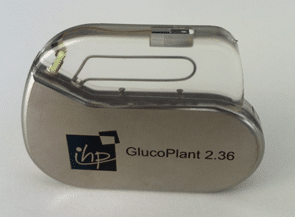
A glucose biosensor, Credit: wikimedia/MBirkholz
What are the components of a biosensor?
A biosensor has many parts that have different functions.
• Analyte: The substance in the body that needs to be detected or measured. For example, in Clark’s experiment, glucose was the analyte.
• Bioreceptor: The substance that recognizes the analyte. This is a biological reaction. The biosensor is selected in such a way that it can recognize only that particular analyte. When the bioreceptor recognizes the analyte, it creates a signal.
• Transducer: A device that converts energy from one form to another. It converts the biological reaction into a signal that can be measured.
• Electronics: These process the signal.
• Display: The results are displayed on the display of a biosensor.
Schematic representation of a biosensor
How do biosensors work?
A biosensor converts the biological reaction into a signal that can be measured. The bioreceptor reacts with the analyte. This reaction is converted into a signal by the transducer and is displayed. The signal is measured to give the amount of the analyte in the body.
Based on the analyte, different materials can be used as a bioreceptor.
• Enzymes: Enzymes are used as bioreceptors in the detection and measurement of glucose.
• Antibodies: When the analyte is a substance that attacks the immune system, a protein called an antibody can be used as a bioreceptor. The analyte here is called an antigen . The antibody binds to the antigen and helps the body’s immune system destroy it.
• Tissues and microorganisms may also be used as bioreceptors.
The working of a biosensor
What are the different types of biosensors?
Biosensors can be divided into different types based on the biological reaction they detect.
• Piezoelectric biosensors: These produce signals when force is applied to the biosensor.
• Electrochemical biosensors: These convert chemical reactions into electrical signals.
• Optical biosensors: These measure signals that are in the form of light.
What are the applications of biosensors?
The main advantages of biosensors are that they are cheap, safe, easy, and accurate. This is why they are used in many industries and have many applications.
One of the major applications of biosensors is in healthcare. Biosensors help diagnose and monitor diseases. Blood sugar is commonly measured using a biosensor. It sends a signal when the blood glucose is either too high or too low. This allows the patient to control their blood sugar. Biosensors can also be used to detect diseases, using antigen–antibody reactions. Cancer and other diseases can also be detected and monitored using biosensors.
The safety of food and food products is a big concern in today’s world. The present methods used to ensure food safety are expensive and time-consuming. Biosensors are a cheaper and more effective alternative to make sure the food we consume is clean, safe, and nutritious. They can detect harmful, disease-causing bacteria in food, and pesticides in milk, and also help measure the proportion of artificial sweeteners in food.
Biosensors are also used in the production of drugs. They can be used to test how effective a drug is against a disease.
A pacemaker is a commonly used biosensor. It is a device that makes sure the heart beats properly, and not too fast or too slow. Understandably, this is very important to lead a healthy life.
Some biosensors can detect microorganisms in the environment. Such biosensors can be used to control pollution and help keep the environment clean. This can also be applied to sewage treatment and providing clean water.
What are the disadvantages of biosensors?
While biosensors are useful in many aspects of life and in many industries, they do not have widespread success because they are very difficult to develop. It requires a lot of skill and knowledge to build a biosensor, and very few scientists are capable of achieving it. These devices also need to be tested thoroughly, to make sure they are safe for use. These processes often take years. This makes the production of biosensors a long and expensive process.
Conclusion
Biosensors have uses in many fields of study. They have made their way into nearly every aspect of science; however, only very few are famous and widely known. They have a wide range of applications in science and medicine. While they have certain drawbacks, their pros outweigh the cons.
Flesch Kincaid Grade Level: 8.8
Flesch Kincaid Reading Ease: 52
Glossary
Enzyme: A substance that speeds up a chemical reaction
Antibody: A protein produced by the immune system when it detects a harmful substance called an antigen
Antigen: A substance that attacks the immune system and has the ability to cause disease
Sanjana is doing her masters in biochemistry. She loves all things biology and truly believes that dogs make the world a better place. She enjoys playing basketball and spends most of her evenings on the court. Writing for Smore Science gives her the creative freedom to write about science in a fun and relatable way.