Table of Contents
PFAS (Per- and Polyfluoroalkyl Substances) – persistent chemicals used widely in consumer products and industrial applications – are emerging as ‘forever chemicals’ contaminating drinking water supplies worldwide.
These human-made compounds withstand degradation in the environment and human body, hence accumulating over time. While federal safety levels aim to limit long-term exposure, recent detection of PFAS in the blood of nearly all Americans underscores the ubiquity of contamination. As key questions remain regarding health implications, PFAS’ persistence introduces unique challenges for regulators charged with ensuring water safety as well as scientists racing to clarify risk factors. Though concentrations may seem negligible in a glass of water, the implications of PFAS toxicity for vulnerable populations underscores why these elusive chemicals warrant increased scrutiny.
What makes PFAS unique is their incredibly strong carbon-fluorine bonds , which give them a remarkable resistance to heat, water, and oil. This durability, while useful in products, makes them persist in the environment and in our bodies, earning them the moniker “forever chemicals.”
The ubiquity of PFAS
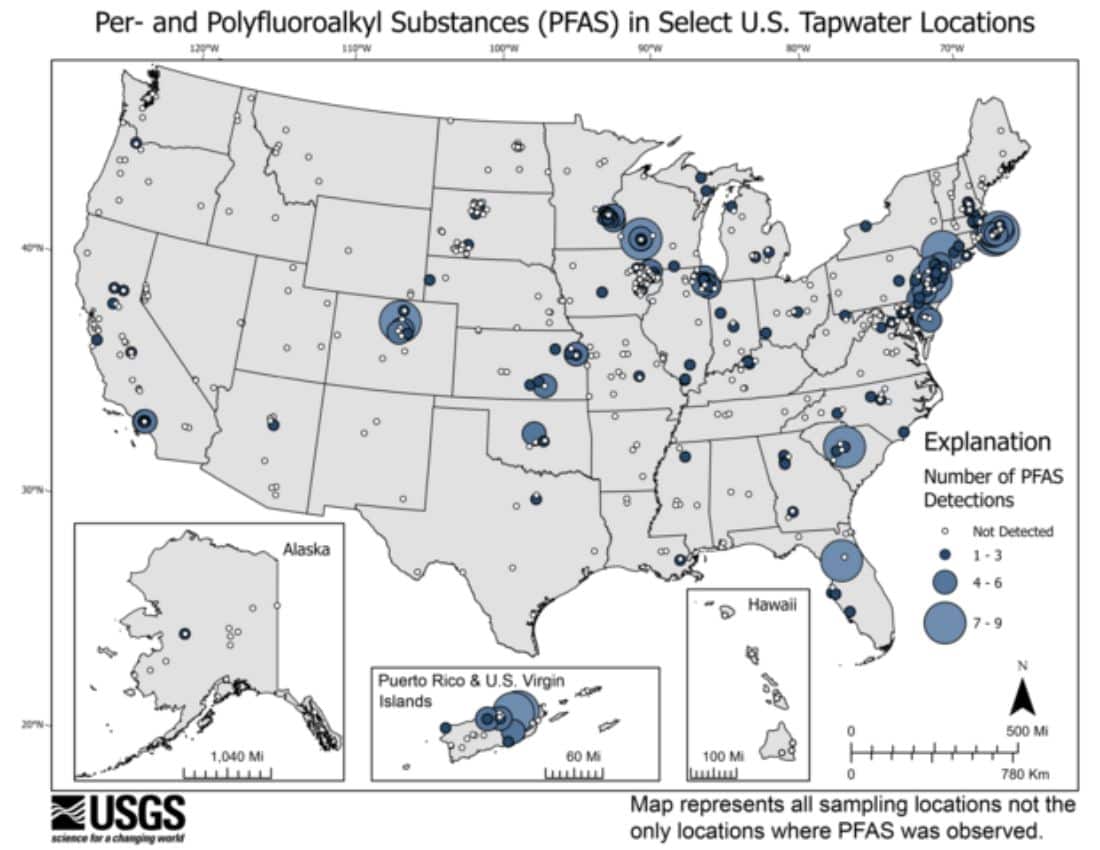
PFAS are everywhere. They’ve been detected in the Arctic ice, deep-sea trenches, and, crucially, in drinking water supplies across the world. A study by the Environmental Working Group found that PFAS are in the drinking water of 200 million Americans. That’s not just a tiny trace; it’s a significant, potentially harmful presence. The widespread contamination is a testament to both the durability and ubiquity of these chemicals.
The health implications of PFAS are alarming. Research indicates that exposure to certain PFAS can lead to adverse health outcomes in humans. These include liver damage, thyroid disease, decreased fertility, high cholesterol, obesity, hormone suppression, and even cancer. A study has linked high levels of PFAS exposure to an increased risk of kidney and testicular cancers.

The challenge in water treatment
Removing PFAS from water isn’t straightforward. Traditional water treatment methods struggle to capture these tiny, resilient molecules. Advanced techniques like activated carbon filtration , ion exchange , and high-pressure membranes are needed, but they come with high costs and technical challenges. This complexity underscores the need for a proactive approach to prevent PFAS contamination in the first place.
The regulation of PFAS is a moving target. In the U.S., the environmental protection agency(EPA) has issued health advisories but hasn’t set enforceable legal limits. This patchwork of advisories and state-level regulations creates a confusing and inconsistent landscape for water safety. Without clear, national standards, it’s challenging to gauge the true scale of the problem and to hold polluters accountable.

Community impact
The impact of PFAS on communities is profound. Stories of contaminated water supplies have emerged across the globe, bringing with them fear, anger, and a sense of betrayal. These communities often face long battles for clean water, compensation, and accountability. Their struggles highlight the human cost of PFAS contamination – a cost that extends beyond mere statistics.
So, what’s next in the fight against PFAS? Increased public awareness is key. As consumers become more informed, they can drive demand for PFAS-free products and push for stronger regulations. On the scientific front, research into safer alternatives and more effective water treatment methods is ongoing. In the policy arena, advocates are calling for stricter regulations and comprehensive monitoring programs.
The issue of PFAS in water is a complex, multi-faceted challenge that requires a concerted effort from governments, industries, scientists, and communities. It’s a stark reminder of the unintended consequences of chemical innovations and the importance of safeguarding our precious water resources. As we move forward, let’s keep our eyes open and our voices loud in the quest for a PFAS-free future. Our health, our environment, and our very way of life depend on it.
Glossary
PFAS (Per- and Polyfluoroalkyl Substances): A group of man-made chemicals used in various industries, known for their durability and resistance to heat, water, and oil.
Carbon-Fluorine Bonds: Strong chemical bonds found in PFAS, contributing to their stability and persistence in the environment.
Activated Carbon Filtration: A method of water treatment where activated carbon is used to remove impurities, including some PFAS, through adsorption.
Ion Exchange: A water treatment technique where ions are exchanged between a solution and a resin, used to remove certain contaminants, including PFAS.
EPA (Environmental Protection Agency): A U.S. government agency responsible for creating standards and laws to protect human health and the environment.
References
National Academies of Sciences, Engineering, and Medicine. 2022. Guidance on PFAS Exposure, Testing, and Clinical Follow-Up. Washington, DC: The National Academies Press. https://doi.org/10.17226/26156.
Seyyedsalehi MS, Boffetta P. Per- and Poly-fluoroalkyl Substances (PFAS) Exposure and Risk of Kidney, Liver, and Testicular Cancers: A Systematic Review and Meta-Analysis. Med Lav. 2023 Oct 24;114(5):e2023040. doi: 10.23749/mdl.v114i5.15065. PMID: 37878255; PMCID: PMC10627102.

Contributors
Copyright @smorescience. All rights reserved. Do not copy, cite, publish, or distribute this content without permission.
SUBSCRIBE TO OUR NEWSLETTER
.......... ..........Subscribe to our mailing list to get updates to your email inbox.
Monthly Newsletter