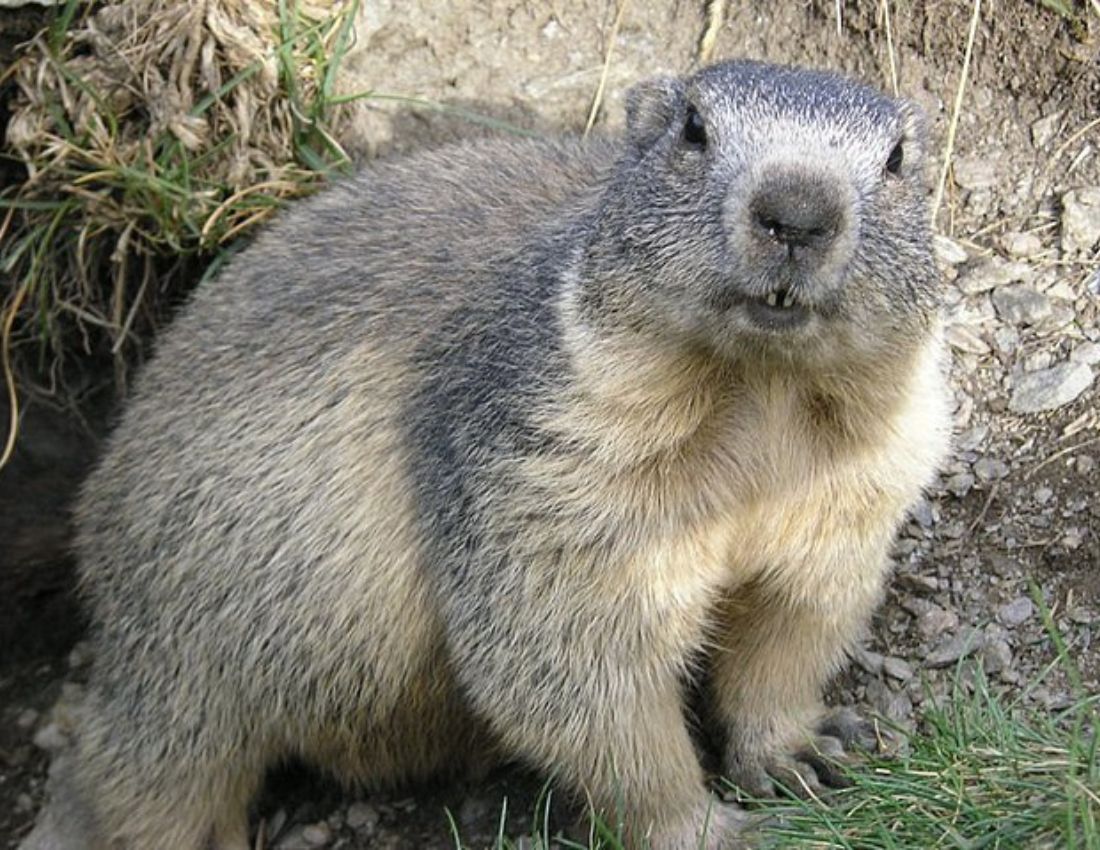
Habitat and Distribution: Let’s start with where these critters call home.
● Marmots are world travelers, found across the Northern Hemisphere – from the high-altitude terrains of the Rockies and the Alps to the grassy slopes of Asia.
● On the other hand, groundhogs are true North American natives, predominantly residing in the eastern United States and Canada.
Physical Characteristics: At a glance, marmots and groundhogs could pass as twins, but a closer look reveals subtle differences. Both have chunky bodies, short legs, and bushy tails, but the size often gives them away.
● Marmots are generally larger, with some species, like the Alaska marmot, weighing up to 8 kg (17.6 lbs).
● Groundhogs, or as some call them, woodchucks, are slightly smaller, averaging around 4-6 kg (8.8-13.2 lbs).
Social Behavior: There is a stark difference in social behaviors and it is a key aspect in differentiating the two.
● Marmots are the extroverts of the rodent world, living in colonies and often seen sunbathing or playing together.
● Groundhogs, however, value their solitude . These lone rangers prefer their own company, except during mating season.
Hibernation Habits: Both marmots and groundhogs are famous for their hibernation habits. However, the duration and depth of their slumbers vary.
● Marmots, particularly those in colder climates, hibernate longer – up to 8 months!
● Groundhogs, while still impressive hibernators, typically clock in around 3-6 months of snooze time.
Communication and Vocalizations : Understanding communication styles provides insights into the behavior and social structures of the two rodents.
● Ever heard a marmot whistle? They’re not just showing off their musical skills; it’s their way of communicating.
● Groundhogs, on the other hand, are less vocal but use body language to express themselves.
Fun Facts and Myths
● Did you know that Groundhog Day is based on a German legend and has no scientific basis?
● Marmots are sometimes called “rock chucks” due to their mountainous habitats.