In Vitro vs In Vivo

Table of Contents

Imagine a world in which every human being is carefully designed.


Destinies are predetermined. Your body, your mind, and your profession are all determined in a small test tube. This is the premise of the book titled Brave New World. The scenario seems far-fetched and absurd now. But it may become possible someday. And one of the tools to achieve this could be in vitro fertilization .


We have come a long way from the first test tube baby. Science and biology could not be possible without in vivo and in vitro research.

In Vitro: A world inside a tube

Every experiment or test cannot be directly conducted inside a human body. In vitro , in Latin, means “within the glass.” In vitro experiments are those in which the test is conducted under controlled conditions in a tube or a Petri plate. These studies are cheaper and faster than those involving living humans. Also, there are fewer ethical concerns.

In Vitro experiments are carried out in petri plates or test tubes.
In Vitro experiments are carried out in petri plates or test tubes. Credit: Paphrag/Wikimedia Commons

Where is In Vitro used?

  • Drug discovery

Before any drug can be sold and prescribed commercially, it is important to ensure that there will not be any unintended side effects. Researchers test potential drug compounds in vitro before they can go forward with clinical trials. Specific cells are exposed to the drug under in vitro conditions to check for toxicity effects.


It can especially be used to test anti-cancer drugs. Cancer is a complex disease, and in vitro testing helps in the analysis of multiple characteristics. In vitro experiments help scientists analyze the toxicity and tumor-fighting capacity of the drug.


  • In Vitro Fertilization

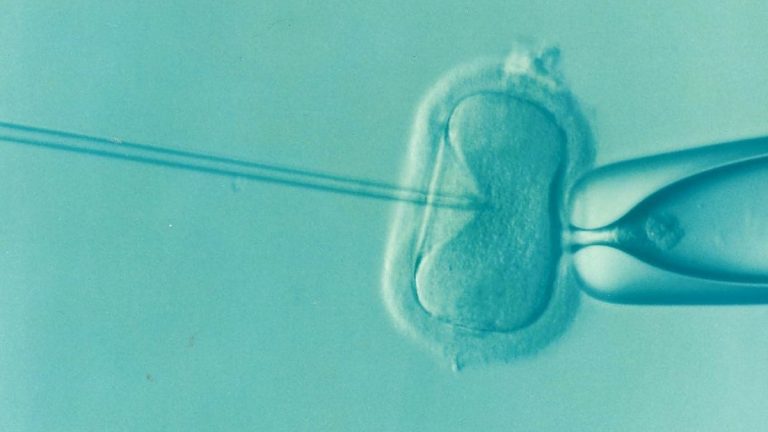
One of the most promising inventions to come out of biotechnology is in vitro fertilization  or IVF. In this procedure, human eggs are obtained from ovaries and placed in a Petri plate. They are then fertilized by a sperm in the Petri plate. After fertilization has occurred, the fertilized eggs are transferred to a uterus. The world’s first test tube baby, Louise Brown, was born on 25 July 1978 in England, via IVF.

IVF
Microscopic view of In Vitro Fertilization (IVF) Credit: Wikimedia Commons

Who Are My Parents?

We all have two parents, right? Well, not all of us do. Some of us have three! The world’s first 3-parent baby was born via IVF. It involved three people—the mother who became pregnant, the father, and a woman who donated her . The genetic material of the mother was extracted from her egg’s nucleus. It was then inserted into the egg of the donor after the genetic material of the donor’s egg cell was removed. The egg then underwent fertilization with the father’s genetic material. This procedure is called spindle nuclear transfer . The woman who donated the egg does not contribute much genetic material to the baby, but the baby does inherit her mitochondrial DNA. The mother suffered from mitochondrial disease. Hence, this procedure was carried out to prevent the baby from also having the mitochondrial disease.


We all have two parents, right? Well, not all of us do. Some of us have three! The world’s first 3-parent baby was born via IVF. It involved three people—the mother who became pregnant, the father, and a woman who donated her . The genetic material of the mother was extracted from her egg’s nucleus. It was then inserted into the egg of the donor, after the genetic material of the donor’s egg cell was removed. The egg then underwent fertilization with the father’s genetic material. This procedure is called spindle nuclear transfer. The woman who donated the egg does not contribute much genetic material to the baby, but the baby does inherit her mitochondrial DNA. The mother suffered from mitochondrial disease. Hence, this procedure was carried out to prevent the baby from also having the mitochondrial disease.

In Vivo: The Paradise Inside a Living Body

Although in vitro studies offer many advantages, they can sometimes be inadequate. In vitro tests may not always mimic what happens inside a human body. Hence, the need for in vivo. In vivo, in Latin, translates to “within the living.” These are studies conducted inside a living body.


In vivo refers to studies conducted on animals, like mice, rabbits, or guinea pigs. If a drug or chemicals shows good results under in vitro conditions, the drug can be administered to these animals. It is the next step in the drug discovery process.


Clinical trial refers to those trials conducted on human bodies. If the drug or chemical compound showed promising results and fewer side effects on the animals, it can be administered to humans. It is one of the most important steps in drug discovery. It determines whether the drug can be sold commercially or not.

In Vivo Gene Therapy

“Butterfly disease” and “bubble boy disease,” despite their unserious names, are quite serious. These are what we call rare diseases, as they affect a very small percentage of the population. According to the Orphan Drug Act, a rare disease is a condition that affects less than 200,000 people in the U.S. Not only are these diseases rare, but they are also very difficult to treat. Our lack of knowledge has been a major obstacle in finding a cure for these diseases.


But we have a “knight in shining armor”—gene therapy.


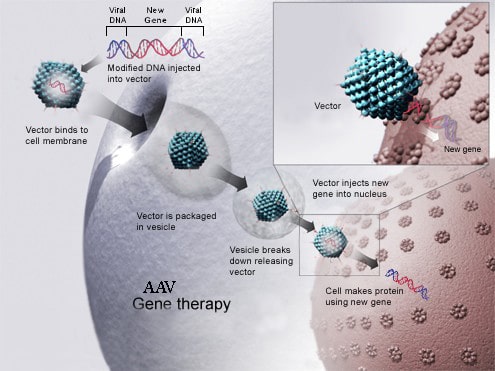
Gene therapy is a genetic treatment. The abnormal gene is corrected, or a missing gene is inserted into the patient. This type of treatment involves the use of vehicles called vectors which can deliver the gene to the target organ or cell. Viruses have garnered a terrible reputation after the covid pandemic, but they are useful to us in some cases. In gene therapy, we use viruses like Adeno-associated viruses (AAV), Adenoviruses, and Lentiviruses as vectors.

AAV Gene Therapy. Crediit: George Church/Wikimedia Commons
Gene introduced into cell using a vector.
Gene introduced into cell using a vector. Credit: National Human Genome Research Institute/Flickr

Using AAV as a vector , scientists inserted a functioning version of an abnormal gene in the retina of the eye. This was done to combat blindness. It was tested on 20 patients, 18 of which then showed improved vision. Gene therapy would be a boon if harnessed well.


Although simple in theory, the underlying mechanisms of gene therapy are quite complex. It is a much-researched topic in the scientific community.

The Zebrafish Bridge

In science and especially in biology, models form an important part of the research. No, I’m not talking about any fashion models, but rather a system in which we can conduct experiments to help us understand the complex processes in humans. For in vitro studies, we have chip models. In chip models, tissues and organs are grown and scientists can simulate some of the conditions in vivo.


In vivo models are live animals like mice, guinea pigs, and rabbits. For research on HIV infection, animals like gorillas and macaques are being used.


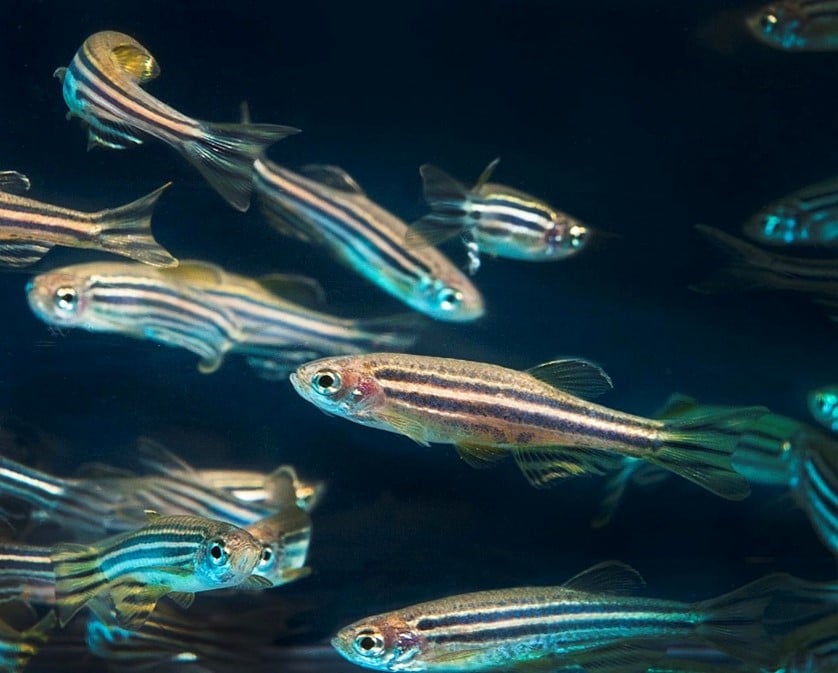
In vivo models are certainly better in terms of understanding complex biological processes. But due to ethical issues regarding the usage of animals for research, they are not the best choice. This is where zebrafish come to the rescue. The freshwater fish called zebrafish is like a bridge between in vivo and in vitro model systems. It’s easier to breed and maintain than mammals, thereby reducing costs. They also have transparent skin, which makes visualization of body organs quite easy.

Zebrafish
Zebrafish Credit: Wikimedia Commons

It is human psychology and ethics that make scientists assume that zebrafish are a better model system. When choosing any model system or animal for experimentation, a few questions guide our choice. Can they talk, suffer, or feel pain? It was a long-held belief that fish don’t feel pain the same way other animals like cats and dogs do. Hence, mice, rodents, and dogs received more humane treatment. There isn’t much evidence to support that fish feel pain the way mammals do. Hence, zebrafish came to be accepted as the better model system.

Flesch Kincaid Grade Level: 7.7


Flesch Kincaid Reading Ease: 60.2

Glossary

In Vitro: Outside the living system.


In Vitro Fertilization: A procedure in which fertilization is carried out outside the body (in a petri plate or test tube).


Spindle Nuclear Transfer: Transfer of genetic material from an unfertilized egg to another.


In Vivo: Inside the living system.


Clinical Trial: Study performed in humans.


Gene Therapy: A treatment to correct genetic defects.


Vector: A vehicle to carry or transport the gene to the patient’s cell or organ.


Toxicity: the quality of being toxic; harmfulness


Fertilization: When gametes combine to form a zygote that will grow into a new organism

In Vitro Studies | Bone & Joint Research Laboratory. (n.d.). https://www.bjrl.utah.edu/in-vitro-studies


Hirsch, C. (2019, December 10). In Vitro Research Reproducibility: Keeping Up High Standards. Frontiers. https://www.frontiersin.org/articles/10.3389/fphar.2019.01484/full


Wang, J., & Sauer, M. V. (2006). In vitro fertilization (IVF): a review of 3 decades of clinical innovation and technological advancement. Therapeutics and Clinical Risk Management, 2(4), 355–364. https://doi.org/10.2147/tcrm.2006.2.4.355


Bavister, B. D. (2002). Early history of in vitro fertilization. Reproduction, 181–196. https://doi.org/10.1530/rep.0.1240181


Kushnir, V. A. (2022, January 3). The Future of IVF: The New Normal in Human Reproduction. SpringerLink. https://link.springer.com/article/10.1007/s43032-021-00829-3?error=cookies_not_supported&code=694ab49d-28ab-4ee9-b6ee-52a311f7a1b6


Farnezi, H. C. M., Goulart, A., Santos, A. L. D., Ramos, M. O., & Penna, M. P. (2020). Three-parent babies: Mitochondrial replacement therapies. JBRA Assisted Reproduction. https://doi.org/10.5935/1518-0557.20190086


Gonçalves, G. a. R., & De Melo Alves Paiva, R. (2017). Gene therapy: advances, challenges and perspectives. Einstein (São Paulo), 15(3), 369–375. https://doi.org/10.1590/s1679-45082017rb4024


Dalkara, D., Goureau, O., Marazova, K., & Sahel, J. (2016). Let There Be Light: Gene and Cell Therapy for Blindness. Human Gene Therapy, 27(2), 134–147. https://doi.org/10.1089/hum.2015.147


Bailone, R. L. (2020, May 7). Zebrafish as an alternative animal model in human and animal vaccination research – Laboratory Animal Research. BioMed Central. https://labanimres.biomedcentral.com/articles/10.1186/s42826-020-00042-4

Contributors

Copyright @smorescience. All rights reserved. Do not copy, cite, publish, or distribute this content without permission.


Join 20,000+ parents and educators
To get the FREE science newsletter in your inbox!