Hyaluronan , also known as hyaluronic acid, is a fascinating and vital substance in our bodies, often overlooked but playing crucial roles in maintaining health and vitality. From keeping our skin supple to ensuring our joints move smoothly, hyaluronan’s impact is far-reaching.
You’ll find hyaluronan in lots of skincare products like creams and serums because of its super-hydrating powers. But that’s not all – it’s also used in some medicines, especially those that help with joint pain, and even in contact lenses to keep your eyes comfortable!
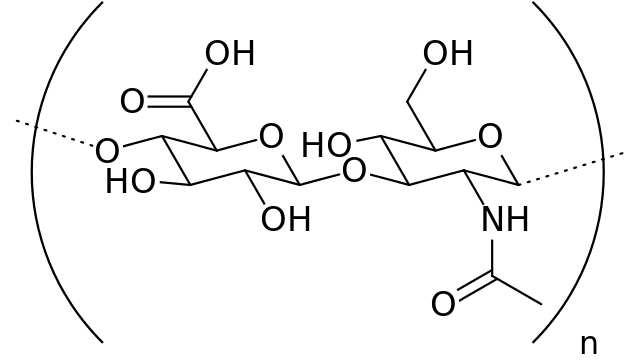
Hyaluronic Acid Chemical Structure, Credit: Wikimedia/ Ed (Edgar181)
The science of hyaluronan
At its core, hyaluronan is a glycosaminoglycan, a type of long-chain sugar molecule. Its structure allows it to bind and retain water molecules, making it an excellent natural moisturizer. Studies have highlighted its unique capacity to hold up to 1,000 times its weight in water. This property is why hyaluronan is so effective at keeping tissues hydrated and lubricated .
Hyaluronan is not just limited to the skin and joints; it’s found in various tissues, including the eyes, cartilage, and even the umbilical cord. Research studies have reported on its widespread distribution and its role in cell signaling, inflammation regulation, and tissue repair.
Your skin loves hyaluronan because it helps keep it hydrated and plump. That’s why you might have heard of hyaluronan in skincare products – it’s a key ingredient in retaining moisture and keeping skin looking young and fresh!
It’s also really important for your joints. In joints, hyaluronan acts as a lubricant and shock absorber. Clinical studies demonstrate its effectiveness in treating osteoarthritis, reducing joint pain, and improving mobility.
Hyaluronan’s role in wound healing is backed by extensive research. It accelerates tissue repair and has anti-inflammatory properties. Its biocompatibility makes it ideal for various medical applications, including eye surgery and drug delivery systems.
Interestingly, hyaluronan is not just produced by humans and animals; it’s also found in certain bacteria and animal tissues like rooster combs. This discovery has led to its industrial production for medical and cosmetic use.
Scientists continue to uncover new potential uses for hyaluronan. Its role in regenerative medicine, particularly in tissue engineering and stem cell therapy, holds promise for future medical breakthroughs.
In summary, hyaluronan is a remarkable component of our bodies, playing essential roles in maintaining hydration, ensuring joint health, and facilitating wound healing. Its versatility and effectiveness make it a subject of ongoing research and an integral part of medical and cosmetic applications. As we continue to explore its potential, hyaluronan stands out as a silent yet powerful force in our health and well-being.
Glossary
Hyaluronan: A natural substance found in the body, known for its ability to retain water and keep tissues hydrated.
Hydrated: Containing water or moisture.
Serums: A type of skincare product that is designed to deliver high concentrations of specific active ingredients to the skin.
Skincare Products: Various products used to care for the skin, including creams, lotions, and serums.