Table of Contents
A rustle in the bushes triggers your heart to suddenly pound. You break into a nervous sweat before a big speech. In moments of stress, our bodies shift into an elevated state seemingly out of our control. These sensations originate from sophisticated nervous system responses honed over eons of evolution for a single purpose – survival.
Understanding the basics
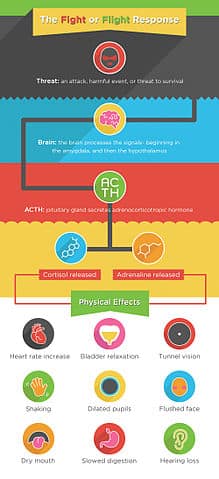
The fight or flight response is like your body’s built-in alarm system. It’s a physiological reaction that occurs in response to a perceived harmful event, attack, or threat to survival. American physiologist Walter Cannon first described this concept in the 1920s. When you face a threat, your sympathetic nervous system kicks into gear, triggering a cascade of changes in the body to prepare you to either fight the danger or run away from it.

The sympathetic nervous system at work
When the sympathetic nervous system activates, it’s like pressing the gas pedal in a car. Your heart rate increases, your breathing quickens, your muscles tense up, and your senses become sharper. This system utilizes neurotransmitters like adrenaline (epinephrine) and noradrenaline (norepinephrine) to create these effects.
The parasympathetic nervous system: The calming counterpart
In contrast, the parasympathetic nervous system acts like a brake. It’s responsible for ‘rest and digest’ activities when the body is at rest. It conserves energy, slows the heart rate, enhances digestion, and relaxes muscles. This system uses neurotransmitters like acetylcholine to induce calm and restoration. Research in the field of neurogastroenterology has shown how this system influences digestion and gut health.
The balance between sympathetic and parasympathetic responses
It’s a delicate dance between these two branches of the nervous system to keep our bodies in optimal balance. Too much sympathetic activation during everyday life tilts that equilibrium towards distress by bombarding us with stress hormones like cortisol and adrenaline when no lions are chasing us. Over time, this can strain the cardiovascular system and suppress immune function, leading to chronic issues like heart disease, obesity, depression, and more.
In fact, a study published in the Annals of Behavioral Medicine assessed participants’ baseline stress levels and then tracked health outcomes. The results found that those with heightened stress and anxiety at the start were over 50% more likely to suffer from conditions like heart attacks and strokes later on, demonstrating the tangible impacts excessive fight-or-flight responses can inflict over years.
On the other hand, having too little sympathetic activity and excessive parasympathetic influence causes the opposite issue – leaving one feeling sluggish, mentally foggy, and disconnected. Imagine walking around all day in a haze as if you just woke up from a deep sleep. There would be little mental clarity or motivation to take on challenges.
Clearly, our nervous systems function best when balanced between responsive states. Tilting too far either way can dampen our aliveness and well-being over time. This reveals why effectively managing stress via lifestyle habits like exercise, meditation, and socializing remains crucial for long-term health.
Managing the fight or flight response
Understanding and managing our body’s natural response to stress is crucial for both short-term well-being and long-term health. When faced with demanding situations, activating the sympathetic nervous system is normal and helpful for performance. However, excessive or chronic activation takes a toll over time.
Research shows that deep, diaphragmatic breathing, mindfulness meditation, yoga, and regular cardio exercise can all help recalibrate an overactive fight-or-flight response. Slow, belly-breathing taps into the parasympathetic nerves and signals safety to the brain, lowering cortisol and heart rate. Mindfulness also balances nervous system activity by focusing attention on the present moment rather than playing out worst-case scenarios in the mind. Gentle movements like yoga release tension while lowering blood pressure. Aerobic exercise causes the release of endorphins and neurotransmitters with calming effects.
Over weeks and months of daily practice, these healthy lifestyle habits train the body to remain balanced – avoiding detrimental high or low arousal states. Learning constructive ways to activate and calm nervous system responses gives us greater control over energy levels, mental state, and how stress impacts us immediately and over a lifespan.
Glossary
Fight or Flight Response: A physiological reaction that occurs in response to a perceived harmful event or threat, triggering changes like increased heart rate and heightened senses.
Sympathetic Nervous System: Part of the autonomic nervous system that activates the body’s rapid involuntary response to dangerous or stressful situations.
Parasympathetic Nervous System: A division of the autonomic nervous system responsible for ‘rest and digest’ functions, promoting relaxation and energy conservation.
Neurotransmitters: Chemical messengers that transmit signals across a chemical synapse, such as between neurons, to influence body functions.
Adrenaline (Epinephrine): A hormone and neurotransmitter involved in the fight or flight response, increasing heart rate and muscle readiness.
Noradrenaline (Norepinephrine): A neurotransmitter similar to adrenaline, involved in the body’s response to stress or danger.
Acetylcholine: A neurotransmitter that plays a role in muscle activation and is involved in various functions of the parasympathetic nervous system.
Neurogastroenterology: A branch of medicine that deals with the nervous system’s control of the gastrointestinal system.
References
McCorry LK. Physiology of the autonomic nervous system. Am J Pharm Educ. 2007 Aug 15;71(4):78. doi: 10.5688/aj710478. PMID: 17786266; PMCID: PMC1959222.
Mats Fredrikson, Karen A. Matthews, Cardiovascular Responses to Behavioral Stress and Hypertension: a Meta-Analytic Review, Annals of Behavioral Medicine, Volume 12, Issue 1, 1990, Pages 30–39,
Contributors
Copyright @smorescience. All rights reserved. Do not copy, cite, publish, or distribute this content without permission.
SUBSCRIBE TO OUR NEWSLETTER
.......... ..........Subscribe to our mailing list to get updates to your email inbox.
Monthly Newsletter