In the vast expanse of the cosmos, the concept of time stretches and twists in ways that defy our earth-bound intuitions. The notion of spending a year in space brings a bundle of questions, chief among them: How does a year in space compare to a year on Earth? This article explains how time works differently in space compared to Earth. It looks at scientific reasons for this difference and shows how these space phenomena actually affect our everyday lives.
The Science Behind Time Dilation: Einstein’s Theory of Relativity
Albert Einstein’s theory of relativity plays a pivotal role in understanding how time in space differs from time on Earth. According to this theory, the faster one travels, the slower time passes for them relative to someone stationary. This phenomenon, known as time dilation, means that for astronauts orbiting Earth at high speed in the International Space Station (ISS), time ticks slightly slower than it does for us on the ground.

Scott Kelly’s Year in Space: A Real-World Time Dilation Experiment
One of the most compelling pieces of evidence comes from astronaut Scott Kelly, who spent nearly a year in space while his twin brother, Mark Kelly, remained on Earth. This unique situation provided a rare opportunity to study the effects of space travel on the human body and time perception. Upon Scott’s return, scientists found a very small but measurable difference in the aging process between the twins, underscoring the physical reality of time dilation.


The mathematical breakdown
The difference, while scientifically significant, is not as dramatic as one might imagine.
For example, calculations based on the speed of the ISS suggest that an astronaut would age roughly 0.007 seconds less for every six months in space compared to someone on Earth. For a year, this discrepancy is still less than a second – a tiny fraction undetectable in our daily lives but monumental in physics.
Gravitational influence on time
Beyond velocity, gravity (or the lack thereof) in space also affects time. Einstein’s general relativity explains that the stronger the gravitational pull, the slower the flow of time. Thus, astronauts farther from Earth’s gravity experience time slightly faster than we do on the surface. However, this effect is smaller than that caused by velocity, making the overall difference minuscule to human perception.
Psychological Effects of Time Dilation on Astronauts
Apart from the physical effects, the psychological perception of time in space presents another layer of complexity. Astronauts often report a shift in how they perceive time, with days blending into nights without natural light cycles. This subjective experience of time can differ vastly from the objective, mathematical measurements, highlighting the multifaceted nature of time itself.
Practical Implications of Time Dilation for Space Travel
As we set our sights on extended missions, perhaps to Mars or beyond, understanding and managing these temporal discrepancies becomes crucial. The cumulative effects of time dilation could have more pronounced implications on health, and thus, synchronization of space travelers with Earth-bound systems and loved ones seems critical.
Measuring Time in Space with Atomic Clocks
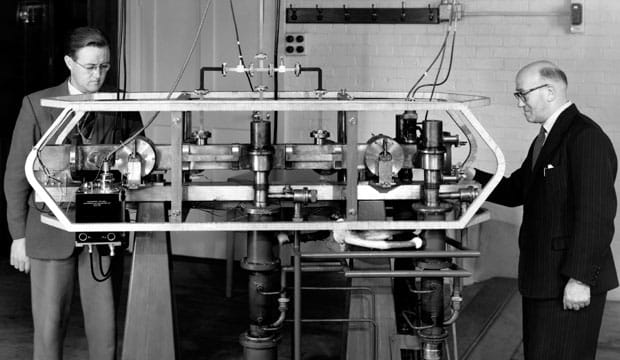
To navigate these challenges, space agencies use atomic clocks, which are highly accurate at measuring time. These clocks help synchronize time between space and Earth, ensuring that communication and operations can proceed with precision despite the relativistic effects.
Future Space Missions and Time Dilation Challenges
When astronauts travel to distant planets in the future, they’ll face a big challenge-on long space journeys, time will pass more slowly for the astronauts than for people back on Earth.
This means:
- A 2-year mission to Mars might feel like 2 years to the astronaut, but slightly more time passes on Earth
- For more distant travel, the differences could be much bigger
- When astronauts return home, they might find that more years have passed than they experienced
While a year in space is nearly the same as a year on Earth in terms of actual time, the small differences help us better appreciate how complex our universe truly is. Astronauts not only travel beyond our planet but also help us understand time in new ways.
As we explore space, we bring our curiosity and desire to learn about things beyond Earth. Studying how time works differently in space versus on Earth adds to our scientific knowledge and makes our human experience richer. It reminds us that how we experience time is just one small part of the universe’s amazing patterns.
FAQs
How long is space travel?
Space is unimaginably vast; the distance between Earth and Mars is about 140 million miles (140,000,000), and it would take approximately 300 days for you to reach Mars from Earth. Saturn, a farther planet, is about a billion miles from Earth (1,000,000,000), and it would take from 3-6 years to reach Saturn from Earth.
Who has stayed long in space at the International Space Station?
Astronaut Scott Kelly holds the record for the longest single spaceflight at 340 days. For the longest cumulative days in space, astronaut Peggy Whitson holds the record at 665 days.
Contributors