Supercooling , also known as undercooling, is one of those natural phenomena that can jumble your thoughts. This is when a liquid is cooled below its normal freezing point, but it doesn’t turn solid. It’s like having a bottle of water so cold it should be ice, but it’s not!
In normal cases, molecule in water move around freely. However, on cooling the temperature, the molecules start to move slowly. In a supercooled liquid, the speed is the least. This allows water molecules to come so close, and move so slow that the molecules merely vibrate about their position.
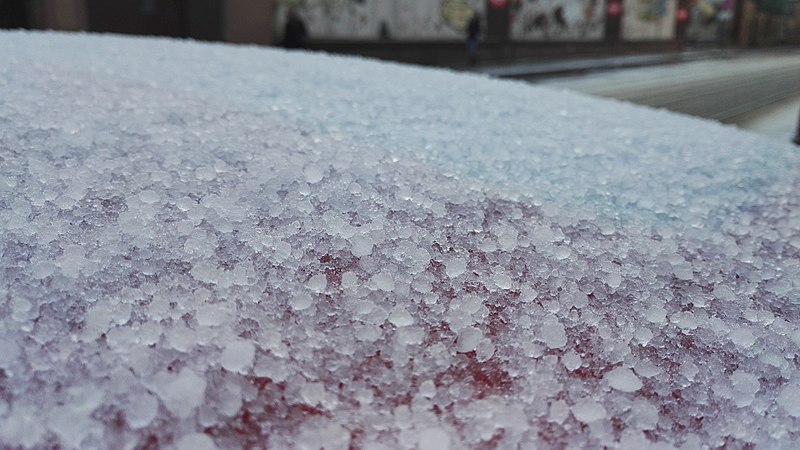
Supercooled water, Credit: Wikimedia/Soshial
The nucleation process
Nucleation plays a big role in our supercooling story.During supercooling, the molecules are waiting for a signal to start forming a solid. Nucleation is that signal. Similarly, nucleation doesn’t cool the liquid but starts the process of turning it into a solid. The molecules of water now vibrate in place, which is the case in any solids.
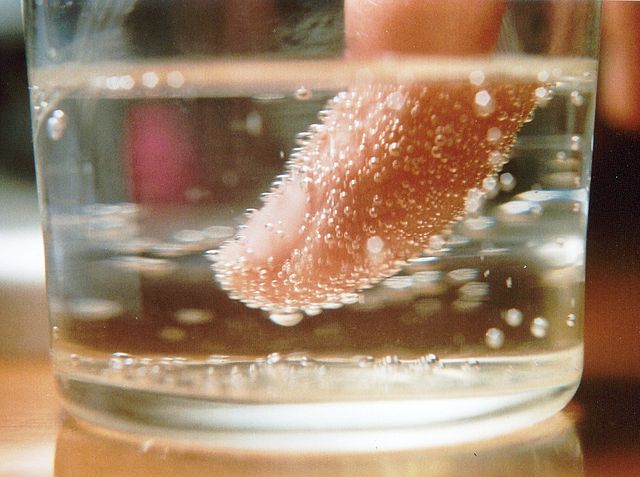
Nucleation, Credit: Wikimedia/Melamed katz
Triggers of nucleation
Just as different things can make a coach blow his whistle, various factors can trigger nucleation. A small piece of dust, a rough spot in the container, or even a sharp tap or shake can be that trigger.
You’ve probably seen this if you’ve ever had a really cold soda. When you open the can, the liquid sometimes turns to ice right before your eyes. That’s because the opening of the can creates a shock wave, a big enough change to kick off the nucleation process.
The magic of supercooled liquids
When the right trigger comes along, they quickly turn from a supercooled liquid into a solid. It’s not just water that can do this. Many other liquids can be supercooled too. And the best part? The moment the liquid becomes a solid, it also releases heat, which can feel like a mini explosion of warmth.
Practical applications of supercooling and nucleation
Supercooling and nucleation aren’t just interesting; they’re also handy in real life. For example, a new kind of wine warmer uses this process. This device has a liquid that is supercooled. When you click a tiny metal piece inside the device, it starts the nucleation process, and the liquid solidifies and warms up your wine!
In the future, scientists may find more uses for supercooling and nucleation. Maybe one day, they’ll use it to create heat in places where it’s usually very cold, like on mountain tops or even in outer space! This incredible process of nature certainly opens up a universe of possibilities.
Glossary
Supercooling: The process of chilling a liquid below its freezing point, without it becoming solid.
Nucleation: The first step in the formation of either a new thermodynamic phase or a new structure via self-assembly or self-organization.
Molecule: The smallest particle in a chemical element or compound that has the chemical properties of that element or compound.