Table of Contents

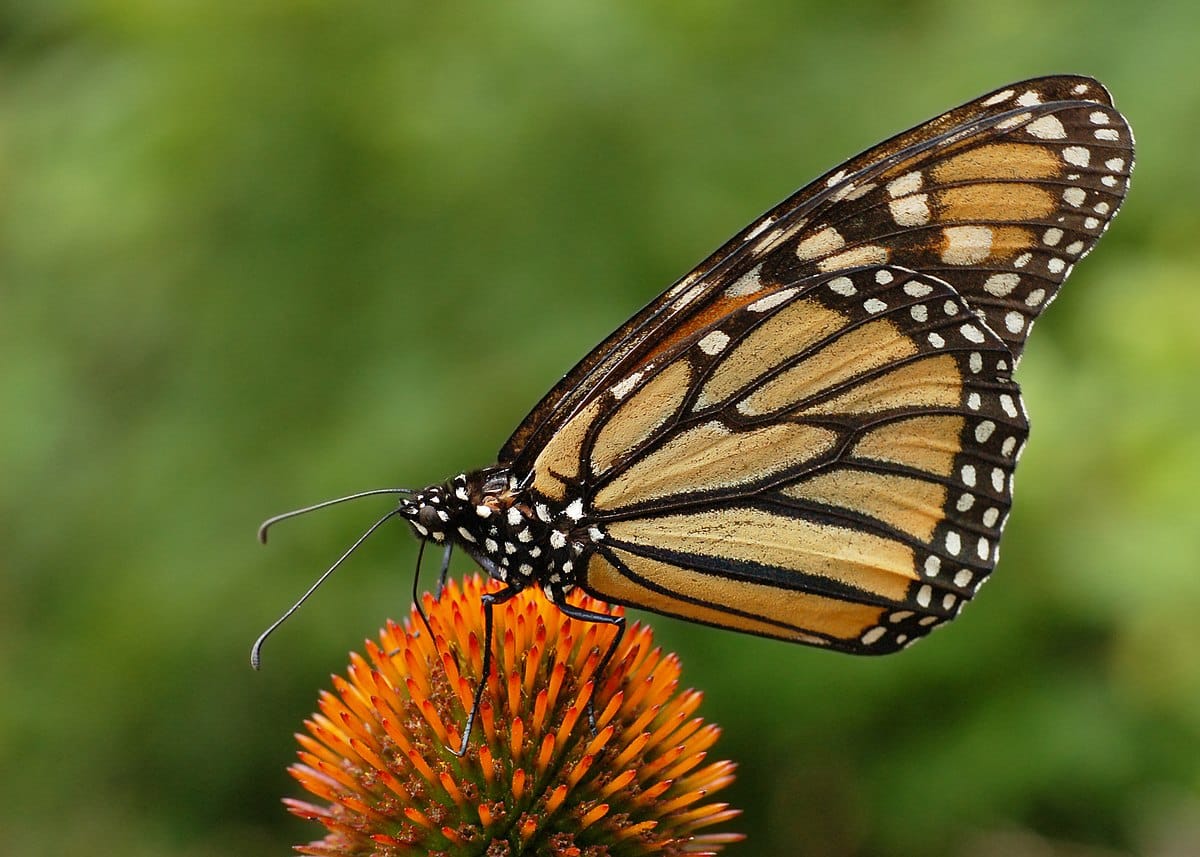
Have you ever seen a beautiful monarch butterfly fluttering through the air on its brightly colored wings? These tiny animals are not only beautiful to look at but also amazing travelers. Join us as we go on an exciting journey to find out how far monarch butterflies travel. Get ready to spread your wings and dive into the world of these amazing insects.
The migration over long distances
People often talk about how far monarch butterflies travel. Every year, these tiny insects go on a long journey in which they travel amazing distances and face great challenges.
To give you an idea of how far monarch butterflies travel, they can move up to 3,000 miles (4,800 kilometers) from where they breed in the summer to where they spend the winter. That’s like going from the sunny beaches of California to the snowy mountains of Alaska.
DOWNLOAD: Animal Migrations Science Poster
Monarchs migrate from the north to the south
Monarch butterflies in North America make a long journey from north to south. As the seasons change and the weather gets colder, these hardy butterflies take a dangerous trip to find better weather and plenty of food.
From the United States and Canada, where they spend the summer, they travel all the way down to the beautiful woods of Mexico. Can you imagine flying for weeks to get to a place where you’ll spend your winter vacation?
Milkweeds for the monarchs

During their amazing trip, monarch butterflies stop at a few places to rest and eat. They get the energy they need to make their long, hard trips from the sweet nectar in flowers. They need these natural gas stations to stay alive. Monarchs also need a specific plant called milkweed, which their eggs and caterpillars feed on. Milkweed is important to their ability to migrate because it gives their young the food they need to grow up.
How do monarch butterflies find their way?
You might be wondering how these tiny insects travel such long distances. Monarchs have an amazing method of finding their way. During the day, they follow the sun’s path, and at night, they follow the stars.
These smart insects can even tell when the temperature or air currents change, which lets them change their flight paths to match. It’s like having a GPS System built in, but it’s even more interesting!
How to protect the monarch butterflies
In recent years, ecosystem loss and the use of pesticides have caused the number of monarch butterflies to go down. It is very important that we protect the places where they lay their eggs and make sure there are milkweed and nectar-rich flowers along their travel path.
By making butterfly-friendly gardens and not using harmful chemicals, we can help these insects survive and see their magical journeys for years to come.
So, the next time you see a monarch butterfly flying through the air with grace, think about what an amazing trip it has been on. Let’s work together to protect their amazing flight routes so that these beautiful animals can stay alive and continue to amaze us.
Flesch Grade Level: 8.5
Flesch Reading Ease: 64.4
Glossary
Breed: The process of laying eggs and reproducing offspring.
Nectar: A sweet, sugary liquid found in flowers that monarch butterflies feed on for energy.
GPS system: A navigation system that uses satellites to provide accurate location information, metaphorically used here to describe the monarch butterflies’ remarkable navigation abilities.
Pesticides: Chemicals used to kill or control pests, which can have a negative impact on monarch butterflies and their populations.
References
Monarch Butterfly Migration and Overwintering. (n.d.). Monarch Butterfly Migration and Overwintering. https://www.fs.usda.gov/wildflowers/pollinators/Monarch_Butterfly/migration/
(n.d.). Monarch Joint Venture. https://monarchjointventure.org/monarch-biology/monarch-migration
Monarch Butterfly Habitat Needs. (n.d.). Monarch Butterfly Habitat Needs. https://www.fs.usda.gov/wildflowers/pollinators/Monarch_Butterfly/habitat/
Sun Compass Integration of Skylight Cues in Migratory Monarch Butterflies. (2011, January 26). Sun Compass Integration of Skylight Cues in Migratory Monarch Butterflies – ScienceDirect. https://doi.org/10.1016/j.neuron.2010.12.025
Migratory monarch butterfly now Endangered – IUCN Red List. (n.d.). IUCN. https://www.iucn.org/press-release/202207/migratory-monarch-butterfly-now-endangered-iucn-red-list
Contributors
Copyright @smorescience. All rights reserved. Do not copy, cite, publish, or distribute this content without permission.
SUBSCRIBE TO OUR NEWSLETTER
.......... ..........Subscribe to our mailing list to get updates to your email inbox.
Monthly Newsletter