Glow-in-the-dark T-shirts, stickers and even paint feel like pure magic when you see them with the lights out. But the science behind them is even cooler. How does glow in the dark work? The answer lies in special materials called phosphors that absorb light energy and release it gradually, creating that mysterious glow long after the lights go out. In this guide, we’ll break down the science of photoluminescence and explore where you encounter this glowing phenomenon in everyday life.
What does glow-in-the-dark mean?
When something glows in the dark, it means the material can absorb light, store that energy, and then slowly release it as visible light even in complete darkness. This process is called photoluminescence, specifically a type called phosphorescence.
The science of glow-in-dark: How does it work?
Understanding how glow-in-the-dark materials function requires looking at what happens at the molecular level and how these special substances interact with light.
At the heart of every glow-in-the-dark product are chemicals called phosphors. These are substances that can absorb energy from light and re-emit it over time. When light hits phosphor molecules, their electrons jump to higher energy levels. As these electrons gradually fall back to their normal state, they release the stored energy as light we can see.
Common phosphor materials include:
Zinc sulfide – The original glow material used since the early 1900s, often producing a greenish-yellow glow
Strontium aluminate – A newer, more powerful phosphor developed in the 1990s that glows brighter and longer (up to 12 hours)
Calcium sulfide – Another compound that produces an orange-red glow
Modern glow-in-the-dark products typically use strontium aluminate doped with europium, which creates an intense green glow that’s visible for hours.
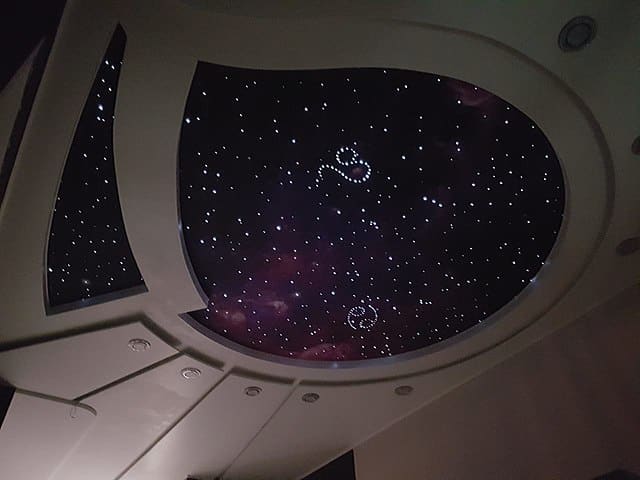
Glow in the dark stars on a ceiling, Credit: Wikimedia/Дом Неба
Glow-in-the-dark vs. bioluminescence and fluorescence
Not all glowing things work the same way. Here are the three different ways that objects can glow.
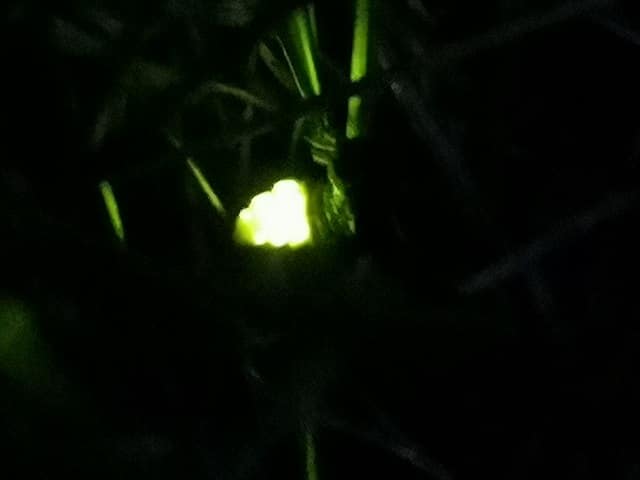
Bioluminescence means “living light.” and occurs when living organisms create light through chemical reactions in their bodies. Fireflies produce flashes using luciferin and luciferase enzymes, while deep-sea creatures like anglerfish use glowing bacteria to lure prey. Unlike glow-in-the-dark materials, bioluminescent organisms generate their own light without needing to absorb it first—they create it through metabolism.
Fluorescence happens when materials glow brightly but only while exposed to a specific light source, usually ultraviolet (UV) light. Highlighter ink appears to glow under black lights, and certain jellyfish proteins fluoresce brilliantly in labs. The moment you remove the UV light, fluorescent materials stop glowing instantly because they don’t store energy.
Phosphorescence (glow-in-the-dark) is the slow release of stored light energy over time. Phosphorescent materials charge up under normal light and continue glowing in darkness—sometimes for hours. The glow gradually fades as the stored energy depletes.
The difference between bioluminescence, glow-in-the-dark or phosphorescent materials and fluorescent materials is that bioluminescence is biological and self-generated, fluorescence requires continuous light exposure, and phosphorescence stores and releases light over time.
We have figured out how to make many different things glow in the dark. Here are common places where phosphorescent materials make life safer, easier, or more fun:
Toys and stickers
Emergency exit signs
Safety tape and road markings
Fishing lures
Watch dials
Paint
Fun facts about glow-in-the-dark science
Why Green Glows Brightest Human eyes are most sensitive to green light, particularly around 520 nanometers. Strontium aluminate phosphors emit green light precisely in this range, making green glow-in-the-dark products appear brightest to us. Blue and other colors work less efficiently because our eyes don’t detect them as well in low light.
Temperature Affects Glow. Phosphorescent materials glow more intensely in cooler temperatures because heat causes excited electrons to release energy faster through non-light pathways. This is why glow products work better in winter than summer.
NASA Uses Glow Technology. Astronauts use photoluminescent tape and markers inside spacecraft to locate equipment during power failures or in dark areas of the International Space Station. The materials work reliably without batteries or electricity.
Scientists are always thinking of new ways we can use glow-in-the-dark technology. In the future, we could have roads that glow in the dark to help drivers see better. We could also have plants that glow and give us light. That would be pretty neat, wouldn’t it?
The next time you see something glow in the dark, remember that there’s a lot of science involved. The world of glowing things is amazing, and we’re still learning about it daily.
FAQs on glow-in-the-dark
1. What makes things glow in the dark?
Glow-in-the-dark items usually contain special chemicals called phosphors that absorb light energy and slowly release it back as visible light.
2. How long can glow-in-the-dark materials shine?
It depends on the material and how much light it absorbed. Some glow for just a few minutes, while high-quality phosphorescent materials can glow for hours.
3. Is glow-in-the-dark the same as bioluminescence?
Not quite! Glow-in-the-dark toys use stored light energy, while bioluminescence in animals (like fireflies or deep-sea creatures) comes from chemical reactions inside their bodies.
4. Can glow-in-the-dark things be recharged?
Yes! Just expose them to a bright light source—sunlight or a lamp—and they’ll glow again once the lights go off.
5. Are glow-in-the-dark materials safe?
Modern phosphorescent materials are generally safe. Older versions sometimes used harmful elements, but today’s consumer products are designed to be non-toxic.
6. Why do some colors glow brighter than others?
Green and blue phosphors are most efficient, so they glow longer and brighter. Other colors like red or purple fade faster.
7. What’s the coolest real-life use of glow-in-the-dark tech?
Beyond toys, it’s used in emergency exit signs, watches, road markings, and even in medical imaging research.
Glossary
Luminescence: The emission of light by a substance that has not been heated. This is what makes an object glow in the dark.
Bioluminescence: The production and emission of light by a living organism, like fireflies.
Phosphorescence: A specific type of photoluminescence. After an object has been charged with light, it slowly releases it, giving it a glow.
Fluorescence: Another type of luminescence, where an object quickly releases the light it has absorbed.
Fluorescent Minerals: Certain minerals that can glow under a special kind of light called ultraviolet light.