Table of Contents
A primer on luminescence and fluorescence
Luminescence and fluorescence are types of light emission that occur in certain materials. While interesting, they are relatively straightforward physical phenomena with well-understood mechanisms in modern physics.
The essence of luminescence is that substances emit light without being heated. This covers a wide spectrum from the pale glow of fungi to the brief flashes of fireflies. The specific mechanics vary, but they mostly involve electrons changing energy levels .

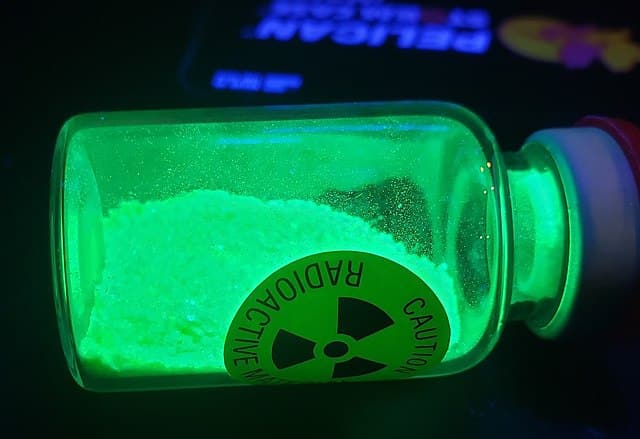
Fluorescence is a subset of luminescence with an even more defined process. When fluorescent substances absorb higher energy light, electrons jump to higher orbitals then quickly fall back down, emitting the excess energy as lower energy light. This manifests as a bright flash.
The key difference between general luminescence and fluorescence lies in the excitation mechanisms and emission durations. Luminescence has diverse triggers with emissions lasting from microseconds to hours, while fluorescent emissions are very fast reactions to light exposure.
When materials absorb energy, elections in their atoms can jump to higher quantum energy levels. As these excited elections fall back down, the electron transition releases energy. If this emission occurs in the visible light spectrum, it is perceived as a glow by our eyes.
The specifics of the atomic structure and energy levels differ across substances, resulting in variation in glow color and intensity. The duration and triggers also depend on these factors along with broader chemical interactions. For example, firefly bioluminescence involves a chemical reaction along with the quantum electron transitions.
In fluorescence, the excitation source is specifically electromagnetic radiation or light. The incoming photons are absorbed by elections, pushing them into higher orbitals. These elections quickly drop back down, emitting lower energy photons that we observe as a fluorescent glow. Only certain materials display fluorescence, all within the broader luminescent category.
Across both cases, the glow arises from electrons falling between allowed quantum energy levels, not unlike the spectra we see in other contexts. The unique chemical and structural properties of these luminescent and fluorescent materials facilitate these visible releases of energy. While the glow itself may seem almost magical, it arises from well-defined physical processes in quantum mechanics. Understanding the mechanics in detail allows scientists to predict, enhance, and manipulate light emission from these substances.
Practical applications: From medicine to art
Both luminescence and fluorescence have practical applications that extend beyond just looking pretty. Fluorescence is used in medical diagnostics, like in fluorescent microscopy, to study cells and biological tissues. Luminescence finds its application in safety signs and emergency lighting. These phenomena are not just about light; they are tools that help improve and save lives.
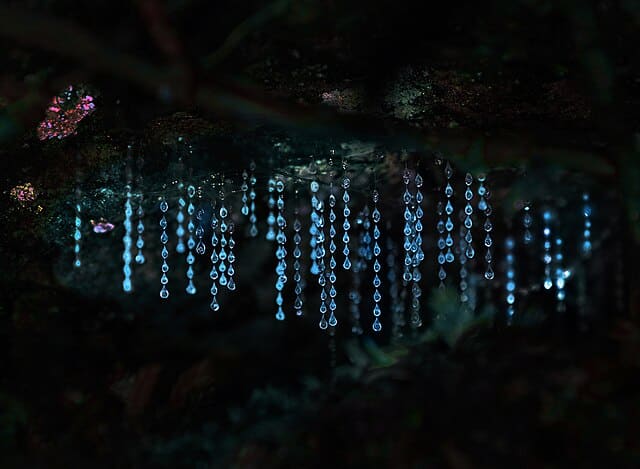
In nature, luminescence and fluorescence play significant roles. Bioluminescence, a type of luminescence, is used by deep-sea creatures for communication and predation . Fluorescence, seen in some corals and butterflies, can be a form of camouflage or a way to attract mates. These natural light shows are crucial for the survival of many species.

As we advance in technology and understanding, the potential applications of luminescence and fluorescence continue to expand. From more efficient lighting solutions to innovative medical treatments, the future looks bright for these glowing phenomena. Researchers are continually finding new ways to harness their properties for the betterment of society.
Luminescence and fluorescence are more than just scientific curiosities. They are integral parts of our world, adding not just light but also wonder to our lives. Understanding these phenomena enriches our appreciation of the natural and scientific world. So, the next time you see something glowing, remember, there’s a fascinating story of science behind that sparkle.
References
Ronda, C. R. (2007). Luminescence: From Theory to Applications. Wiley-VCH.
Valeur, B., & Berberan-Santos, M. N. (2012). Molecular Fluorescence: Principles and Applications. Wiley-VCH.
Tsien, R. Y. (1998). The Green Fluorescent Protein. Annual Review of Biochemistry, 67, 509-544.
Glossary
Luminescence: Emission of light by a substance that hasn’t been heated; includes various types of light emissions like bioluminescence and chemiluminescence.
Fluorescence: A type of luminescence where a substance absorbs light and re-emits it almost instantly.
Bioluminescence: A type of luminescence found in biological organisms, where light is produced through a chemical reaction within the organism.
Electrons: Subatomic particles with a negative charge, found in all atoms; movement of electrons to different energy levels can emit light.
Energy Levels: Specific regions around an atom’s nucleus where electrons are likely to be found; electrons move to higher energy levels when absorbing energy.
Atomic: The smallest scale in chemistry and physics, referring to the level of individual atoms and their components, like electrons.
Fluorescent Microscopy: A type of light microscopy that uses fluorescence to study properties of organic or inorganic substances.
Camouflage: A method used by animals and plants to blend into their surroundings, often for protection from predators.
Predation: The biological interaction where one organism, the predator, feeds on another organism, its prey.
Contributors
Copyright @smorescience. All rights reserved. Do not copy, cite, publish, or distribute this content without permission.
SUBSCRIBE TO OUR NEWSLETTER
.......... ..........Subscribe to our mailing list to get updates to your email inbox.
Monthly Newsletter