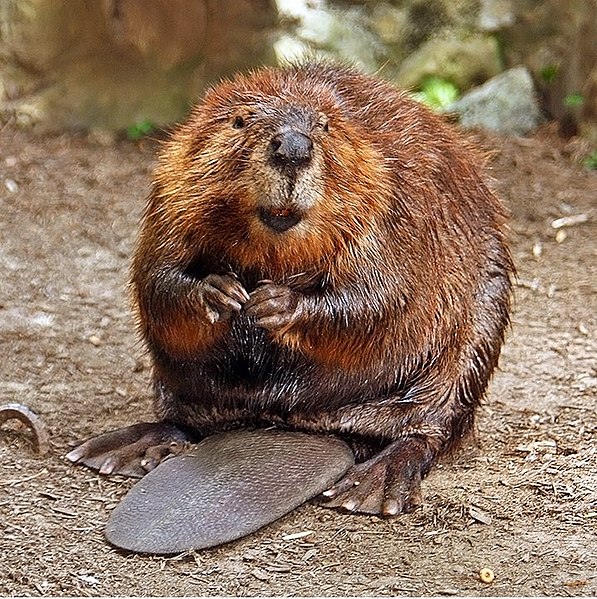
Beavers are one of the biggest types of rodents , and cute too. They are known for their impressive ability to build dams. But there’s a whole lot more to these animals than you might think. So, let’s take a closer look.
Beaver, Credit: Wikimedia/Steve
Fact 1: The eager architects
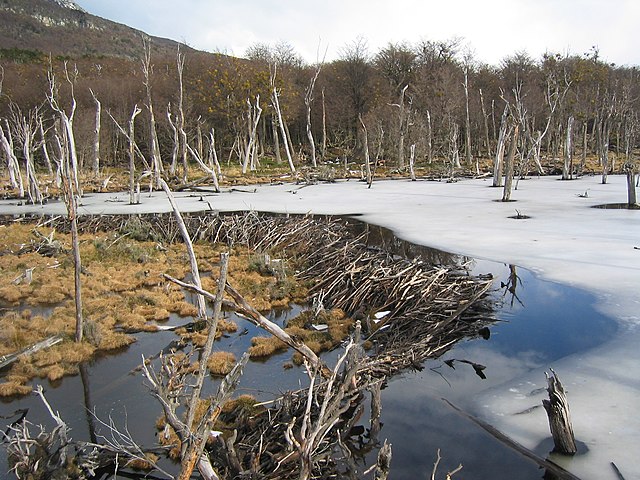
Beavers are builders of the mammal world. Have you ever made a fort out of sticks and blankets? Well, beavers do something like that, but even better. They can use trees, mud, and stones to construct dams and lodges. These dams result in the formation of deep ponds, which are the preferred home for beavers. Not only do they build homes, but they do it very well, and their architectural skills are just amazing. It is believed that the sound of running water compels beavers to engage in building dams. Isn’t that cool?
Dam built by beaver, Credit: Wikimedia/IlyaHaykinson
Fact 2: Chompers for life
You know those cartoons where beavers are always shown gnawing on logs? That’s based on real life. Beavers have large front teeth that they use to chew through tough materials like wood. But here’s the fascinating part: their teeth never stop growing! As a result, beavers must continuously gnaw on wood to prevent their teeth from becoming too long.
Beaver's skull, Credit: Wikimedia/Tiia Monto
Fact 3: Environmental heroes
In addition to being builders and chewers, beavers play a crucial role in our environment. By constructing their dams, they create wetlands. Wetlands provide a safe haven for many different kinds of plants and animals. They help clean the water that flows through them and even help control floods. So, we can say beavers are environmental heroes.
Fact 4: A beaver’s tail tale
Beavers have large, flat tails. It’s not there just for style. Beavers use their tails in a variety of ways. It acts as a support when they are carrying heavy stuff, helps them in steering when they swim, and they slap their tails on the water surface to warn other beavers when danger is near.
Fact 5: Super swimmers
You may already know that beavers spend a lot of time in the water. But did you know they are expert swimmers? They can stay submerged in water for up to 15 minutes. They have a special clear layer that slides over their eyes so they can see when they’re underwater. And when they dive, their nose and ears automatically close to prevent water from entering.
Fact 6: The late-night lifestylers
Like many of us who like to stay up late, beavers are also night owls. They prefer to sleep during the day and work during the night. This behavior is known as being nocturnal .
Fact 7: Beavers and the long nap
During winter, beavers like to cozy up in their lodges and take a long nap, but it’s not hibernation like some animals do. Beavers remain active throughout the winter. They store food before winter and keep it in their lodge to munch on during the chilly months.
Fact 8: Their houses have rooms
Beaver lodges are quite organized. They have separate chambers for different purposes, like one for sleeping and another for eating. To keep them safe from predators , the entrance to their lodges is underwater. Isn’t that cool?
Beaver sitting on the riverside, Credit: Wikimedia/Donaufotograf
Fact 9: The sweet tooth of a beaver
Besides being woodcutters, beavers are quite the foodies. They don’t just chew wood for the sake of it. They love to eat the sweet inner bark of trees, various aquatic plants , and shrubs.
Fact 10: Their role in history and culture
Beavers have been important to humans throughout history. They were hunted for their fur to make warm hats, and their meat was often used for food. In many cultures, beavers are considered symbols of hard work and determination because of their industrious nature.
Conclusion: The wonderful world of beavers
So there you have it. Ten facts about beavers that you might not have known. They are more than just dam builders. They’re swimmers, chewers, and environmental caretakers. Each characteristic makes them an important and interesting part of our world’s wildlife. And remember, every time you see a beaver or think of one, there is always more to know and learn about these wonderful creatures.
Glossary
Rodents: A group of mammals characterized by a single pair of continuously growing incisors in each of the upper and lower jaws.
Nocturnal: Active during the night, as opposed to during the day.
Predators: Animals that naturally prey on others.
Aquatic Plants: Plants that have adapted to living in aquatic environments.