Wasps , similar to bees and hornets, have stingers that they can use to sting humans. However, stinging is an exhaustive endeavour.
The stinger is part of the wasp’s body. To sting humans, the wasp needs to embed a part of their body, specifically the stinger , into the human.
Bear in mind that, unlike bees, wasps don’t lose their stinger after this. In fact, an adult wasp can sting an individual multiple times without dying. This is because the wasp has a smooth stinger as opposed to a barbed stinger. This lets the wasp easily remove the stinger from the flesh of an individual once it has stung them.
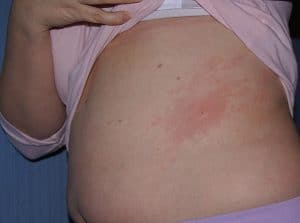
Wasp bites will often leave a hole at the site of the sting, Credit: Wikimedia/Phyllis Buchanan
This doesn’t make the sting hurt any less. In fact, a wasp’s sting may hurt more than a bee’s sting. This is because wasp stings aren’t just a prick to the skin. Rather, using the stinger, wasps disperse small amounts of venom into your body. However, the amount of pain differs from person to person, as some individuals may be allergic to particular stings. For example, you may experience quite a bit of pain when stung by a wasp, however, your friend who is allergic to bees will experience a greater level of threat from a bee than a wasp.
Although wasps don’t die from stinging, stinging still takes a lot of work. Wasps need to land on an individual to sting them, as they need to steady themselves on something (such as the individual’s arm). This is quite hard to do if the human is running or moving too much. Even if the wasp successfully lands on the human, the human can just as easily brush them off or swat them away. This makes the situation quite risky for wasps.
Be careful when you pass by a wasp nest, as wasps can swarm around you and each wasp can sting you multiple times, Credit: Wikimedia/Kalamazadkhan
In such situations, wasps make use of a different tactic to deal with their threat. Instead of stinging, they bite. Generally, bites hurt less than stings, but will still require medical treatment since the wasps may transfer bacteria with a bite.
If bitten by a wasp, make sure to clean the site of the bite well to prevent any sort of infection. You can then ice it to reduce any swelling.
Conclusion
Wasps can both sting and bite people. However, more often than not, wasps will prefer to sting an individual than bite them. This is because wasps generally reserve biting to deal with smaller threats instead of bigger ones.
For example, a wasp is more likely to bite a pesky parasite or a smaller insect than it is to bite a larger human. Keep in mind, however, that a wasp will bite a bigger animal if it is in a situation where it isn’t secure enough to employ or make use of its stinger.
Additionally, a few wasps have become specialized to simultaneously employ both of these tactics, stinging and biting at the same time when defending their territories.
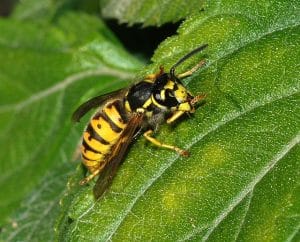
Yellow jackets are aggressive wasps that will bite and sting any animal that threatens their nest, Credit: Wikimedia/Alvesgaspar
For example, a yellowjacket wasp is adept at fighting off a threat to their nest by aggressively stinging and biting any animal that dares to enter its territory.
Readability: 68.3
Flesch Kincaid Grade Level: 7.1
Glossary
Wasp: An insect that looks similar to a bee but is slightly larger and narrower.
Stinger: A needle-like extension present on the rear end of a few insects’ bodies. Insects like bees and wasps use stingers to protect themselves.
Allergy: A reaction to a specific type of substance that triggers the immune system into hyperactivity.
Venom: A toxic substance that is produced by a few animals, like snakes or wasps. These animals inject their venom into prey or threat to stun them.