Imagine this: a teeny-tiny crown sitting on the head of a little wasp and her army of worker wasps bustling around to make her dreams come true. True royalty, indeed! While in reality, there is no crown and no royal, gem-studded throne, the concept of a wasp queen is still very interesting.
Buzzing royalty: Do wasps have a queen?
Going straight to the key question, yes, wasps do indeed have queens. In fact, these regal insects play a pivotal role in the hierarchy of a wasp colony. Wasps that have a queen are called social insects. Some of these social wasps include species like yellow jackets, paper wasps, and bald-faced hornets. They like to live together as one big happy family and their family members can range in number from 5000-10000! All of them work together to nurture and raise the kid wasps. But, only one(or sometimes a few) of the group lays the eggs. And she’s called the queen. The rest of the wasps are sterile female workers, which means that they cannot lay eggs. But what sets a queen wasp apart from her fellow colony members?
How large is the queen wasp?
The first and foremost would be the size. Queens are typically larger than other wasps in the colony. It represents the queen’s unique reproductive role. Unlike worker wasps, whose primary duties include foraging and caring for the young, queens are solely responsible for laying eggs. The queen wasp usually measures around 2-2.5cm in length, whereas the workers measure approximately 1.2-1.7cm. Their larger size allows them to carry and produce more eggs, ensuring the colony’s survival and growth. Now, we know what sets a queen apart, but what if there are many queens? Who gets the crown, then?
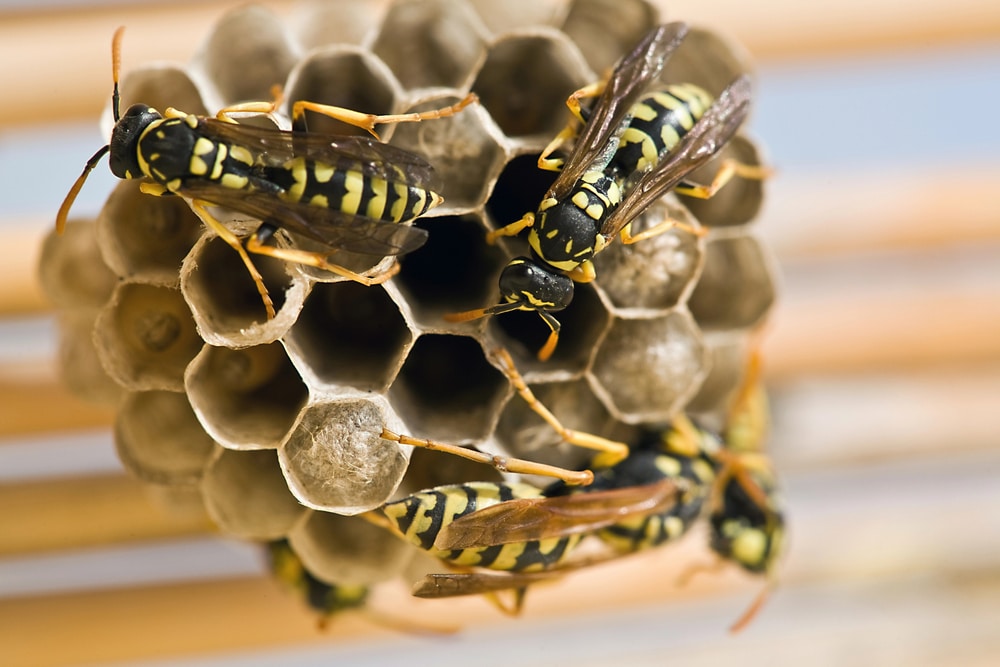
A young paper wasp queen, Credit: deposit photos
In some species, such as the paper wasp, there can be multiple queens within a single colony. But there’s clear competition amongst them about who’s able to reproduce the most, then second most, and third most number of eggs. This phenomenon adds an extra layer of complexity to the social structure of these insects.
The queen’s life and legacy
In the spring, after emerging from winter hibernation, fertile queen wasps embark on a journey to establish new colonies. Inside these nests, they lay the foundation for their kingdom, birthing their first batch of worker wasps. As summer heats up, the colony flourishes, growing from a modest size to a bustling community of up insects. The queen produces around 200-300 eggs per day. She also releases pheromones, which are special chemicals to keep the colony united. Towards the end of summer, the growth of the wasp colony has reached its full potential, and the queen has produced eggs that develop into new queens and fertile male wasps. But as autumn approaches, the colony’s growth gives way to decline, and the colony’s social structure breaks down. The new queen wasps leave the nest and are fertilized by male wasps, and they find their own place to hibernate over the winter until the following year.
Adult yellow jacket wasps and larvae, Credit: Deposit photos
A queen’s lifespan can vary depending on factors such as species and environmental conditions. Some queens may live for just a few months, while others can survive for several months. On average, the queen wasp lives for a year. During her reign, the queen’s primary objective is to ensure the colony’s survival by laying eggs and maintaining social order.
In conclusion, the world of wasps is a captivating blend of monarchy and intrigue. So the next time you encounter a wasp buzzing around your garden, take a moment to appreciate the hidden complexities of their kingdom—their queens would certainly approve!
Copyright @smorescience. All rights reserved. Do not copy, cite, publish, or distribute this content without permission.
Join 20,000+ parents and educators
To get the FREE science newsletter in your inbox!
SUBSCRIBE TO OUR NEWSLETTER
.......... ..........
Subscribe to our mailing list to get updates to your email inbox.