We see magnets everywhere in our daily life, in various shapes, sizes, and forms. They are in your refrigerator door, your favorite pair of headphones, or that science project you did last year. But have you ever wondered what makes a magnet, well, a magnet? It all has to do with an invisible force field they create that either attracts or repels other magnets and magnetic materials, like iron.
Various magnets, Credit: Wikimedia/Chetvorno
Do Magnets Lose Power Over Time
Magnets are fascinating because of their powers. However, do they keep their powers forever? That’s the million-dollar question. Magnets can lose their magnetic force under normal circumstances, some magnets, known as permanent magnet , can keep their magnetic force for a really long time. We are talking years, or even centuries. This is because they’re made from certain materials, like iron, cobalt, or nickel, that really like being magnetic. It’s like they have a passion for it. But even though they are called permanent, they don’t really last forever.
What actually is the kryptonite of a magnet? Let the science sleuth take over, and run an investigation.
What Causes Magnets to Lose Their Power
The question then arises – what causes magnets to lose their magnetic power or magnetism? A few things can make a magnet lose its power. Heat is one of them. When a magnet gets too hot, the atoms inside it, which are normally arranged in a special way to create the magnetic force, get shaken up. This chaos confuses the magnetic field and can make the magnet weaker.We can also shake up the atoms by hammering or dropping the magnet repeatedly.
Also, the presence of a strong magnet or an electric field can force the atoms inside a magnet to lose their special alignment . In simple words, they are no longer a team, and when the team falls apart, the magnet loses its power.
The last method is to keep the like poles of a magnet together. A magnet has two poles, one North and one South, the names given because of how the magnet aligns. If you hang a magnet using a string, you will note that it rests in a North-South direction. Like poles mean two same poles, like North-North or South-South. Like poles of two magnets will repel each other, while opposite poles attract. When two like poles are present together for a long time, the strength of the magnet fizzles out.
Ways to Preserve Magnet Strength
Now, knowing that magnets can lose their powers, the natural question to follow is – can we do something to help them keep their powers longer? And the answer is yes. There are ways to keep magnets in their prime for longer. First, keep magnets away from high temperatures. If it’s too hot, maybe it’s not the best place for your magnet. Also, you can store a magnet by attaching it to a piece of metal, like iron. It helps the magnet to retain its power. And of course, remember to keep magnets away from strong electrical fields and other powerful magnets. This is because they can impact our magnet’s ‘teamwork’, thus reducing its power.
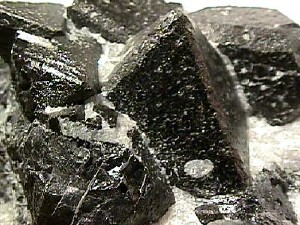
Magnetite, a naturally occurring magnet, Credit: Wikimedia/Dlloyd
Real-World Implications of Magnet Power Loss
At first glance, losing magnetic power might not seem like such a big deal. But the loss of magnetism can actually impact many areas of our lives, especially in this modern, tech-savvy world. Consider electric cars or wind turbines, for example. These machines use very powerful magnets. If these magnets lose their power, the car might not run as efficiently, or the wind turbine might not generate as much electricity. So, understanding magnets and how they lose power is actually very crucial. It’s not just about the cool science behind it, but also about how we can ensure the smooth running of many parts of our world.
Wind Turbines, a real-world application of magnets, Credit: Wikimedia/Lycaon
Glossary
Atoms: The smallest unit of matter that defines the chemical elements. Every solid, liquid, gas, and plasma is composed of neutral or ionized atoms.
Magnetic field: A field of force produced by magnetic objects or by moving electric charges. It has both direction and magnitude, making it a vector field.
Permanent Magnet: A type of magnet that retains its magnetism after being removed from a magnetic field.
Electric Field: A field around a charged particle, in which an electric force is exerted on other charged particles.
Alignment: The arrangement in a straight line or in correct relative positions. In the context of magnets, it refers to the arrangement of atoms in a certain way to create a magnetic field.