A juice without most of its water is called a concentrate. A very common example is that of concentrated orange juice. It was first made in the mid-1940s when World War II made it hard to ship fresh juice. So, people found a way to make juice that could stay good longer and be moved more easily. How did a wartime measure end up as a modern alternative? Let’s find out.
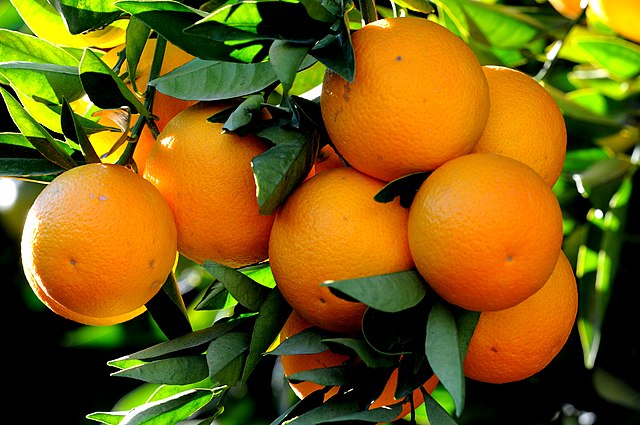
Oranges on tree, Credit: Wikimedia/Zeynel Cebeci
How concentrated orange juice is made
Making concentrated orange juice is a special process. First, fresh oranges are squeezed to get the juice. This part is easy to understand. But then, the juice goes through something called “concentration ”. In this step, a machine heats the juice and takes away most of the water. This makes the juice thicker, as much as seven times more thick, almost like syrup, and lets it be stored for a longer time.
This is a very common step in most preservation processes. People salt fish to preserve them, or brine them. The reason is to eliminate water. Salt draws out water by a process called osmosis. As a matter of fact, water is the most important resource for any lifeform, including microbes that spoil food. Take the water out, and the food item gets a robust shelf life.
But there’s a tricky part, too. When the water is removed, some flavors go away as well. To fix this, the juice makers add something called a “flavor packs .” This brings back the fresh, fruity taste we all love. Without it, the juice would taste bland, even after water is added back in.
Juicing Oranges, Credit: Wikimedia/Jengod
The pros and cons of concentrated orange juice
Concentrated orange juice is great in many ways. Because it’s small and light, it’s easy to ship all over the world. It can also stay good for a long time. That means you can have tasty orange juice even if there are no fresh oranges nearby.
But there are also some downsides. Because the juice is heated, it can lose some of its natural goodness. And while the flavor packs bring back the taste, they’re not the same as the original flavors from fresh oranges. That means the taste can be a bit different than juice squeezed right from the fruit.
How to use concentrated orange juice
When you buy concentrated orange juice, you usually need to add water back in. This process is called “reconstitution ”. The instructions will be on the can, but usually, you’ll mix one part concentrate with three parts water. And voila, you’ve got yourself a glass of orange juice!
But don’t think concentrated orange juice is just for drinking. It can be used in lots of recipes, too. It can add a tangy twist to cakes, marinades for meat, and even homemade ice cream!
Although freshly squeezed orange juice is miles clear, concentrated orange juice is a decent alternative. Necessity is the mother of all inventions, and so is the case here. From World War II to the age of the World Wide Web, we have found a lot of ways to make everything efficient with the help of science. Concentrating orange juice is no different.
Glossary
Concentration: In this context, concentration is the process of removing water from the orange juice to make it denser and extend its shelf-life.
Reconstitution: This is the process of adding water back into the concentrated orange juice to return it to its drinkable state.
Flavor Packs: These are added back into the juice after concentration to restore the natural flavors lost during the process.